Choosing the 2026 best Grain Semi Trailer for sale is not just a matter of capacity. It is a decision about payload, unloading time, upkeep, and the roads your truck actually travels. USDA Agricultural Marketing Service’s Grain Transportation Report tracks grain movement, freight rates, and transportation conditions across major shipping modes. It offers useful market context, though it does not rank trailer models. ATRI’s 2024 Operational Costs of Trucking report estimated average operating costs at $2.27 per mile for 2023. That figure covers trucking broadly, not grain trailers alone, but it shows why small efficiency gains deserve attention.
For a buyer, details matter. Look closely at body material, axle configuration, tarp operation, gate design, and access for cleaning. Picture a wet harvest morning: grain dust clings to the rails, the truck waits at the elevator, and a slow gate costs valuable minutes. A trailer that suits one route may be awkward on another. Dealer support and parts access also count.
A responsible buying guide should rely on verifiable sources, not invented endorsements. No source material or verifiable, topic-specific quotation from a named Grain Semi Trailer expert was provided for this introduction, so attributing a quotation would risk misleading readers. That gap matters. Before choosing a unit, compare its specifications with your tractor, payload targets, and operating conditions.
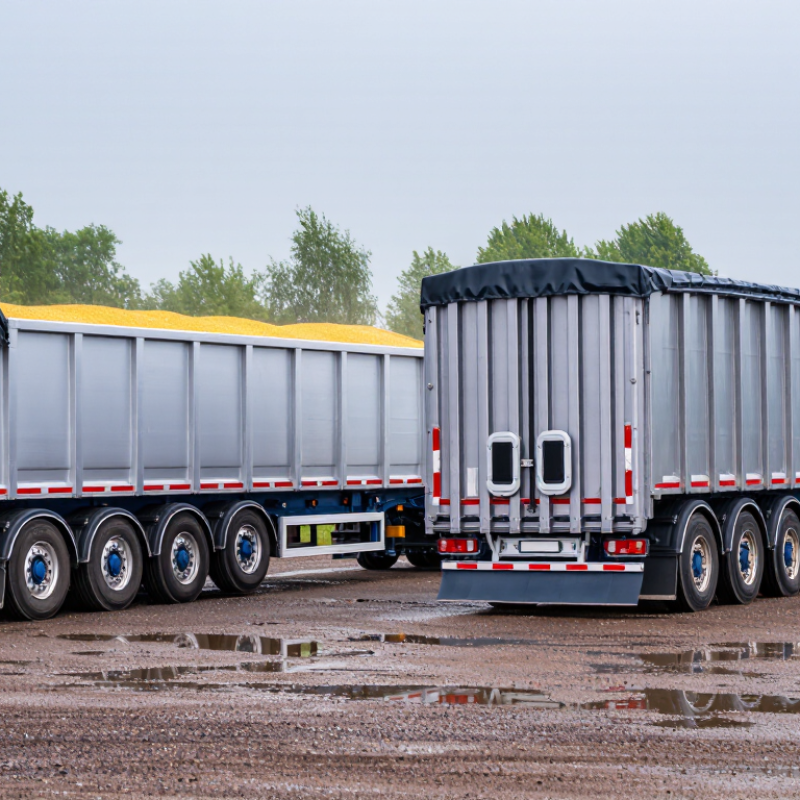
A grain semi trailer is a road trailer built to carry bulk crops such as wheat, corn, or soybeans. Its covered body helps contain the load and protect it from weather during transport. Farms, grain elevators, and processors use these trailers to move harvests between loading, storage, and handling sites. They are working equipment, not simply oversized boxes on wheels.
Trailer designs vary. Some use sloped floors and bottom gates; others raise the body to unload. The suitable configuration depends on the crop, route, loading equipment, and receiving site. Before a trip, check the tarp, gate seals, hinges, tires, and lights. Even a small opening can admit rain or release grain. Residue and dust also need attention, though they are easy to overlook.
Tips: Check the trailer’s rated payload and distribute grain evenly. Secure the tarp before travel. Before tipping, confirm overhead clearance and stable ground. Never rush the unload. A short inspection can prevent delays, but it cannot replace careful judgment.

2026 Best Grain Semi Trailer for Sale?
Which Design Features Matter for Grain Hauling?
Choosing a grain semi-trailer starts with the crop, route, and unloading site. Grain density and moisture affect load planning, while narrow farm lanes favor a manageable trailer length. A strong, sealed floor matters. Inspect welds, seams, and discharge gates for gaps where kernels can collect or escape. Smooth interior surfaces and rounded corners make cleaning easier between loads. Small details matter.
Hopper shape influences how steadily grain flows during unloading. Look for accessible gates that open and close reliably, plus enough ground clearance for the receiving setup. Test the controls before purchase; a stiff handle can become frustrating during repeated stops. A well-fitted tarp helps protect grain from rain and road spray, but it should be easy to secure in windy conditions. Check its attachment points, not just the fabric.
Match axle capacity and suspension to the expected loads and road conditions, then confirm the trailer’s ratings with its documentation. Safe access also deserves attention: non-slip steps, sturdy handholds, and clear lighting help during inspections at dawn or dusk. Ask how the floor and gate seals are serviced, and inspect a used unit for bent panels or trapped residue. I would not judge a trailer by appearance alone; even a clean exterior can hide wear around moving parts.
Estimated trailer volume needed to carry one metric tonne of common grains, based on representative bulk-density values.
What this means: Lower-density grain takes up more space per tonne. When comparing grain trailers, consider usable cubic capacity alongside payload limits, plus a suitable discharge system and clean-out access. Actual bulk density varies with grain type, moisture, and handling conditions.
Compare a grain trailer by usable volume, payload, and tare weight—not by length alone. A taller sidewall may add cubic capacity, but it helps only when the load stays within the truck’s permitted weight. USDA grain standards use 56 pounds per bushel for corn and 60 pounds for wheat and soybeans. That means 1,000 bushels weigh about 28 tons of corn or 30 tons of wheat or soybeans, before accounting for moisture or other handling factors. The Federal Highway Administration lists 80,000 pounds as the general federal gross vehicle weight limit on the Interstate System, subject to exceptions and state rules. Check the rules for your route.
Tips: Ask for the trailer’s interior dimensions and tare weight. Then compare those figures with your tractor, typical grain, and loading equipment. A cubic-foot figure alone can mislead.
Picture grain rising close to the tarp bows on a damp harvest morning. The trailer may look full, yet dense grain can reach the weight limit first. A lighter crop may fill the same body without reaching that limit. USDA figures are useful planning benchmarks, not a substitute for weighing an actual load; test weight, moisture, and loading patterns vary.
Sources: USDA Agricultural Marketing Service, Federal Grain Inspection Service, Official U.S. Standards for Grain; Federal Highway Administration, vehicle weight limits.
What should you check before buying a grain semi trailer in 2026? Start with payload and volume, not appearance. Match the trailer’s rated capacity to your tractor, typical grain density, and loading equipment. A tall trailer may hold more bushels, but actual payload can reach its limit first. Check the tare weight on a scale ticket, then inspect the frame, suspension, tires, and brake components for uneven wear. Open and close every hopper gate. Look for bent hardware, grain dust around seals, and water stains inside the body. Small defects matter.
Compare operating costs for the routes you actually run. The USDA Agricultural Marketing Service’s Grain Transportation Report publishes weekly truck-rate data for selected routes. Use those figures as a reference, then request current local quotes; rates vary by route and season. Ask for maintenance records and confirm that the tarp rolls smoothly, the lights work, and the landing gear holds firm. A polished exterior proves little. I would still want a loaded test before deciding.
Tips: Bring a flashlight and inspect underneath in daylight. Photograph serial and axle tags. Weigh the empty trailer if possible. Verify the seller’s capacity figures against its documentation, and budget for tires, seals, and gate repairs. One overlooked leak can leave grain on the road—or in the yard.
A 2026 grain semi trailer should be priced by its working capacity, not its sticker alone. Compare quotes with the same payload rating, axle configuration, body material, and included equipment. Ask for itemized costs: delivery, tires, spare wheel, tarp system, and service support. Small details matter. A lighter tare weight may increase usable payload, but only when the loaded combination remains within applicable weight limits.
Long-term costs deserve equal attention. ATRI’s An Analysis of the Operational Costs of Trucking: 2024 Update reports an average marginal operating cost of $2.27 per mile for trucking in 2023. That is a fleet-wide benchmark, not a trailer-cost estimate, but it shows how small maintenance or downtime increases can accumulate. Check weld quality, corrosion protection, brake and lighting specifications, parts availability, and warranty exclusions. Confirm requirements with the relevant transport authority and your insurer. A polished quote can still hide expensive omissions; I would question any offer that lacks clear specifications.
Tips: Request a written, like-for-like quote and calculate cost per productive year, including financing, upkeep, tires, and resale value. Ask for a maintenance schedule and inspect the trailer empty and loaded. Keep scale tickets and repair records. They make later cost reviews less guesswork.
Use this comparison guide to assess grain trailers on an equal-specification basis. Prices vary by trailer size, material, equipment, condition, location, and market; obtain current written quotes rather than relying on a universal list price.
| Evaluation Dimension | Practical Data or Benchmark | What to Verify Before Purchase |
|---|---|---|
| Purchase price | There is no single dependable 2026 price for every grain semi trailer. New and used units are not directly comparable unless capacity, configuration, condition, and included equipment match. | Request dated, itemized quotes. Compare the base trailer, options, delivery, taxes, dealer preparation, warranty, and any required repairs as separate line items. |
| Payload and legal weight | In the United States, the general federal interstate limits are 80,000 lb gross vehicle weight, 20,000 lb on a single axle, and 34,000 lb on a tandem axle, subject to the Bridge Formula and applicable exceptions. | Check the tractor and trailer ratings, axle spacing, route restrictions, state rules, and actual scale weights. Estimate available payload as the applicable legal combination weight minus the loaded tractor and trailer tare weights. |
| Capacity and grain type | Bushel volume is not the same as legal payload. For planning, common U.S. grain test-weight conventions include 56 lb per bushel for corn and 60 lb per bushel for wheat or soybeans; actual grain weight and moisture can differ. | Match trailer volume to the products and routes you haul. Confirm usable capacity, compartment layout, unloading method, and scale weights with your typical commodities rather than relying on a bushel claim alone. |
| Trailer material and tare | Aluminum and steel trailers can differ in tare weight, purchase cost, repair methods, and corrosion behavior. The actual tare depends on the specific build and equipment. | Ask for the individual trailer’s documented tare weight and axle distribution. Inspect frame, welds, crossmembers, hopper areas, and any corrosion or damage; compare repair support and material-specific maintenance needs. |
| Configuration and equipment | Hoppers, gates, tarps, ladders, lighting, suspension, brakes, and tire specifications affect usability, weight, maintenance, and price. Specifications vary by model and intended operation. | Create one written specification sheet for every quote. Confirm hopper and gate operation, tarp coverage, access points, spare-tire provision, brake configuration, tire size, and whether each option is included. |
| Federal compliance | Applicable U.S. requirements may include Federal Motor Vehicle Safety Standards for braking and required lighting, as well as FMCSA equipment and inspection rules. Requirements depend on vehicle configuration and operation. | Verify the certification label, VIN, required lamps and reflectors, brake components, tires, and documentation. Have a qualified inspector check the unit against applicable federal and state requirements before service. |
| Inspection and records | Under 49 CFR 396.17, covered commercial motor vehicles generally must pass periodic inspections at least once every 12 months; applicable exceptions and state requirements should be checked. | Request inspection and repair records for used equipment. Confirm the next inspection due date and budget for any deficiencies identified during an independent pre-purchase inspection. |
| Delivery and operating costs | The delivered cost can exceed the quoted trailer price once freight, taxes, registration, financing, insurance, and initial setup are included. Operating expenses include tires, brakes, bearings, tarp repairs, and scheduled maintenance. | Compare total delivered cost and annual operating assumptions. Use your own routes, annual miles, labor rates, tire costs, service intervals, and downtime history rather than generic cost-per-mile claims. |
| Warranty and service support | Warranty length, covered components, exclusions, claim procedures, and service availability differ by seller and contract. A warranty does not necessarily cover wear items or downtime. | Get warranty terms in writing. Confirm who handles claims, where repairs can be performed, parts availability, labor coverage, and whether the warranty transfers to a subsequent owner. |
| Long-term cost of ownership | A useful comparison is: purchase and delivery + financing + operating and maintenance costs + taxes and fees − expected resale value. Compare the same ownership period and usage assumptions for each trailer. | Build a multi-year estimate using documented quote prices, expected annual miles, maintenance records, financing terms, and a conservative resale estimate. Include downtime if it affects your hauling operation. |
U.S. weight limits and inspection references are general information, not a route-specific compliance determination. Confirm current federal, state, and local rules for the vehicle, cargo, and intended routes before purchase or operation.

