What is the Best Cement for Home Use?
When considering home improvement projects, choosing the right cement for home use is crucial. Not all cements are created equal. Various types offer different strengths and weaknesses. This decision can greatly impact the durability and effectiveness of your projects.
For instance, if you're building a patio, a high-strength cement is essential. It can withstand weather changes and heavy foot traffic. Alternatively, if you're repairing a small crack, a quick-setting cement might be more appropriate. The versatility of cement for home projects adds to the complexity of your choices.
Yet, many homeowners overlook these details. They often rush into their decisions without understanding the properties of different cements. This can lead to costly mistakes down the line. Reflecting on your project needs is vital. The right cement will not only improve your projects now but also ensure their longevity. Choosing wisely is an investment in your home’s future.
Types of Cement Suitable for Home Use: An Overview
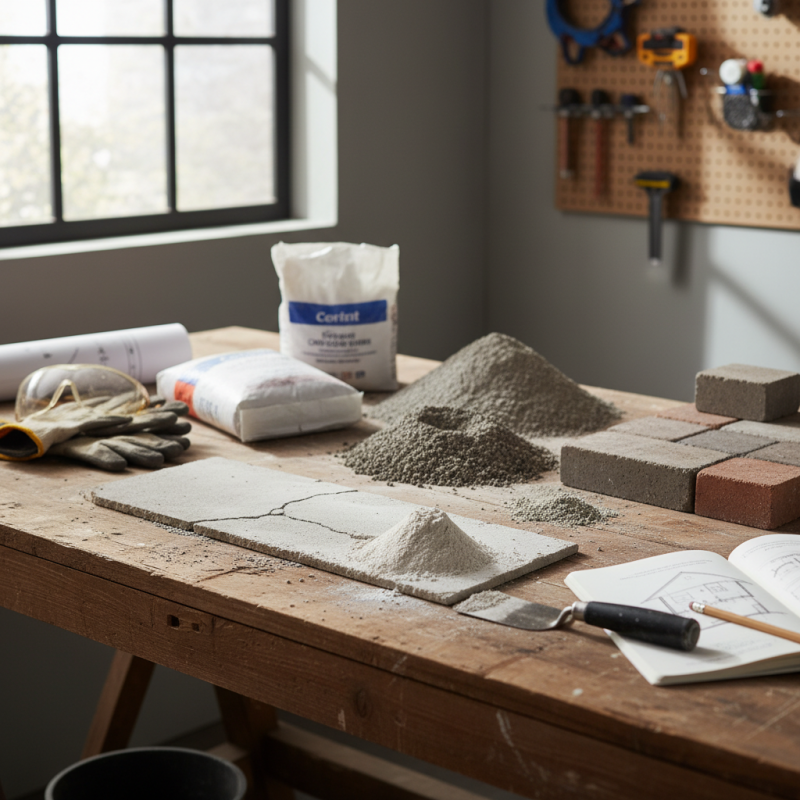
When choosing cement for home use, it's essential to understand the types available. Portland cement is the most common choice. It is versatile and suitable for most applications, including foundations and walls. A report from the US Geological Survey indicates that around 85% of all cement produced globally is Portland cement. Its reliable strength makes it a go-to for many homeowners.
Another option to consider is mason’s cement. This type is often used for laying bricks or stones. Its unique formulation offers enhanced workability. However, it doesn't provide the same strength as Portland cement. Homeowners need to weigh the benefits against their specific project requirements. According to industry studies, using mason’s cement can lead to long-lasting installations if applied correctly.
In some cases, composite cements, which mix various materials, are beneficial. They might be cheaper and environmentally friendly but can sometimes lack the robustness of traditional options. Choosing the right type of cement demands careful thought about the specific use cases and conditions. Understanding the properties of each type can ultimately influence the success and durability of your projects.
Types of Cement Suitable for Home Use
Understanding Portland Cement: The Most Common Type Used
Portland cement is the most commonly used type of cement in home construction. It is versatile and suitable for various projects, from sidewalks to foundations. Many people mistakenly think all cement is the same. However, the unique properties of Portland cement set it apart.
When mixed with water, Portland cement forms a paste that hardens over time. It typically contains limestone, clay, shells, and silica. The process of making it involves incredibly high temperatures, which can be intimidating to think about. Still, this process provides durability and strength.
Some homeowners might overlook the importance of selecting the right cement. Using the wrong type can lead to issues. For example, if too much water is added, the mix can weaken significantly. This may cause cracks in the future. There’s a fine line to walk, and each project needs attention to detail. Understanding how to work with Portland cement can significantly improve the quality of your home projects.
Alternative Cements: When to Consider Eco-Friendly Options
When considering home projects, eco-friendly cement options can be tempting. Traditional Portland cement is popular but has a significant carbon footprint. Alternative cements, like fly ash or hempcrete, offer a greener solution. They utilize waste materials or renewable resources. This reduces environmental impact while providing strength.
Using alternative cements isn't always straightforward. Some formulations may lack the strength needed for heavy loads. Others might require specific conditions to cure properly. It's essential to research each option. Consider project demands and local climate conditions. Test small batches to ensure compatibility. Sometimes, mixing traditional and alternative cements can yield better results.
Connecting with local suppliers can shed light on unique options. They may carry regional materials with lower environmental impacts. Engaging with eco-conscious communities might also reveal innovative alternatives. Be open to experimentation. The journey to sustainable construction is ongoing and complex. Embrace the imperfections and learn as you go.
What is the Best Cement for Home Use? - Alternative Cements: When to Consider Eco-Friendly Options
| Type of Cement |
Best Use |
Environmental Impact |
Setting Time |
| Portland Cement |
General construction, floors, sidewalks |
High CO2 emissions during production |
30-60 minutes |
| Fly Ash Cement |
Pavements, bridges |
Reduced CO2 emissions, utilizes waste material |
1-2 hours |
| Lime Cement |
Restoration, masonry |
Lower carbon footprint compared to traditional cements |
12-24 hours |
| Recycled Aggregate Cement |
General construction, environmentally conscious projects |
Minimizes waste and reduces raw material use |
60-120 minutes |
| Geopolymer Cement |
High-performance structures, heavy-duty applications |
Very low CO2 emissions, made from waste materials |
45-90 minutes |
Key Properties of Cement for Durability and Strength
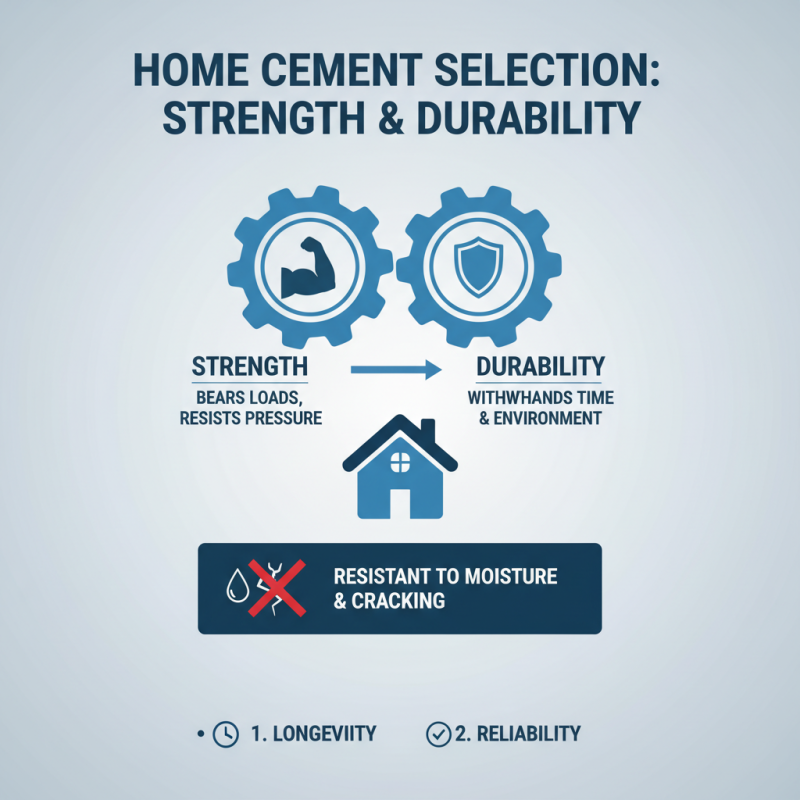
When choosing cement for home use, two vital properties are durability and strength. Durability impacts how well the cement withstands time and environmental stresses. For example, cement exposed to moisture might crack or degrade. Therefore, it's crucial to select a blend that resists water damage and performs well over the years.
Strength is equally important. It determines how much load the cement can bear without breaking. Whether building a driveway or a foundation, the cement must support weight effectively. However, users must remember that high strength often comes with a trade-off. Mixing ratios can complicate the process. Using too much water may weaken the final product.
While experimenting with different types of cement, some might find unexpected results. A mixture that seems perfect in theory may fail in practice. Finding the right balance requires patience and observation. Remember to consult local resources or guides to make informed decisions. Each project can teach something new.
Selecting the Right Cement Based on Project Requirements
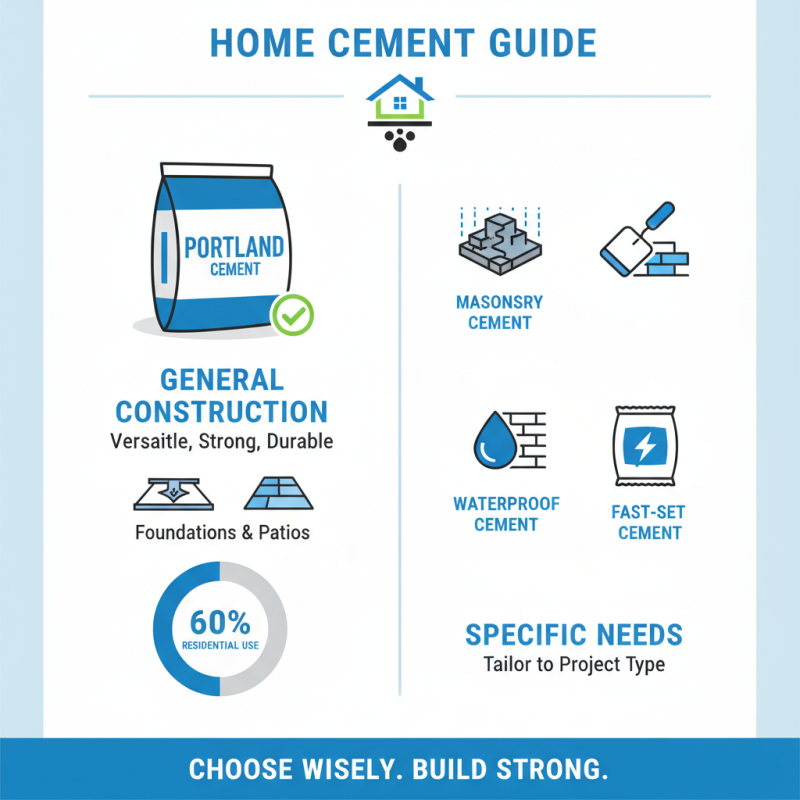
When choosing cement for home projects, understanding specific needs is crucial. Different cement types serve various purposes. For example, Portland cement is ideal for general construction due to its versatility. Reports indicate that over 60% of residential projects utilize this common type. It offers strength and durability, perfect for foundations and patios.
For specialized applications, consider other options. Rapid-setting cement is excellent for quick repairs. It sets within 20 to 40 minutes, which is beneficial in emergency situations. Additionally, mixtures with added polymers can improve flexibility. This flexibility is often necessary for structures exposed to varying temperatures. Yet, it’s important not to overlook potential downsides. Using the wrong type can lead to cracking or render the project ineffective.
When mixing and matching types, pay attention to proportions and curing times. Many DIYers underestimate the importance of these factors. Proper curing can take up to 28 days for many cement types, affecting overall strength. A mismatch in expectations can lead to future repairs or structural failures. Understanding your project’s specific requirements is essential for long-lasting results.