Masonry concrete is essential for robust construction. Recent industry reports show a 15% rise in demand for durable building materials. This increase highlights the need for effective masonry concrete techniques. These techniques ensure longevity and structural integrity, offering solutions for modern construction challenges.
Proper application methods can significantly enhance masonry concrete performance. However, many projects overlook crucial procedures. A study reveals that 30% of masonry failures stem from inadequate installation. This emphasizes the importance of skilled craftsmanship in achieving desired results. Sustainable practices in masonry concrete is another aspect that deserves attention. With growing environmental concerns, builders are seeking eco-friendly alternatives.
Masonry concrete has the potential to transform construction norms. Yet, there is a need for continuous improvement in techniques. The construction industry must embrace innovation while addressing existing shortcomings. Executing the best practices in masonry concrete can lead to safer and more resilient structures.
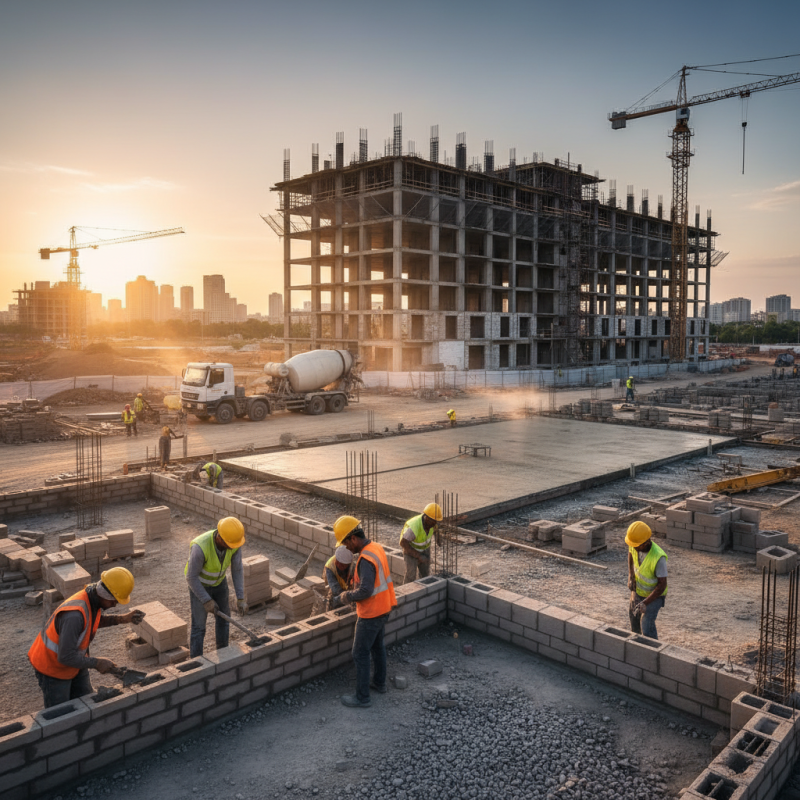
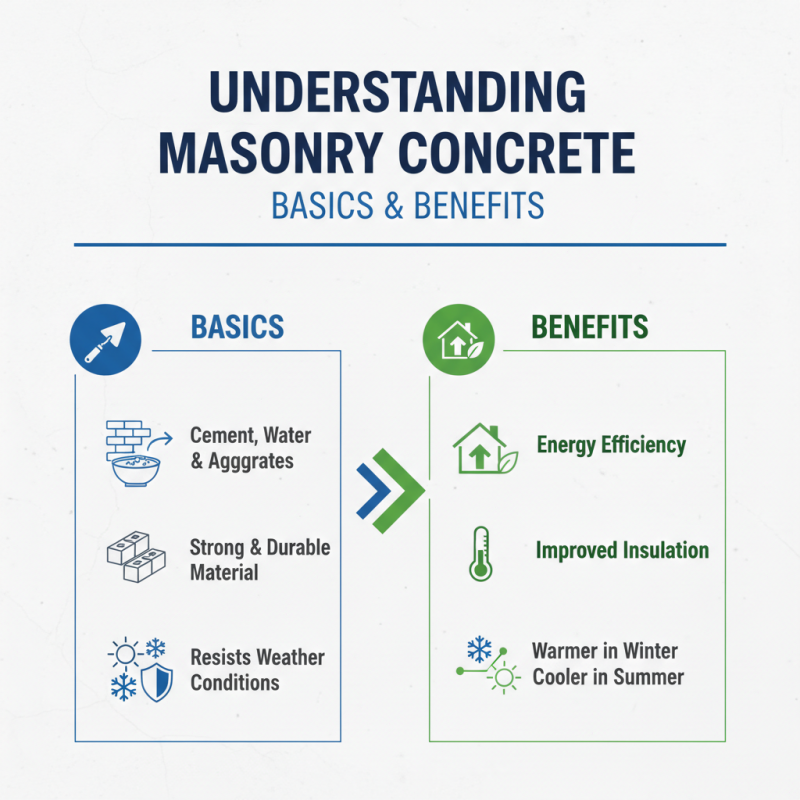
Masonry concrete plays a pivotal role in modern construction. It is a mixture of cement, water, and aggregates, creating a strong and durable material. The basic premise of masonry concrete is its ability to withstand various weather conditions. Builders often appreciate its energy efficiency, providing better insulation. This means homes stay warmer in winter and cooler in summer.
However, not all masonry work is flawless. Poor mixing ratios or inadequate curing can lead to cracks over time. It’s essential to understand that longevity requires attention. Using quality materials goes a long way, but attention to detail is crucial. For instance, ensuring uniform consistency in mix can prevent future issues. It’s easy to overlook these aspects, but they are vital for durability.
Moreover, the benefits extend beyond strength. Masonry concrete offers aesthetic versatility. It can be shaped and colored as per needs. Yet, without careful planning, the desired look might not translate. Every project should consider both functionality and design. Balancing these elements is the key to successful masonry applications.
When it comes to masonry concrete techniques, selecting the right tools and materials is essential. According to industry reports, nearly 50% of construction failures stem from improper material use. Tools like trowels, mixers, and levels play a vital role in achieving quality workmanship. For instance, a well-calibrated level ensures that structures are plumb and true, reducing future risks of uneven settling.
In the realm of materials, concrete mix designs are crucial. The American Concrete Institute recommends specific ratios to optimize strength and durability. Including additives like fly ash and silica fume can enhance concrete's performance. However, it's important to note that not all mixes work for every project. Improper selection may lead to cracking or poor adhesion. Each project demands careful evaluation of local conditions and load requirements.
While tools and materials are fundamental, the expertise of the labor force cannot be overlooked. Training workers on the rigors of using these tools creates better outcomes. Yet, many skilled laborers might skip essential training, leading to inadequate application techniques. Investing in training and quality materials ultimately contributes to long-lasting structures.
Masonry construction is vital for lasting structures. To enhance durability, focus on technique. The right methods can extend lifespan significantly. For example, proper joint filling is essential. According to a study, well-filled joints can increase resistance to water infiltration by up to 70%. When moisture penetrates, it can lead to severe damage.
Moreover, selecting the right mortar mixes is crucial. A report states that a stronger bond adds years to a structure's integrity. The combination of cement, sand, and additives plays a significant role. Using a proper water-cement ratio can make a noticeable difference. Yet, many builders overlook this aspect, which leads to weak structures.
Another technique is the use of reinforcement within masonry walls. Reinforcements improve tensile strength. In fact, reinforced masonry can withstand forces up to 50% more than unreinforced versions. However, some contractors still underutilize reinforcements. Not recognizing this can result in premature failure. Focusing on these techniques will lead to better masonry outcomes.
| Technique | Description | Benefits | Typical Applications |
|---|---|---|---|
| Reinforced Masonry | Incorporating steel reinforcement bars in masonry units to enhance structural integrity. | Increased strength and resistance to lateral forces. | High-rise buildings, bridges, and retaining walls. |
| Damp Proofing | Applying moisture barriers to protect masonry from water damage. | Prevents mold growth and structural decay. | Basements, foundations, and exterior walls. |
| Quality Control of Materials | Using high-quality concrete and aggregate for masonry mixtures. | Ensures consistency and durability of structures. | All masonry construction applications. |
| Proper Curing | Maintaining moisture levels in concrete during the curing process. | Enhances strength and reduces cracking. | All concrete masonry applications. |
| Use of Expansion Joints | Incorporating joints to allow for movement in the masonry. | Prevents cracking due to thermal expansion and contraction. | Large walls and bridges. |
| Correct Mortar Mix | Using the appropriate mortar mix for the specific masonry unit. | Enhances the bond and overall strength of the structure. | All masonry scenarios. |
| Brick Ventilation | Utilizing vents in brick walls to improve airflow. | Reduces moisture accumulation and increases durability. | Commercial buildings and residential homes. |
| Use of Fiber Reinforcement | Adding fibers to the concrete mix to improve tensile strength. | Increases impact resistance and reduces shrinkage cracking. | Floor slabs and precast elements. |
| Thermal Insulation | Incorporating insulation materials within masonry walls. | Enhances energy efficiency and minimizes thermal bridging. | Residential and commercial insulation applications. |
| Sustainable Practices | Using recycled materials and environmentally friendly practices. | Reduces environmental impact and promotes sustainability. | Green building projects and eco-friendly designs. |
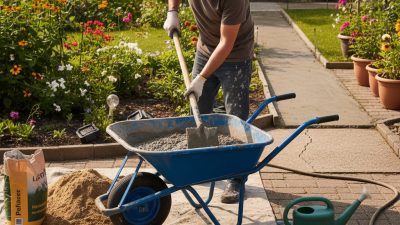
Mixing and pouring masonry concrete require careful attention to detail. Start by selecting the right materials. Use high-quality cement and aggregates. They impact the final strength significantly. Ensure the ratio of sand and gravel is balanced. A common mistake is using too much water, which weakens the mix. Aim for a consistency that is workable but not too wet.
When pouring, timing is essential. Ensure the formwork is stable and clean. Pouring too fast can lead to air pockets. These weak spots compromise durability. Use a vibrator for consolidation. This helps to remove trapped air. Another detail often overlooked is curing. Allow concrete to cure properly to prevent cracking. Water curing is effective; keep the surface moist for several days. Reflect on these steps. Even minor oversights can lead to major issues in the long run.
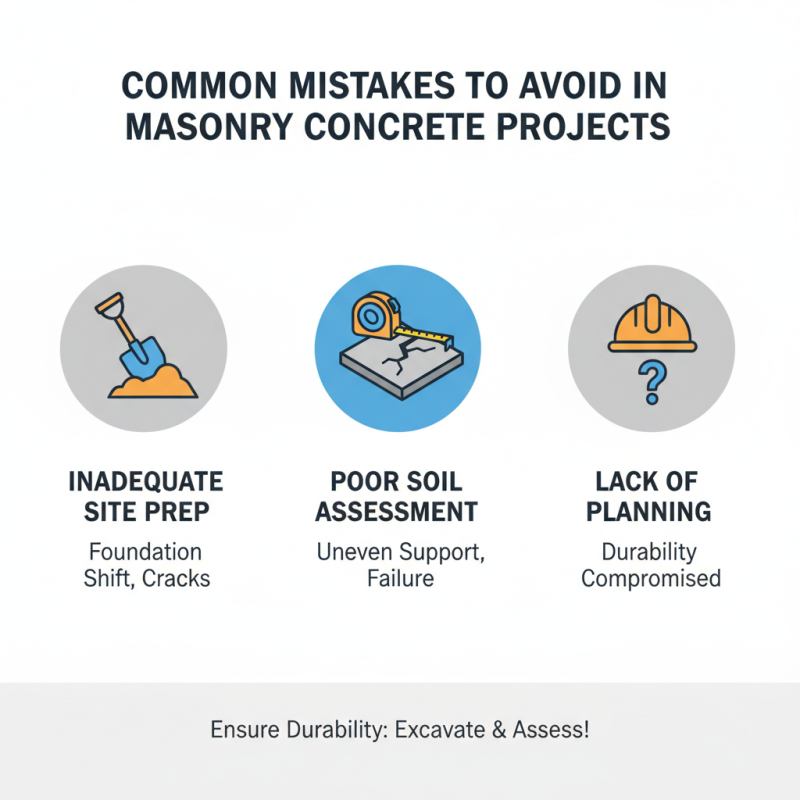
When it comes to masonry concrete projects, avoiding common mistakes is key to achieving durability. One frequent error is not preparing the site adequately. Without proper excavation, the foundation may shift over time. This can lead to cracks and structural issues. Always assess soil conditions thoroughly.
Another mistake is poor mixing techniques. If the concrete is not mixed properly, it can become weak or uneven. A mixture that’s too dry lacks the necessary strength, while one that’s too wet may lead to excess shrinkage. Quality matters significantly. Pay attention to the water-cement ratio for optimal results.
Finally, neglecting proper curing can undermine the entire project. Many overlook this critical phase, thinking it’s unnecessary. In reality, curing allows the concrete to set correctly, ensuring durability. It’s vital to maintain moisture levels for a week or more after pouring. This promotes better strength and longevity. Reflecting on these areas can lead to successful masonry outcomes.