China Top 10 Cement Suppliers for Global Buyers
China remains central to the global cement trade, but choosing a supplier takes more than comparing annual output. The U.S. Geological Survey’s Mineral Commodity Summaries 2025 estimates 2024 world cement production at about 4.1 billion metric tons, with China producing roughly 1.9 billion. These figures show scale, not export availability. A large plant may serve domestic customers first, while port access and product specifications shape what global buyers can actually purchase.
Concrete matters, too. Andrew Minson, Director of Concrete and Sustainable Construction at the Global Cement and Concrete Association, has described it as “the most used man-made material on earth.” For cement people, that scale brings practical questions: where clinker is sourced, how consistent each shipment is, and whether test certificates match the buyer’s project requirements. A neat ranking cannot answer every one of them.
This guide compares ten leading Chinese suppliers through production capability, product range, export experience, and buyer-facing support. It also considers details that can be overlooked in a spreadsheet: bagged or bulk delivery, port distance, lead times, and documentation. Rankings are imperfect; company disclosures and market conditions change. Treat the list as a starting point, then verify current capacity, certifications, and shipment terms directly with each supplier.
China’s Cement Industry: Production, Products, and Export Landscape
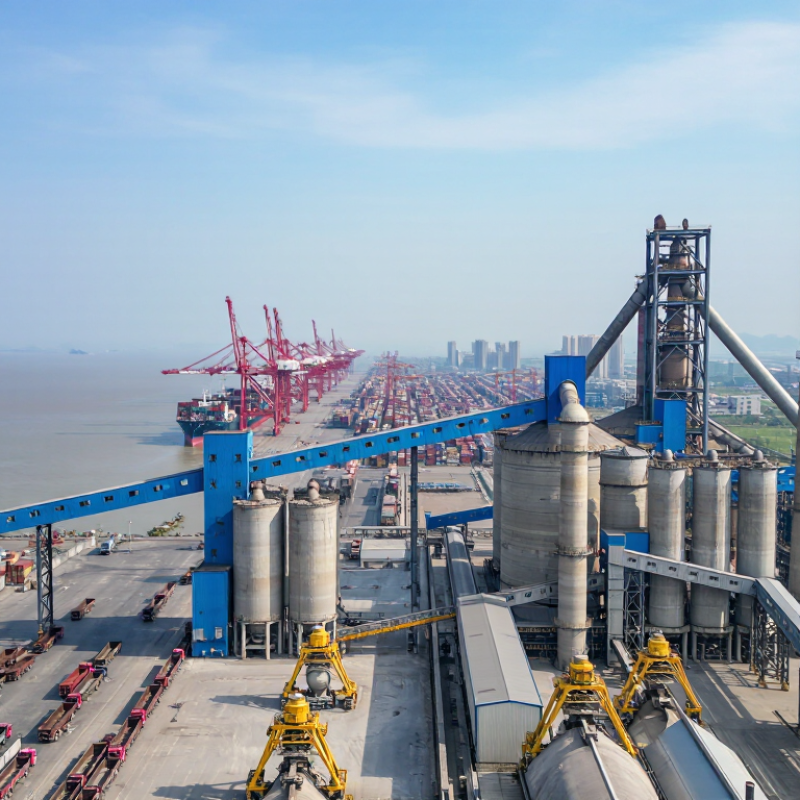
China’s cement industry is built around large-scale production, with output shaped by construction demand, regional capacity, and access to limestone and energy. Integrated plants typically turn limestone into clinker, then grind it with gypsum and other permitted materials to make finished cement. Scale matters. Yet capacity alone does not tell buyers whether a shipment fits a project.
Common exportable products include ordinary Portland cement, blended cement, and clinker. Their composition and performance can differ, so procurement teams should check grade, strength development, setting time, and applicable test reports. Details matter more. A sample bag may look ordinary; the certificate and batch data carry the useful evidence. Buyers should also confirm packaging, moisture protection, loading plans, and port handling before shipment.
China’s export landscape reflects both manufacturing depth and practical constraints. Freight costs, vessel availability, regional production schedules, and destination requirements can shift delivery dates and landed prices. Export volumes and offers may change with domestic demand, so a quotation is only a snapshot. It can be messy. Ask for recent production records, independent inspection options, and clear terms for sampling and claims. No single supplier profile fits every market, and paperwork can still leave unanswered questions. A careful comparison of product data, logistics, and consistency is more useful than choosing by price alone.
China Top 10 Cement Suppliers for Global Buyers
China’s Cement Industry: Production, Products, and Export Landscape
Production context:
China produced approximately 1.83 billion metric tonnes of cement in 2024, according to the National Bureau of Statistics of China. The table below compares ten product lines relevant to supplier evaluation; it does not rank or identify individual companies.
| No. |
Cement Product |
Relevant Chinese Standard |
Typical Application |
Export-Buyer Considerations |
| 1 |
Portland Cement (P·I / P·II) |
GB 175-2023 |
General construction and concrete applications where Portland cement is specified. |
Confirm the required strength class, test method, and destination-market acceptance before ordering. |
| 2 |
Ordinary Portland Cement (P·O) |
GB 175-2023 |
Buildings, reinforced concrete, and common infrastructure works. |
Request a recent mill test certificate and verify setting-time and strength requirements in the purchase specification. |
| 3 |
Portland Slag Cement (P·S) |
GB 175-2023 |
Concrete and construction applications where slag cement is specified. |
Confirm the specified subtype and slag content requirements against the applicable standard and contract. |
| 4 |
Portland Pozzolana Cement (P·P) |
GB 175-2023 |
General construction uses where this blended cement type is accepted by the project specification. |
Check local approval rules and ensure the declared composition matches the buyer’s specification. |
| 5 |
Portland Fly-Ash Cement (P·F) |
GB 175-2023 |
Construction and concrete applications that permit fly-ash blended cement. |
Confirm fly-ash requirements, performance documentation, and the destination country’s conformity rules. |
| 6 |
Composite Portland Cement (P·C) |
GB 175-2023 |
General building and construction applications specified for composite cement. |
Ask for the product composition and test results; requirements can differ between importing markets. |
| 7 |
Low-Heat Portland Cement |
GB/T 200-2017 |
Mass concrete and other projects that specify low-heat cement properties. |
Confirm the project’s heat-of-hydration criteria and the required certification documents. |
| 8 |
White Portland Cement |
GB/T 2015-2017 |
Architectural finishes, decorative concrete, terrazzo, and other appearance-sensitive uses. |
Specify whiteness, packaging protection, and handling requirements in the contract. |
| 9 |
Road Portland Cement |
GB/T 13693-2017 |
Road and pavement construction where road cement is specified. |
Match the product to the pavement design and verify the required mechanical and durability tests. |
| 10 |
Oil-Well Cement |
GB/T 10238-2015 |
Well cementing operations under specified downhole conditions. |
Specify the required class and well conditions; confirm compliance with the buyer’s technical standard. |
Export note:
Cement can be shipped in bags or in bulk, subject to supplier capability, packaging specifications, port facilities, and the sales contract. Product standards and import requirements vary by destination; buyers should verify current regulations, certificates, labeling, and customs classification before shipment.
References:
National Bureau of Statistics of China, 2024 cement production data; Chinese national standards listed by product. Standard editions and destination-market requirements should be checked at the time of procurement.
How the Top 10 Cement Suppliers Are Selected and Compared
Supplier selection begins with evidence, not headline production figures.
We compare stated capacity with export availability, because a large kiln does not guarantee a shipment is ready. Product range matters too: buyers may need Portland cement, blended cement, or clinker, each with distinct performance requirements. Technical data sheets and recent test results help confirm the fit.
Comparisons also consider quality consistency, export experience, and delivery reliability. We review test reports, production records, packing details, and references where available. A 50-kilogram bag must arrive dry and intact; bulk orders need suitable loading plans and clear shipment timelines. Port access, container availability, and response times can affect the landed cost as much as the quoted price. Independent testing can add confidence, though it takes time.
Scores should reflect the buyer’s priorities, not a universal formula. A contractor on a tight schedule may value dependable lead times; a distributor may focus more on grade range and packing options. No scorecard is perfect. Company data can be incomplete or outdated, so we note uncertainty rather than treating every claim as verified. We compare suppliers using consistent criteria and give greater weight to evidence that buyers can check.
Profiles of China’s Top 10 Cement Suppliers for Global Buyers
China’s ten supplier profiles reflect different strengths rather than a verified ranking. An integrated coastal producer may offer clinker and finished cement, with port access that can simplify loading. An inland manufacturer may suit buyers prioritizing domestic rail or road connections. An export-focused supplier often has experience preparing documents and coordinating container or bulk shipments. Check its recent export references. A blended-cement specialist can provide products designed for particular strength or setting requirements. Ask for current test data. A large multi-site group may offer broader capacity, though plant-level consistency still deserves review.
A regional producer can be practical for smaller orders and nearby destinations. A clinker-focused supplier may work for buyers with local grinding capacity. A producer with bulk-loading facilities may reduce packaging needs, but requires suitable receiving equipment. A bagged-cement supplier can serve projects without bulk storage; inspect packaging and moisture protection. A technical-service-oriented supplier may help clarify product specifications and sampling procedures. Details matter. For every profile, request recent independent test results, a dated production specification, and a sample shipment plan. Confirm the cement type, delivery terms, and expected lead time in writing. Product names alone are not enough. Check the documents against the intended application.
Cement Grades, Quality Standards, and Export Capabilities
China’s cement export choices should be assessed by grade, test results, and delivery controls—not price alone. The USGS Mineral Commodity Summaries 2024 estimates global cement production at about 4.1 billion tonnes in 2023, with China producing roughly 2.0 billion tonnes. That scale supports broad supply, but it does not guarantee every batch suits a buyer’s project.
Strength classes such as 32.5, 42.5, and 52.5 under EN 197-1 indicate different performance ranges; ASTM C150/C150M uses cement types with separate requirements. These systems are not direct equivalents. Ask for batch-specific results covering compressive strength, setting time, fineness, and chemical composition. Small differences matter. Confirm which standard the contract names, and require independent testing where project risk justifies it.
Export capability is practical, not just a port claim. Check whether the supplier can provide bulk or bagged cement, moisture-resistant packaging, traceable batch records, and consistent loading schedules. Request recent inspection and laboratory reports, then compare them with the shipment documents. One caveat: samples may not represent every shipment. A clear sampling plan and agreed acceptance limits can reduce that uncertainty.
China Top 10 Cement Suppliers for Global Buyers — Cement Grades, Quality Standards, and Export Capabilities
Reference comparison of common cement strength classes used in international trade
The chart shows the minimum 28-day compressive strength specified for EN 197-1 strength classes. These standard thresholds help buyers compare product specifications; they are not supplier ratings. Confirm each shipment’s applicable standard, test certificate, and export documentation with the supplier.
Source: EN 197-1:2011, Table 3. Values shown are minimum 28-day compressive strength in MPa.
How to Evaluate Suppliers, Logistics, and Import Requirements
When comparing cement suppliers, look beyond the quoted price. Ask for recent test reports showing strength, setting time, and chemical composition, then check whether the tested product matches the grade you plan to buy. A supplier’s production capacity matters, but so does consistency between shipments. Request references from buyers handling similar volumes and destinations. A tidy certificate is useful; it is not proof of reliable delivery.
Logistics can change the landed cost quickly. Confirm whether cement will travel in bulk or moisture-resistant bags, and ask how loading, storage, and port delays are managed. Even a small leak can damage bagged cement. Check the quotation’s shipping terms, insurance, estimated transit time, and responsibility for demurrage. I would not rely on a low freight estimate without checking its assumptions; port charges are easy to overlook.
Before placing an order, confirm the destination country’s product standards, labeling rules, customs documents, and any required conformity checks with a qualified import broker or relevant authority. Requirements can differ by market and may change. Compare the draft invoice, packing list, certificate of origin, and test documents before shipment. One detail still deserves a second look: whether the supplier’s stated delivery date includes clearance time.