China Best Tinted Plastic Film Suppliers for Global Buyers

Global buyers evaluating China’s tinted film suppliers need more than a low quotation. They need consistent color, dependable roll quality, and clear technical records. PlasticsEurope’s Plastics—The Fast Facts 2024 reports 413.8 million tonnes of global plastics production in 2023. This figure covers all plastics, not tinted film alone. Still, it shows the scale of the materials industry behind film manufacturing. Grand View Research’s plastic films market analysis also tracks demand across packaging, construction, and other applications, where performance needs differ.

Small details matter. A sample roll may look even under factory lighting, then show color variation beside a window. Buyers should compare visible light transmission, haze, thickness tolerance, UV performance, adhesive behavior, and color consistency. Ask suppliers for current technical data sheets, batch identification, and test results relevant to the intended use. Independent testing can help verify claims. It is not a substitute for checking the finished product in real conditions.

China offers a broad base of film converters and manufacturers, but supplier capability varies. Some specialize in architectural or automotive films; others focus on decorative and packaging applications. That distinction matters. The best fit depends on end use, order volume, customization, and export experience. No supplier is perfect. Even a polished specification sheet can leave practical questions unanswered. This guide introduces key considerations for identifying China’s best Tinted Plastic Film suppliers and building a more evidence-based shortlist.
China Best Tinted Plastic Film Suppliers for Global Buyers

Understanding Tinted Plastic Film and Its Main Types

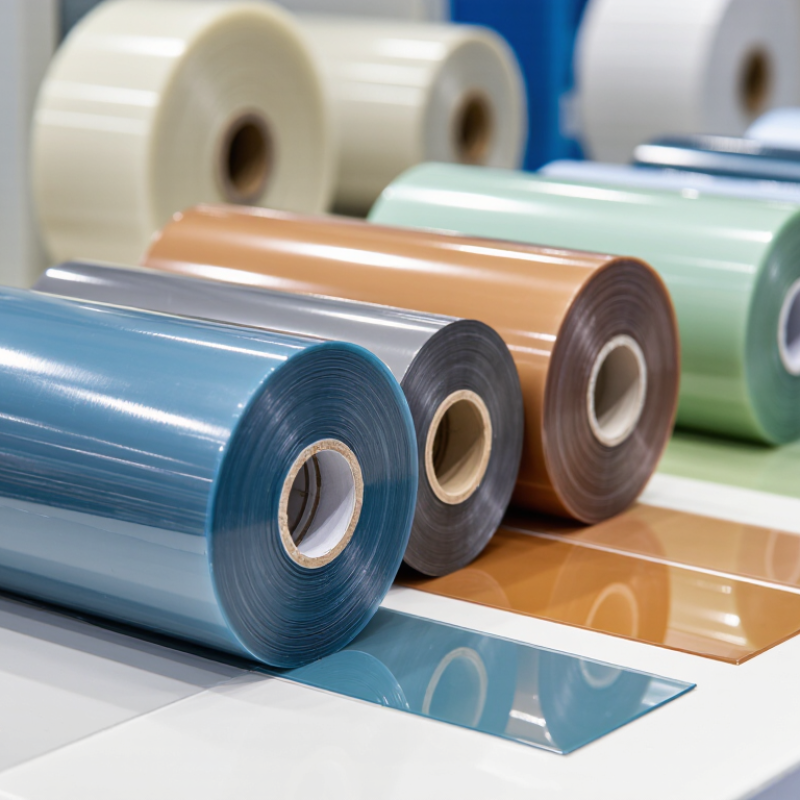
Tinted plastic film is a polymer sheet colored to manage light, privacy, appearance, or product visibility. Its performance depends on the resin, colorant, thickness, and processing method. PET films often provide clarity and dimensional stability, while PVC can offer flexibility for formed or decorative applications. Polyethylene films are common in packaging, though their surface and optical properties differ.

Common types include transparent color-tinted film, translucent film, and opaque pigmented film. Transparent film preserves a view while adding color; translucent film softens light and obscures detail. Opaque film blocks visual transmission more fully. Another useful distinction is how color is introduced: dyed films may give a clear appearance, while pigment-colored films can provide stronger hiding power. Some films also include UV-absorbing layers, but actual protection should be confirmed with test data.

Look closely at the intended use. A dark sample may appear lighter on a bright window, and a small color difference can become obvious across a large installation. Check thickness, visible-light transmission, haze, and color consistency with the supplier. Request a sample. Test it in real lighting, not just on a desk. Even then, a sample may not perfectly represent a full production run, so confirm acceptable variation before ordering.

How Tinted Plastic Film Is Manufactured and Tested

China Best Tinted Plastic Film Suppliers for Global Buyers

How Tinted Plastic Film Is Manufactured and Tested

Tinted plastic film typically begins with resin pellets and measured color concentrates. Operators blend them before extrusion, then melt and push the material through a flat die. The hot web passes through cooling rolls, where thickness and surface finish take shape. Small variations matter. A slight change in pigment dispersion can create visible streaks or uneven shading. Process records should track resin batches, melt temperature, line speed, and roll pressure. These details help buyers investigate defects instead of relying on appearance alone.

Testing turns those records into measurable evidence. ASTM D1003 is commonly used to assess haze and luminous transmittance; color difference can be checked with instrumental color measurement, while ASTM D882 covers tensile properties of thin plastic sheeting. Samples should be taken across the roll, not only from one convenient edge. PlasticsEurope’s Plastics – the Fast Facts 2024 reports global plastics production of 413.8 million tonnes in 2023. That figure describes all plastics, not tinted film, so it cannot predict a film’s quality. Still, it shows why clear specifications and repeatable tests matter across a large, varied supply chain. Test results need context, too: a passing sample may miss roll-to-roll variation, and accelerated weathering does not perfectly reproduce outdoor service. Good suppliers should explain both the measured limits and what the tests cannot prove.

Key Criteria for Evaluating Chinese Tinted Film Suppliers

When evaluating Chinese tinted film suppliers, compare measurable specifications, not color samples alone. Request the film’s polymer type, nominal thickness, tolerance, width range, and intended application. Ask how tint is controlled across production runs. A sample may look even under showroom lighting but reveal streaks beside a window. Small differences matter.

Check test records for light transmission, haze, color consistency, and weathering performance. Confirm which methods and sample conditions were used; results are difficult to compare otherwise. Ask for a recent inspection report, batch identification, and details of how defects are handled. Also assess production capacity, lead times, protective packaging, and response speed. Clear answers are useful. Vague assurances are not. A supplier’s documents help, but they cannot replace testing film under your own lighting and processing conditions.

Tips: Send a written specification and evaluate samples against it. Photograph samples under consistent light, and record measurements. Request a small trial roll before a large order. If requirements change, update the specification; informal agreements can create avoidable gaps. No checklist removes every risk, and that is worth remembering.

China Best Tinted Plastic Film Suppliers for Global Buyers - Key Criteria for Evaluating Chinese Tinted Film Suppliers

Evaluation Criterion Weight What Buyers Should Assess Evidence or Practical Acceptance Check
Product specification and consistency 18% Confirm polymer type, tint or color, thickness, width, roll length, surface finish, and any adhesive or coating requirements. Request a controlled product specification and sample rolls. Compare measured thickness and dimensions with the agreed tolerances across multiple samples.
Optical performance 14% For transparent or translucent film, assess visible light transmission, haze, color appearance, and batch-to-batch uniformity against the intended use. Request test results for the specified film construction. ASTM D1003 is commonly used to measure haze and luminous transmittance of transparent plastics; agree on the test method and limits before ordering.
Weathering and color stability 12% Evaluate resistance to UV exposure, heat, moisture, and color change where the film will be used outdoors or near windows. Ask for test conditions and results, not just a “UV-resistant” claim. ISO 4892 provides methods for laboratory exposure of plastics to light sources; the required exposure and acceptance limits depend on the application.
Mechanical and surface properties 10% Check tensile strength, elongation, tear or puncture resistance, scratch resistance, and handling performance as relevant to the film type. Compare laboratory reports with the buyer’s product specification. Test methods and limits should match the polymer, film thickness, and end-use requirements.
Quality management and process control 12% Review incoming-material controls, production checks, traceability, calibration, nonconformance handling, and change-control practices. Request a current quality-system certificate where applicable, sample inspection records, lot identification details, and the supplier’s corrective-action process. Verify certificates with the issuing body when needed.
Production capacity and equipment suitability 8% Check whether the available extrusion, coating, printing, slitting, and inspection equipment can produce the required film construction and dimensions. Ask for a process flow, equipment capability details, typical production batch size, and confirmation that the requested specification can be maintained at the intended order volume.
Customization and sampling 8% Assess color matching, thickness options, roll format, surface treatment, packaging, and support for pre-production approval. Agree on a signed or otherwise controlled reference sample, color tolerance method, sample lead time, and approval procedure before mass production.
Regulatory and material documentation 8% Identify the destination-market requirements that apply to the film, its additives, coatings, inks, or adhesive components. Request a material declaration and relevant test reports. RoHS and REACH obligations depend on product composition, intended market, and applicable regulations; request documentation specific to the supplied product.
Delivery and export readiness 5% Review production scheduling, packaging protection, shipping documents, export experience, and communication during order fulfillment. Confirm the quoted production and transit schedule, Incoterms® rule, packing details, country-of-origin documentation, and procedures for reporting delays or transit damage.
Commercial clarity and after-sales support 5% Compare quotation completeness, payment terms, warranty scope, claim handling, and the process for resolving specification disputes. Use a written quotation and purchase specification that state tolerances, inspection criteria, remedies for nonconforming goods, and the responsible contact for technical or quality issues.
Total evaluation weight 100% Score each criterion using the same scale, such as 1 (poor) to 5 (excellent), and retain supporting evidence for each score.

Note: The weighting is a buyer-side evaluation framework, not a ranking of individual suppliers. Test methods and acceptance limits should be selected for the film’s polymer, construction, destination market, and end use.

Comparing Supplier Capabilities, Certifications, and Customization

China Best Tinted Plastic Film Suppliers for Global Buyers

Comparing Supplier Capabilities, Certifications, and Customization

A reliable supplier should explain how it controls film thickness, tint consistency, and roll winding—not just show a color sample. Ask for measured tolerances, light-transmission data, and test results for UV exposure if the film will face sunlight. Small details matter. A beautiful sample can still hide uneven color across a production roll. Compare production capacity, minimum order quantities, and lead times using the same specifications.

Certifications deserve a closer look. Check certificate validity, issuing body, and scope; a quality-management certificate does not prove every film meets your application’s requirements. Request material declarations and independent test reports, especially when the film will contact food or sensitive products. The OECD’s Global Plastics Outlook (2022) estimated that just 9% of plastic waste was ultimately recycled in 2019. That makes material composition and end-of-life information useful questions during supplier reviews. Customization should be documented: resin type, color reference, thickness, width, printing compatibility, and acceptable variation. Not always easy. Buyers should also compare trial samples against written specifications, because color can shift between batches, and suppliers may not flag that risk unless asked.

Managing Samples, Orders, and Export Logistics for Global Buyers

For tinted plastic film, sample approval should settle measurable details before a bulk order begins. Ask for a sample roll with the agreed shade, thickness, width, core diameter, and winding direction. Check color under consistent lighting, then record the result with photos and a signed specification sheet. A sample that looks right on a desk may differ under warehouse lighting. Small details matter.

For repeat orders, use one approved reference sample and define acceptable tolerances in writing. Confirm roll quantities, labels, pallet dimensions, and packing protection before production. UNCTAD’s Review of Maritime Transport 2024 reports that shipping carries over 80% of global trade by volume, so freight planning is not a minor afterthought. Request estimated production and sailing dates, and leave room for port delays. They happen.

Export terms shape who arranges freight, insurance, and customs tasks. Confirm the agreed Incoterms rule, destination port, and required documents with your freight forwarder before dispatch. Share the commercial invoice and packing list early, and verify consignee details letter by letter. Even a tidy spreadsheet cannot predict every delay. I would still build a buffer into delivery promises; it can feel overly cautious, but missed arrival dates cost trust.

Tinted Plastic Film Procurement: Planning Time Ranges

Illustrative planning ranges for key sample, order, and export stages (days).

These ranges are planning estimates, not market averages. Actual lead times depend on sample availability, production specifications, destination, customs clearance, and freight schedules. Sample handling may take place alongside order preparation.

The owner of this website has made a commitment to accessibility and inclusion, please report any problems that you encounter using the contact form on this website. This site uses the WP ADA Compliance Check plugin to enhance accessibility.