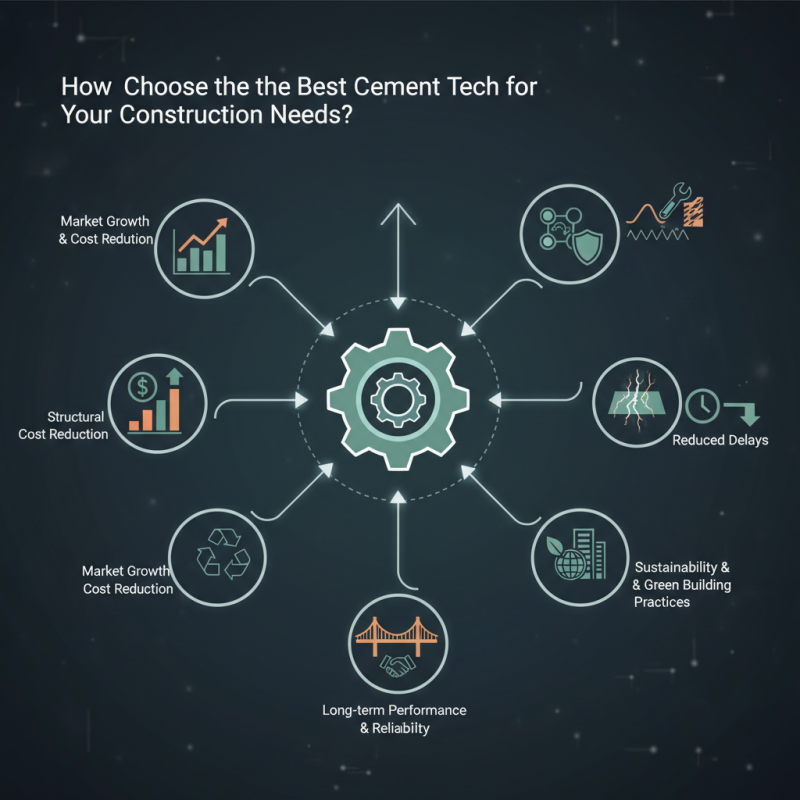
Choosing the right cement tech is crucial for successful construction projects. The global cement market is expected to reach $600 billion by 2025, highlighting the industry's growth. Effective cement tech can enhance durability and reduce costs. Specific technologies, such as self-healing concrete, are emerging, offering innovative solutions for modern construction challenges.
However, the selection process can be overwhelming. Various cement types serve different purposes, and not all are created equal. Research from the World Cement Association indicates that using the right mix can improve structural integrity. Many projects suffer from inadequate decisions in cement tech, leading to costly repairs and delays.
Moreover, sustainability is a growing concern. Advanced cement tech minimizes environmental impact and supports green building practices. Understanding the specific needs of a project is vital. The decisions made today will shape the future of construction. Choosing wisely is not just about cost; it also involves long-term performance and reliability.
When choosing the right cement technology, it's essential to understand the available options. Cement technology varies widely, influencing durability, strength, and overall performance. Traditional Portland cement remains popular, but alternatives like fly ash and slag cement offer unique benefits.
Fly ash, a byproduct of coal combustion, can enhance concrete's long-term strength. It reduces permeability and improves resistance to chemicals. However, its availability can be inconsistent, leading to potential supply issues. Slag cement, derived from iron production, also boosts durability but may require careful mix adjustments.
New developments like geopolymeric and green cement technologies are gaining traction. These innovative options can significantly lower carbon footprints. Yet, their performance in extreme conditions is still under study. While these alternative cements show promise, contractors must weigh the pros and cons, ensuring they meet specific project requirements.
| Cement Type | Key Features | Typical Applications | Strength (MPa) |
|---|---|---|---|
| Ordinary Portland Cement (OPC) | Standard cement for general use | Buildings, pavements, bridges | 20-25 |
| Low Heat Cement | Reduced heat of hydration | Mass concrete structures | 30 |
| Sulphate Resisting Cement | Resistant to sulphate attacks | Coastal structures, sewage treatment | 25-30 |
| Rapid Hardening Cement | Fast setting and hardening | Roads, repairs | 30-35 |
| White Cement | Aesthetic qualities, bright color | Decorative works, precast products | 20-25 |
When evaluating cement types for construction, performance and durability are critical factors. Different cement materials exhibit varying strengths and weaknesses. For example, some cements are better at resisting harsh weather conditions. Others might excel in specific applications, like masonry work. It's essential to analyze the environment where the cement will be used. Will it face moisture or heavy loads? Understanding these aspects can lead to better choices.
Testing performance is crucial. Some cements may not provide the required strength during adverse conditions. Recognizing standards, such as compressive strength, helps gauge suitability. Durability is another vital attribute. Cement should resist cracking and environmental damage over time. Even small flaws in formulation can lead to significant issues later. This is where careful sourcing and quality control come into play.
Additionally, auditors and builders should not overlook local factors. Some regions require specific types of cement based on prevalent weather. Ignoring this could result in structural failures. It’s a reminder that not all options will suit every project. A thoughtful evaluation of performance and durability can lead to informed decisions in cement selection.
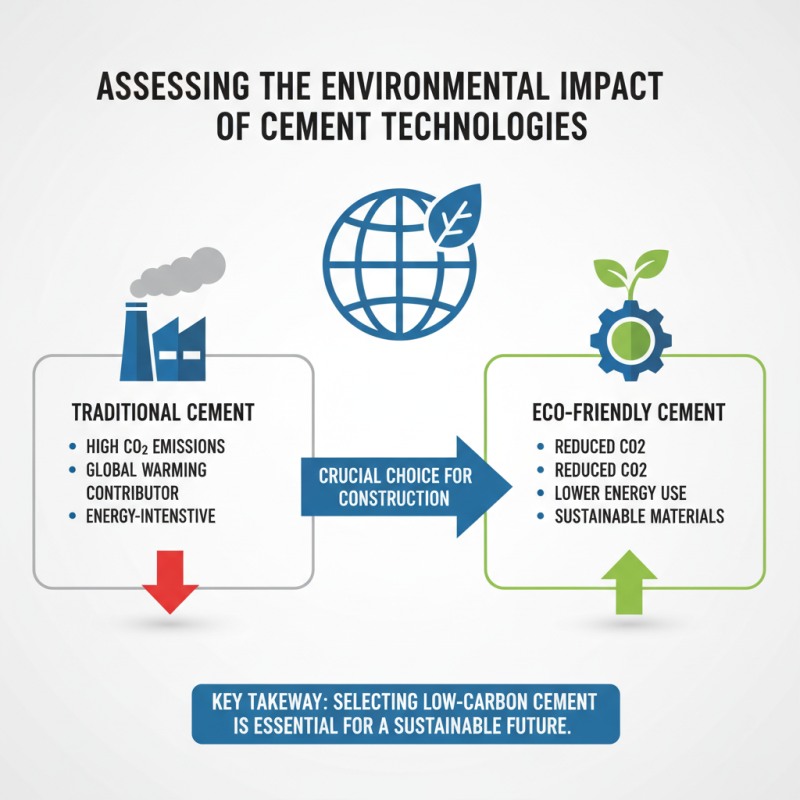
Selecting the right cement technology is crucial for any construction project. An often-overlooked aspect is the environmental impact of different cement types. Cement production emits significant CO2, contributing to global warming. This makes it essential to choose eco-friendly options.
Consider technologies that use alternative materials. For instance, fly ash or slag can be used in cement mixes. These materials reduce carbon emissions and utilize industrial byproducts. By opting for such mixtures, projects can decrease their environmental footprint significantly.
Tips to assess environmental impact: Check the sources of raw materials. Evaluate the emissions from production processes. Look for certifications that indicate eco-friendliness. Are there local suppliers? This minimizes transportation emissions too. Always aim for materials that support sustainability. A small decision in material selection can lead to larger environmental benefits. Embrace a mindset of reflection. It’s not just about strength; consider the lasting consequences of your choices.
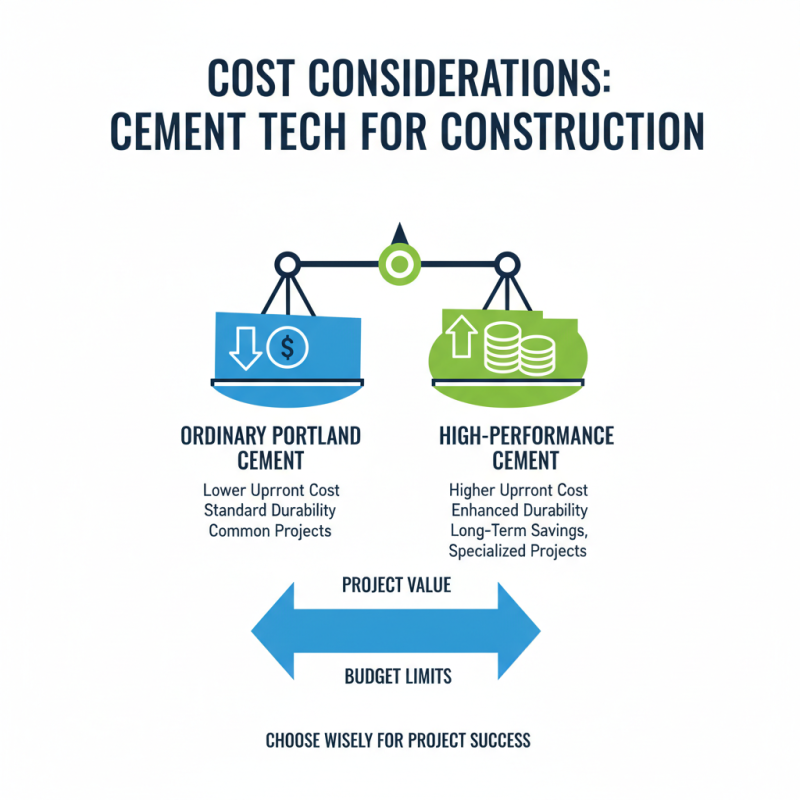
Cost considerations play a significant role in choosing the right cement technology for construction projects. Various cement options are available, each with unique price points. For instance, ordinary Portland cement is generally more affordable. However, specific projects may benefit from high-performance alternatives. These advanced cements may have a higher upfront cost but offer long-term savings through increased durability.
Estimating long-term costs is crucial. High-quality cements often reduce maintenance and repair expenses. It's important to factor in the lifecycle of the materials. Some cements may offer lower initial costs but lead to higher maintenance needs over time. Understanding the balance between initial investment and long-term performance can be tricky.
Moreover, market fluctuations can impact cement prices. Supply chain issues sometimes lead to unexpected increases in costs. This uncertainty can create challenges for project budgeting. Collaborating with experts can provide insight into making informed decisions. Researching regional pricing trends also helps construction teams identify the most cost-effective options. Balancing immediate budget constraints with future requirements is essential in this process.
When selecting cement for your construction project, understanding specific requirements is crucial. Not all cements are created equal. Some are better suited for high-strength demands, while others excel in moisture resistance. Assess the environmental conditions your project will face. This can include temperature changes, humidity levels, and soil conditions.
Consider the structure's intended use. For example, if you're constructing a foundation in a flood-prone area, water-resistant cement is essential. Similarly, if the project involves heavy loads, high-strength options may be necessary. Reflect on your project timeline, as setting times can greatly vary among cement types. Ensure that your choice aligns with both the material's capabilities and the construction schedule.
Pay attention to local regulations and standards. They often dictate the types of materials that can be used, impacting your choices. Consulting with professionals in the field can provide valuable insights. Their expertise can help bridge gaps in knowledge you may have about specific cement types. Each project is unique, and sometimes finding the right balance involves trial and error. Keeping an open mind can lead to better outcomes.