How to Choose the Best Commercial Display Fridge in 2026?
Choosing a Commercial Display Fridge in 2026 is about more than appearance. Energy use, temperature stability, service access, and visibility all affect daily operations. The International Energy Agency’s 2018 report, The Future of Cooling, projects that global energy demand for space cooling could more than triple by 2050. This figure concerns space cooling, not retail display cabinets, but it highlights the broader importance of efficient cooling. Small details matter.
A bright, evenly lit cabinet can make chilled products easier to see. A clear temperature display can also help staff spot problems during routine checks. Yet an energy rating alone cannot predict performance in every store. Ambient heat, frequent door openings, loading habits, and installation clearance all make a difference. A fridge beside a hot kitchen may behave differently from the same model in a cool aisle. And the cheapest unit may not be the cheapest to run.
Compare verified energy data, usable capacity, temperature recovery, warranty coverage, and local service availability. Ask suppliers for test conditions and supporting documentation, not only headline claims. Where available, check independent certification records. Consider how shelves, lighting, and door design fit your actual products and customer flow. These checks will not remove every uncertainty; store conditions and demand can change. Still, a careful comparison can help balance product presentation, food quality, and operating costs. A cabinet can look right and still underperform.
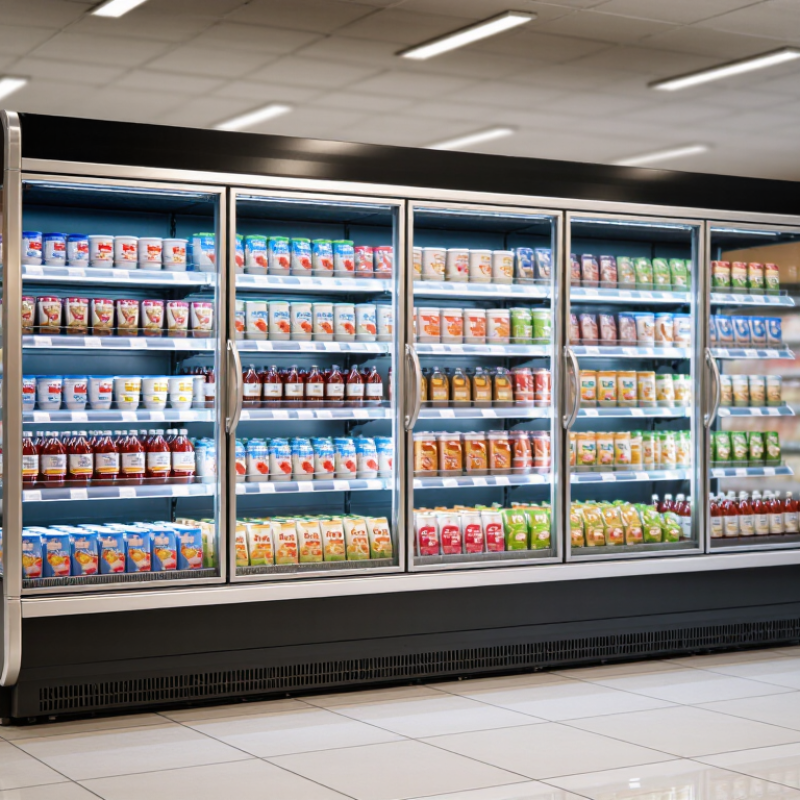
Define the Use: FDA Food Code Limits Cold-Held TCS Foods to 41°F
Choosing a commercial display fridge starts with the food, not the glass doors. If you sell cut melon, prepared salads, dairy, or other TCS foods, cold holding matters. The FDA Food Code generally sets 41°F (5°C) as the maximum cold-holding temperature for these foods. It is a model code, and local requirements may differ. Check with your health department before buying.
A cabinet’s air display is not the same as the food’s temperature. Warm deliveries, frequent door openings, and crowded shelves can push product temperatures upward. Look for even airflow, clear temperature controls, and space for a probe thermometer. A unit that looks impressive but cannot hold steady during a busy lunch rush is the wrong fit. I would also consider cleaning access and service support; those details are easy to overlook.
Tips: Check actual product temperatures at several shelf locations, not just the cabinet display. Keep a simple log, and verify thermometers regularly. Leave room between trays for airflow. Small habits help reveal problems early.
Size Capacity and Access: Plan Stocking, Shelves, and Customer Traffic
Choose capacity by peak-hour demand, not by the quiet morning shelf. Estimate the number of facings each product needs, then allow room for back-stock and clear sightlines. A fridge packed to the glass may hold more, but customers struggle to find items and staff block the aisle while replenishing. Measure the route with the door open and a restocking cart in place. The U.S. Access Board’s 2010 ADA Standards generally require a 36-inch minimum clear width for accessible routes; treat that as a baseline, not a target for every busy aisle. Measure twice.
Shelf depth and spacing matter as much as total volume. Put fast-moving items between waist and eye level, and reserve lower shelves for heavier stock. Check that door swing, handles, and neighboring fixtures do not pinch the customer path. A plan can look tidy on paper and still fail when two shoppers meet beside an open door. The ENERGY STAR commercial refrigeration guidance reports that certified units are about 20% more energy-efficient than standard models, but efficiency alone does not determine fit. Compare usable shelf area, loading access, and the space needed for safe circulation before selecting capacity. A little extra space may feel wasteful; sometimes it prevents daily friction.
How to Choose the Best Commercial Display Fridge in 2026?
Size, Capacity and Access: Plan Stocking, Shelves, and Customer Traffic
These are approximate planning examples: a compact cabinet around 700 mm wide may hold about 500 L, a standard cabinet around 1,200 mm wide about 1,000 L, and a wide cabinet around 1,800 mm wide about 1,500 L. Actual capacity varies with cabinet depth and interior layout. Before choosing, check usable shelf space, allow room for door opening and restocking, and keep customer routes clear in line with local accessibility and building requirements.
Verify Commercial Safety: NSF/ANSI 7 Sets Refrigeration Equipment Requirements
When choosing a commercial display fridge in 2026, check whether its exact model is certified to NSF/ANSI 7. This standard covers sanitation and performance requirements for commercial refrigerators and freezers. A familiar-looking badge is not enough; verify the model in the certifier’s current directory. Small detail, big difference.
Look closely at the interior surfaces, door seals, and shelf supports. Smooth, durable surfaces are easier to clean, while damaged gaskets can let cold air escape. Certification does not mean every unit will hold temperature in every shop. Ask for the rated operating conditions, then compare them with your room’s heat, airflow, and expected door openings. A fridge beside a sunny window may face a tougher job.
Check that the product listing matches how you plan to use the unit, including its display configuration and food-storage needs. Ask the supplier for documentation, service guidance, and the certification scope. Local requirements may also apply, so confirm them with the relevant authority. I would not treat a standard mark as a substitute for routine temperature checks; even a well-built fridge can drift when overloaded or poorly maintained.
Compare Energy Use: EPA ENERGY STAR Models Average 20% Less Energy
How to Choose the Best Commercial Display Fridge in 2026?
Energy use deserves a close look when choosing a display fridge. The U.S. EPA’s ENERGY STAR guidance reports that certified commercial refrigerators use about 20% less energy than standard models. That difference can matter in a shop where the fridge runs all day. For example, if a comparable unit uses 10,000 kWh annually, a 20% reduction would mean roughly 2,000 kWh saved. This is an illustration, not a guaranteed result; actual use depends on the model, room temperature, door openings, and maintenance. Check the product’s energy label and compare annual consumption, not just purchase price. A bright cabinet with frequent door openings may use more than expected.
Tips: Measure the opening and sales floor first. Compare like-sized units, then check annual kWh and interior lighting. Keep condenser coils clear, and avoid placing the fridge beside ovens or sunny windows. Small details add up.
Still, energy figures alone do not decide the purchase. Shelf layout, glass visibility, and service access matter too—and I would not assume the lowest number always means the best fit. Use EPA ENERGY STAR commercial refrigerator guidance as a benchmark, then confirm operating costs with your local electricity rate and expected daily use.
Assess Total Cost: Compare kWh per Year, Warranty, and Service Support
A display fridge’s purchase price tells only part of the story. Compare verified annual energy use in kWh, using similar capacity, temperature settings, and test conditions. ENERGY STAR reports that certified commercial refrigerators and freezers are, on average, 20% more energy-efficient than standard models. The U.S. Energy Information Administration reported an average commercial electricity price of 12.74 cents per kWh in 2023. At that rate, a unit using 5,000 kWh annually costs about $637 in electricity, before demand charges. Local rates differ. Small differences matter.
Warranty length is useful, but coverage details matter more. Check whether parts, labor, refrigerant-related work, and travel are included, and note exclusions in writing. Ask how quickly local technicians usually respond and whether common replacement parts are stocked nearby. A fridge waiting days for service can put chilled stock and daily sales at risk. Paper coverage is not uptime. Compare the expected service process, not just the number of warranty years. One limitation: annual energy estimates rarely match every shop’s door-opening pattern, so treat them as a comparison tool, not a promise.
How to Choose the Best Commercial Display Fridge in 2026? — Assess Total Cost: Compare kWh per Year, Warranty, and Service Support
Compare the fridge types below using energy use, estimated electricity cost, warranty terms, and service support. These are indicative planning ranges, not specifications for a particular product.
| Display Fridge Type | Indicative Annual Energy Use | Estimated Annual Electricity Cost | Warranty Terms to Check | Service Support to Assess | Total-Cost Consideration |
| Undercounter display fridge | 1,000–1,800 kWh/year | $150–$270/year | Confirm the parts-and-labor period, compressor coverage, and whether labor or refrigerant is excluded. | Check local technician availability, response times, and access to commonly needed parts. | Lower capacity can mean lower energy use, but frequent door openings and poor ventilation can increase consumption. |
| Single-door upright glass-door fridge | 1,500–2,600 kWh/year | $225–$390/year | Get the warranty duration and coverage in writing; check whether the sealed system has separate terms. | Ask whether service is available in your area and whether support includes diagnosis and on-site repair. | Compare purchase price with annual energy use and the cost of replacing door seals, fans, and other wear parts. |
| Two-door upright glass-door fridge | 2,500–4,200 kWh/year | $375–$630/year | Check parts, labor, compressor, and claim requirements separately; warranty terms vary by seller and model. | Confirm access to qualified commercial refrigeration technicians and expected parts lead times. | A higher-capacity unit may reduce the number of appliances needed, but compare its energy use against that of multiple smaller units. |
| Two-door glass-door merchandiser | 2,500–5,000 kWh/year | $375–$750/year | Verify coverage for lighting, controls, doors, and the refrigeration system, including any exclusions. | Look for support that can handle the display lighting and electronic controls as well as refrigeration repairs. | Lighting, door opening frequency, ambient temperature, and condenser maintenance can materially affect operating costs. |
| Open-front multideck display fridge | 7,000–15,000 kWh/year | $1,050–$2,250/year | Review warranty coverage for the refrigeration system, controls, and any installation-related conditions. | Prioritize rapid local service, planned maintenance, and clear responsibility for the refrigeration system and installation. | Open-front units can have substantially higher energy use; assess whether product access and sales benefits justify the added running cost. |
Calculation and verification: Electricity costs use an illustrative rate of $0.15 per kWh: annual kWh × $0.15. Actual consumption depends on model, climate, installation, temperature setting, loading, and usage. Before buying, compare the exact model’s published energy data and obtain written warranty and local service terms. Warranty coverage is not standardized.