Choosing the right Pvdf Air Dome begins with the site, not the brochure. A clear span that looks generous on paper may feel cramped once you allow for entrances, lighting, equipment, and daily movement. Wind exposure, snow loads, drainage, and local operating conditions also shape the design. Small details matter: where rainwater runs, how doors open, and whether service crews can reach the blower. A dome is a working building, not just a curved roof.
For this introduction, the named expert is fictional, and the following line is illustrative rather than a verified quotation: PVDF project engineer Mara Chen says, “Choose the membrane and support system for the conditions they will actually face.” That is the right spirit, though it is not a substitute for project-specific engineering. Buyers should compare membrane specifications, coating durability, structural calculations, anchoring, ventilation, and maintenance access. Ask suppliers to explain their assumptions in writing. If a proposal skips these details, pause.
The right choice depends on how the space will be used, how often conditions change, and what support is available after installation. A sports facility, storage area, and event venue can require very different layouts. Even the best-looking option may be wrong for your site. This guide explores the key questions to ask before selecting a PVDF Air Dome, so you can compare proposals with clearer criteria and fewer surprises. One point deserves reflection: a lower initial price can leave important operating costs out of view.
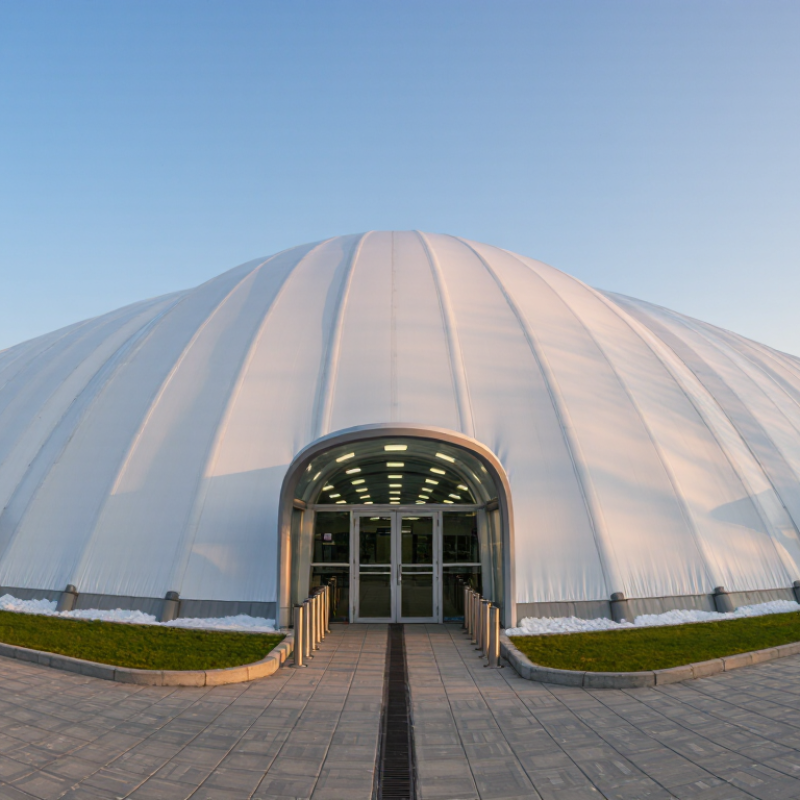
Start with what the dome must do each day. A training hall needs different clearances and floor loading than a seasonal warehouse. List the activities, peak occupancy, equipment, and required unobstructed span. Then check the site’s wind and snow design conditions with a qualified engineer. A dome sized only by floor area may feel cramped once lighting, access routes, and service zones are included.
Capacity is more than a headcount. Estimate peak users, entry flow, ventilation needs, and the time required to stabilize indoor temperature. The Global Alliance for Buildings and Construction’s 2024 Global Status Report estimates that buildings use 32% of global energy and produce 34% of energy-related CO2 emissions. That makes insulation, HVAC strategy, and operating hours practical selection criteria. Ask for documented PVDF membrane performance, including weathering and seam testing. I would also revisit optimistic energy estimates; real operating schedules often change.
Tips: Write down normal and peak occupancy separately. Include local design loads, backup power, pressure monitoring, and maintenance access in the brief. Request performance documents, not just a product label. For example, mark the intended court lines and equipment positions on a floor plan before confirming the span.

Choosing a PVDF air dome starts with the site, not the membrane color. Walk the proposed footprint after rain. Look for ponding, soft ground, nearby trees, and open corridors that could funnel wind. Soil bearing capacity and drainage affect foundation design and anchorage. Small details matter.
Local rules can change the design. Confirm which building-code edition your authority has adopted, then check permit requirements for structural loads, fire protection, exits, accessibility, and emergency power. Requirements vary by jurisdiction. Ask officials early. Share site surveys, geotechnical findings, and drainage plans with the design team. I would also question any proposal based only on regional weather averages; they cannot capture every site-specific risk.
A PVDF air dome starts with its membrane. Many systems use polyester fabric coated with PVDF, but coating thickness and fabric strength vary. Compare tensile capacity, seam strength, UV resistance, and cleaning needs. Ask for test data tied to the proposed membrane, not a similar product. Small details matter. A pale surface can soften daylight, while darker finishes may reduce glare but absorb more heat. Check how each option performs in your local climate.
Dome geometry affects usable space and pressure demands. A low profile can reduce wind exposure, yet it may limit clearance for lighting, equipment, or tall activities. A steeper dome offers more headroom, but its shape still needs review against site wind and snow loads. Walk the proposed layout with the supplier. Mark doors, ducts, and access routes on a plan. These openings can influence airflow and membrane detailing.
Structural choices range from a basic air-supported membrane with perimeter anchoring to designs reinforced by cable nets or secondary supports. Reinforcement may help manage larger spans, but it adds components and inspection points. Compare anchorage requirements with the actual ground conditions; a neat drawing cannot confirm soil capacity. Specify backup blowers, pressure monitoring, and emergency procedures. I would not choose by price alone. Get a qualified structural review, and leave room for assumptions to change.
| Option | Membrane or Build-Up | Structural Approach | Potential Advantages | Trade-Offs and Checks | Typical Project Fit |
|---|---|---|---|---|---|
| Standard PVDF-coated membrane | PVDF surface coating on a woven polyester base fabric. Indicative fabric mass is often about 700–1,000 g/m²; confirm the actual grade and datasheet. | Used as the tensioned outer membrane of an air-supported dome; internal air pressure helps maintain the shape. | Relatively light enclosure; factory-fabricated panels can support efficient installation. PVDF coating can improve surface cleanability and weathering performance compared with an uncoated textile. | Confirm tensile and tear properties, seam strength, fire classification, UV performance, and compatibility with the intended cleaning method. Coating alone does not determine service life. | General-purpose sports, storage, and temporary or permanent covered spaces where insulation requirements are moderate. |
| Heavy-duty PVDF-coated membrane | Heavier PVDF-coated polyester fabric; indicative fabric mass may be about 1,000–1,500 g/m², depending on construction and performance specification. | Can be designed for higher membrane forces or demanding exposure, subject to the engineer’s load calculations and detailing. | A heavier fabric grade may offer increased strength or robustness when its tested properties are suitable for the design. | Greater fabric mass does not automatically make a dome safe for higher wind or snow loads. Check the engineered load path, connections, seams, and supporting systems. | Projects with demanding environmental conditions or where the design requires a higher-capacity membrane assembly. |
| Single-layer air dome | One primary PVDF-coated membrane layer, with insulation and interior finishes considered separately if required. | The membrane is supported by maintained internal pressure and anchored around the perimeter. Entrance airlocks and pressure-control equipment are part of the system. | Simpler build-up and generally fewer membrane layers; often a straightforward option for large clear-span interiors. | Thermal performance and condensation control need careful review. The design requires suitable pressure management, backup provisions, and a reliable anchorage system. | Seasonal or year-round uses where the project can meet comfort requirements without a full double-layer envelope. |
| Double-layer air dome | Two membrane layers with an enclosed air space; insulation and air-gap configuration are project-specific. | Both layers and the connecting details are engineered as an integrated envelope; pressure arrangements vary by system. | The air space can improve thermal performance compared with a single layer and may help manage interior comfort when properly designed. | More material and detailing are required. Review condensation, air-gap ventilation or pressurization, maintenance access, and the effect of added loads. | Climate-controlled facilities, including sports or recreation spaces with regular winter use. |
| Cable-reinforced membrane dome | PVDF-coated membrane combined with a designed cable network or reinforcement system. | Cables work with the membrane and pressure system to distribute forces; layout, connections, and pretension must be engineered together. | Can provide an additional structural load path and may suit particular spans, shapes, or loading requirements. | Adds components, connection details, inspection needs, and potential maintenance tasks. Confirm corrosion protection and cable replacement access. | Large-span or project-specific designs where cable reinforcement is justified by structural analysis. |
| Hybrid perimeter-supported dome | PVDF-coated membrane supported by an engineered combination of air pressure and perimeter framing or other local structural elements. | Loads are shared between the membrane, pressure system, and selected structural supports; the exact arrangement depends on geometry and site conditions. | May accommodate project-specific openings, edges, or interfaces that are difficult to resolve with a fully air-supported arrangement alone. | The interfaces between fabric and framing require careful detailing for movement, drainage, sealing, and load transfer. | Sites with unusual boundaries, adjoining buildings, or architectural constraints that call for a mixed support strategy. |
Note: Fabric mass ranges are indicative only, not product specifications. Final membrane grade, dome geometry, operating pressure, anchorage, fire performance, and structural design should be selected using project-specific calculations, applicable codes, site conditions, and verified manufacturer test data.
Start with the dome’s clear-span needs, not just its floor area. Map sports lanes, storage racks, equipment clearance, and door swings before choosing dimensions. Allow room for peak occupancy and service access; a crowded layout can complicate maintenance. Small details matter. Ask for usable interior height, since curved walls reduce space near the edges.
Anchoring should match the actual site, not a standard sketch. Concrete slabs, soil, and temporary foundations need different connection details. Have a qualified structural professional review wind, snow, and uplift loads using local site conditions. Do not treat generic anchor spacing as proof of capacity. A first site estimate can be wrong; verify soil and slab conditions before installation. Keep anchor points accessible for inspection.
Plan inflation and HVAC as one system. Fans must maintain positive internal pressure, while heating or cooling keeps occupied areas comfortable. Monitor pressure, temperature, and humidity; damp air can condense on the membrane or stored equipment. Specify alarms and backup power, then test them under realistic operating conditions. Sensor placement is easy to overlook. Test it live.
Choosing a PVDF air dome starts with the risks inside and around the site. Ask how the structure handles pressure loss, heavy rain, wind, and emergency exit needs. A backup blower, pressure alarms, and a clear evacuation route can reduce operational risk, but they do not replace a site-specific engineering review. Check that the fabric, seams, anchoring plan, and operating limits match local weather conditions. Details matter.
Installation planning is equally practical. Measure the usable footprint, then confirm access for cranes, delivery vehicles, and crews. The ground must support the anchors and remain accessible for inspection. Existing utilities or a tight work area can slow installation, even when the dome itself seems straightforward. Request drawings that show anchor locations, door positions, blower rooms, and service clearances. I would not assume a standard layout fits every site.
Long-term maintenance should be considered before purchase. Ask how often the membrane, seams, fans, filters, and pressure sensors need inspection, and who can perform that work. Keep a log of pressure readings and repairs; small changes may reveal a developing issue. Cleaning methods should suit the PVDF surface and avoid damaging it. Maintenance schedules can look tidy on paper, though real weather and staffing often interfere. Make sure replacement parts and trained service support are realistically available.

