10 Essential Tips for Working with Concrete Masonry?
Concrete masonry is a versatile building material used in various construction projects. It offers durability and strength, making it a preferred choice among contractors. However, working with concrete masonry can present challenges that require careful consideration.
Understanding the properties of concrete masonry is crucial. Each block has unique characteristics affecting its handling and bonding. Improper techniques can lead to structural weaknesses, which is often overlooked. Attention to detail matters. Preparing the site and selecting the right tools can make a significant difference.
Moreover, collaborating with skilled workers is essential. Their experience can bridge gaps in knowledge. Mistakes can happen, but they provide learning opportunities. Reflecting on these experiences can lead to better outcomes in future projects. With the right tips, working with concrete masonry can become a smooth and rewarding process.
Understanding Concrete Masonry Fundamentals
Concrete masonry is essential in construction projects. Understanding its fundamentals helps ensure durability and efficiency. According to the Concrete Masonry Association, approximately 75% of structures rely on concrete materials. Knowing the properties of concrete can lead to better project outcomes.
Tip: Always ensure proper mixing ratios. Incorrect ratios can weaken the structure. A mix that is too dry or too wet may result in cracks and instability. Data shows that a balanced mix can enhance the material's strength by up to 30%.
Additionally, techniques vary by project. Take note of local climate conditions. Moisture levels can greatly affect curing. Failing to consider this can lead to unexpected challenges, like surface defects or delayed curing times.
Tip: Stay flexible with your methods. Sometimes, what works in theory fails in practice. Adaptation is key. Engaging with local experts helps identify potential pitfalls early. Minor adjustments can lead to major improvements in the long run.
Selecting the Right Materials for Your Project
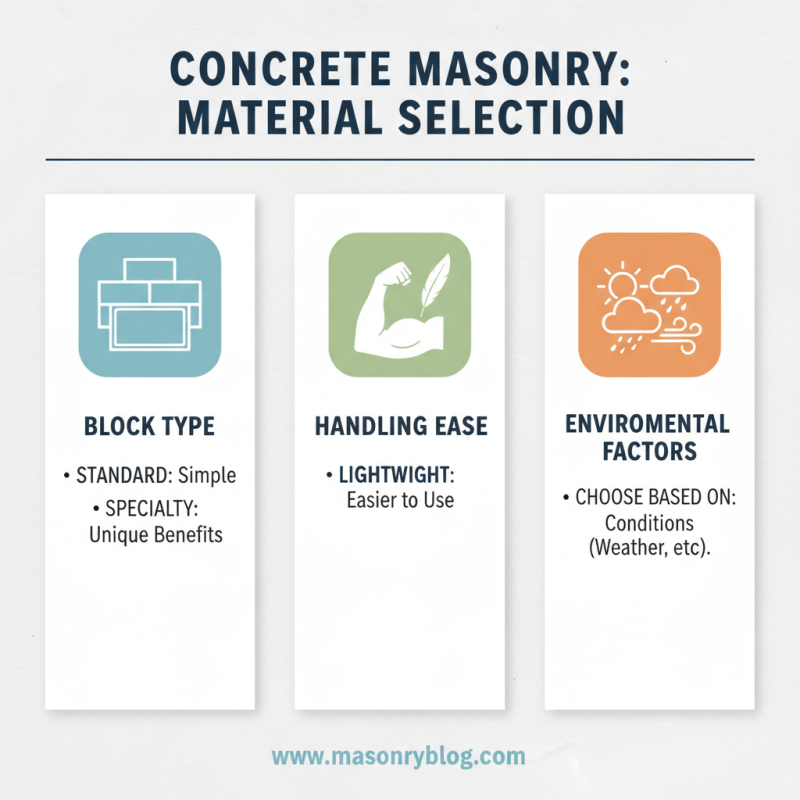
When working with concrete masonry, selecting the right materials is crucial. Consider the type of blocks you'll use. Standard blocks may suffice for simple walls, but specialty blocks can offer unique benefits. For instance, lightweight blocks are easier to handle. Choose based on the environmental conditions your project will face.
Pay close attention to the type of mortar as well. The wrong choice can compromise stability. Mix ratios matter. A good tip is to test small batches before committing to a larger mix. Some projects may even benefit from using reinforced or insulated blocks. Insulation can enhance energy efficiency.
Lastly, don't overlook the importance of tools. Using the right tools can lead to better results. However, materials without quality tools can become problematic. Rushing into a project without proper planning could lead to costly mistakes. Take your time to weigh your options. Every detail can influence the outcome of your masonry work.
Essential Tools and Equipment for Concrete Masonry Work
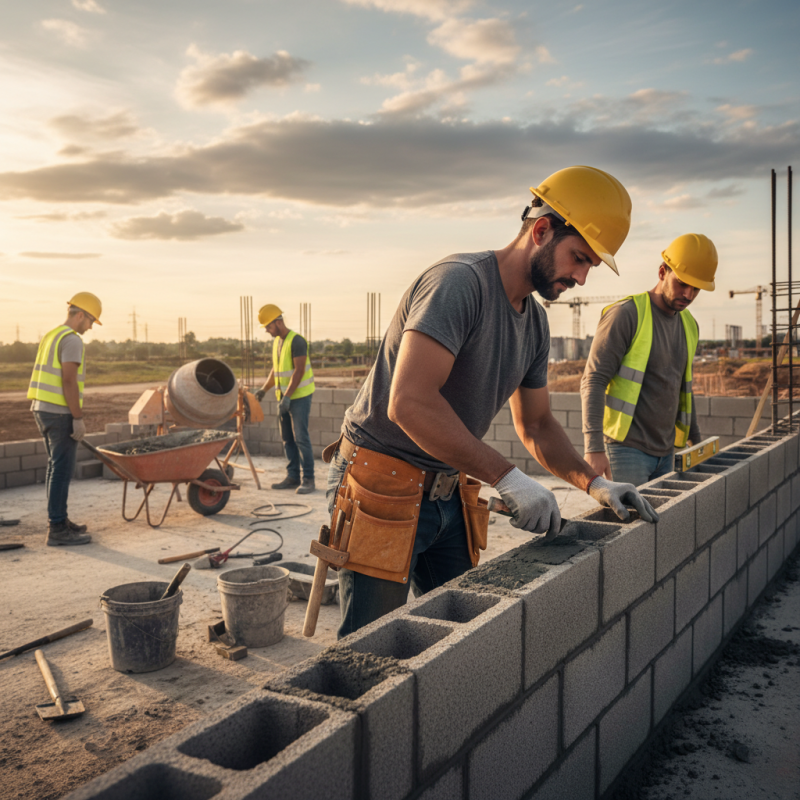
When working with concrete masonry, having the right tools is crucial. Essential equipment includes a concrete mixer, trowels, and masonry saws. A concrete mixer simplifies mixing large batches. This speeds up the process and ensures better consistency. A masonry saw is important for precise cuts. It helps achieve clean edges and accurate measurements.
Safety gear can't be overlooked. Hard hats, gloves, and goggles protect against injuries. According to industry reports, nearly 30% of masonry workers face injury risks. Proper safety equipment can reduce this statistic significantly. Workers should also consider portable scaffolding for elevated work. It allows for better reach and balance when laying blocks.
Quality tools enhance efficiency but can be a source of frustration. Sometimes, equipment may fail unexpectedly. A mixer may clog, or a trowel might break. These hiccups may delay work and require quick problem-solving. Keeping spare parts handy may alleviate some of these issues. Moreover, investing time in maintenance pays off. Regular checks can extend the life of tools and avoid complications on-site.
10 Essential Tips for Working with Concrete Masonry
| Tip Number |
Tip |
Essential Tools |
Safety Equipment |
| 1 |
Plan Your Layout Carefully |
Measuring Tape |
Safety Goggles |
| 2 |
Choose the Right Mix |
Concrete Mixer |
Gloves |
| 3 |
Use Proper Tools |
Trowels |
Dust Masks |
| 4 |
Work in Moderation |
Concrete Vibrator |
Ear Protection |
| 5 |
Proper Curing Techniques |
Curing Blankets |
Hard Hat |
| 6 |
Use Reinforcement Wisely |
Rebar Bender |
Protective Footwear |
| 7 |
Take Weather Conditions into Account |
Thermometer |
Rain Gear |
| 8 |
Check Your Positioning Regularly |
Level |
First Aid Kit |
| 9 |
Avoid Overworking the Concrete |
Finishing Tools |
Respirator |
| 10 |
Review Your Work |
Inspection Tools |
Safety Belt |
Step-by-Step Techniques for Mixing and Pouring Concrete
Mixing and pouring concrete requires careful attention to detail. The right mix ratio is crucial. Usually, a standard mix consists of 1 part cement, 2 parts sand, and 4 parts gravel. This mix provides good strength for most projects.
When preparing to pour, ensure your forms are secure and level. Any misalignment can lead to an uneven surface, causing problems later. Industry reports suggest that over 30% of concrete issues stem from improper pouring techniques. Take your time to check measurements and dimensions.
Tip: Always use clean, dry materials. Wet materials can alter the mix, leading to inconsistent strength. Use a high-quality concrete mixer. A poorly mixed batch can cause fractures over time. Pour the concrete in layers. Deep pours can trap air pockets, weakening the structure. Use a vibrator to eliminate these bubbles.
As you work, keep an eye on the weather. Pouring in extreme heat can cause rapid evaporation. This can crack the surface. Likewise, pouring in cold conditions may delay curing. Check the forecast before starting your project. Patience is key; rushing can lead to costly mistakes.
10 Essential Tips for Working with Concrete Masonry
This bar chart illustrates the importance of various tips for working with concrete masonry, highlighting how essential each technique is rated on a scale from 1 to 10.
Best Practices for Curing and Finishing Concrete Surfaces
Curing and finishing concrete surfaces is vital for ensuring
durability
and strength.
Research from the American Concrete Institute shows that proper curing can improve the
compressive strength
of concrete by up to
30%. This means that taking the time to cure properly pays off.
Here are some effective tips to enhance your curing process.
One essential tip is to maintain moisture. Cover the freshly poured concrete with wet burlap or plastic sheeting. This keeps the surface from drying too quickly, which can create cracks.
Avoid windy or hot periods for casting. The goal is to keep the surface cool and hydrated.
Finishing the surface requires careful attention. Work the surface during the initial set to avoid trapping moisture underneath.
Use a float for an even texture. However, be cautious about overworking the concrete, as this can lead to a weak surface layer.
Don’t rush this important step.
Tracking conditions and adjustments is also key. If the environment changes, be ready to adapt your curing methods.
Concrete may behave differently in varied climates.
Monitor your worksite regularly to ensure optimal conditions throughout the curing stage.