Choosing the best Led High Bay Light is not a contest of wattage alone. In a warehouse, the right fixture should put useful light on the workbench, aisle, or loading bay without creating harsh glare. Ceiling height, beam angle, fixture spacing, and surface reflectance all change the result. Small details matter.
A composite industry perspective, voiced here by lighting specialist Alex Morgan, captures the trade-off: “A high-bay fixture succeeds when its light reaches the task, not just the floor.” Treat that as a practical guide, not a verified quotation from a real person. Compare photometric layouts, delivered lumens, efficacy, color rendering, and dimming compatibility. Check the fixture’s operating-temperature range, too; a hot production area can challenge components that perform well in a cool showroom. Numbers help. Context matters more.
This guide examines what “best” means for different industrial spaces, from tall storage aisles to busy workshops. It considers light distribution, glare control, installation, maintenance, and warranty terms. A bright fixture can still leave dark shelves or waste energy. And a lower purchase price may not mean lower lifetime cost. The honest answer can be inconvenient: no single model suits every ceiling or task. Measure the space, review the layout, and question any recommendation that ignores both. Even careful planning can miss something; actual site conditions deserve a final check.
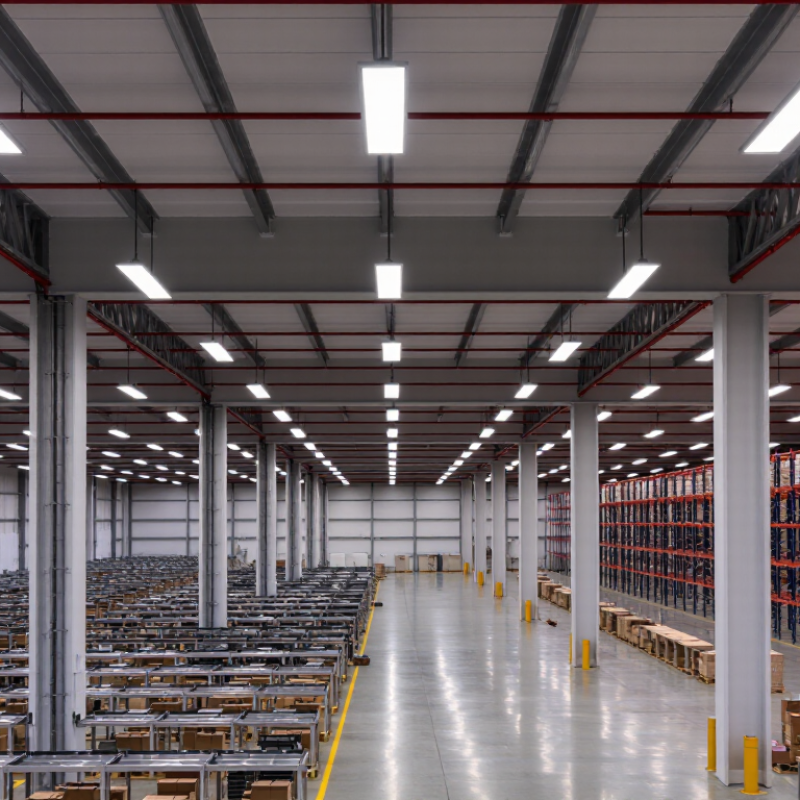
An LED high bay light is a ceiling-mounted fixture designed for large indoor spaces with high ceilings, commonly around 20 feet or more. Warehouses, workshops, gymnasiums, and distribution areas use them to bring light down to work surfaces from above. The fixture combines LEDs, a driver, and optics that shape the beam. That distinction matters. A narrow aisle may need controlled, directed light, while an open production floor may need broader coverage. Mounting height, spacing, surface reflectance, and the task all affect the result.
The purpose is to provide usable, evenly distributed light while managing energy use and maintenance. In a warehouse, that can mean making labels legible on upper shelving and reducing dark gaps between aisles. The U.S. Department of Energy’s 2019 Energy Savings Forecast of Solid-State Lighting projected that LED adoption across general illumination could save 569 terawatt-hours of electricity annually by 2035, compared with its baseline scenario. That figure covers many lighting applications, not high bays alone. It gives useful context, but it cannot predict savings for a specific facility. A higher lumen rating is not automatically better; glare, beam pattern, and the actual lighting level on the floor deserve careful review.

What Is the Best LED High Bay Light?
Key Features That Determine High Bay Light Performance
A high bay’s performance starts with delivered light, not wattage alone. Check its efficacy in lumens per watt, then match the beam angle to the mounting height and aisle layout. A narrow beam can leave dark corners; a wide beam may waste light on upper walls. The U.S. Department of Energy reports that LEDs use at least 75% less energy and last up to 25 times longer than incandescent lighting. That broad comparison is not a high-bay product guarantee, so verify each fixture’s tested specifications and warranty.
Look for a reputable photometric report, suitable color rendering, and a driver rated for the site’s temperature and switching conditions. The DesignLights Consortium’s technical requirements assess factors such as efficacy, light distribution, and color quality. These details help compare products beyond headline brightness. Dimming and occupancy controls can reduce operating hours, but poorly placed sensors may switch lights off over active work areas. It’s an easy detail to miss.
Tips: Request an IES-format photometric file and review its aisle layout before ordering. Compare measured light at work surfaces, not just fixture lumens. If possible, trial one fixture first; real spaces rarely match a perfect diagram.
UFO high bays have compact, round housings and usually suit open warehouses, workshops, and tall production areas. Their broad, downward light can work well over open floor space, but may create glare above reflective machinery. Linear high bays spread light along aisles and shelving rows. They are often easier to align with racks, where a round fixture can leave uneven patches between shelves. Sealed high bays add protection against dust or moisture, making them useful in washdown or damp areas. Check the fixture’s actual rating and installation conditions; “sealed” alone does not tell the whole story. Details matter.
The U.S. Department of Energy’s 2022 Solid-State Lighting R&D Opportunities report sets a 2035 target of 250 lumens per watt for LED luminaires. That is a research target, not a typical high-bay rating. For a real comparison, review the fixture’s tested efficacy, lumen output, beam distribution, and dimming compatibility. DOE guidance also notes that LEDs can use at least 75% less energy than incandescent lighting, though that broad comparison does not predict savings in a specific building. A neat efficacy number can still mislead: mounting height, aisle layout, and ceiling reflectance change how much useful light reaches the work surface. I would check a photometric layout before choosing between UFO and linear types.
What Is the Best LED High Bay Light?
How to Compare LED High Bay Lights for Different Spaces
The best high bay light depends on the work below it, not just its lumen rating. In a warehouse, measure mounting height, aisle width, and shelf shadows before comparing beam angles. A wide beam can suit open production floors, while narrow aisles may need controlled optics to limit wasted light. Measure the floor. Check the Illuminating Engineering Society’s recommended illuminance for the specific task, then assess uniformity and glare alongside brightness. A neat lumens-per-watt ranking can mislead.
Match the fixture’s output and distribution to the ceiling height and operating hours. For dusty or damp areas, verify the ingress-protection rating; for hot spaces, check the manufacturer’s rated operating temperature. The U.S. Department of Energy’s 2019 solid-state lighting forecast projected annual LED savings of about 569 terawatt-hours by 2035 against a no-LED baseline. That is a broad national projection, not a guarantee for one building. Heat matters, too.
Tips: Compare tested photometric files, not marketing claims. Ask for a layout showing light levels between fixtures and at work surfaces. Check dimming and occupancy-sensor compatibility, but confirm controls will not disrupt tasks. If possible, trial one fixture in the actual space; reflected glare from a glossy floor can surprise you.
| Space or Application | Typical Mounting Height | Typical Illuminance Target | Useful Fixture Output Range | Optics and Light Distribution | Color and Color Rendering | Environmental and Control Considerations |
|---|---|---|---|---|---|---|
| Warehouse and distribution area | 20–40 ft (6–12 m) | About 10–30 fc (100–300 lux), depending on aisle tasks and activity | About 20,000–40,000 lumens per fixture is a common starting range; confirm through a lighting layout | Narrow or aisle-specific optics can limit light spill in tall rack aisles. Wider distributions suit open storage areas. | 4000K is a common neutral-white choice; CRI 80 or higher is generally suitable for routine storage tasks. | Consider occupancy controls in intermittently used areas. Check the fixture’s temperature rating and ingress protection where dust or moisture is present. |
| General manufacturing floor | 15–30 ft (4.5–9 m) | About 30–50 fc (300–500 lux); detailed inspection tasks may need more | About 15,000–30,000 lumens per fixture is a common starting range; spacing and ceiling reflectance affect the result | Medium or wide distribution can provide more uniform coverage over work areas. Check for glare at workstations and machine interfaces. | 4000K or 5000K; consider CRI 80 or higher, with higher color rendering where accurate color assessment matters. | Match the fixture to ambient temperature, dust, vibration, and any washdown exposure. Use sealed fixtures when the environment requires them. |
| Gymnasium or indoor sports court | 20–40 ft (6–12 m) | About 30–50 fc (300–500 lux) for general recreation; requirements vary by sport and competition level | About 20,000–40,000 lumens per fixture is a common starting range; verify uniformity and glare in a photometric plan | Wide, controlled distribution helps cover the playing surface. Shielding and careful aiming can reduce glare for players looking upward. | 4000K is a common option; CRI 80 or higher supports clear color perception. | Use suitable impact protection where balls or equipment could strike fixtures. Dimming and zoning can adapt light levels to different activities. |
| Retail or showroom with a high ceiling | 15–25 ft (4.5–7.5 m) | About 30–50 fc (300–500 lux) for general areas; displays may need separate accent lighting | About 12,000–25,000 lumens per fixture is a common starting range; coordinate with display and accent lighting | Medium or wide distribution supports general ambient light. Use separate accent fixtures when products need focused emphasis. | Often 3500K–4000K; consider CRI 90 or higher when product color appearance is important. | Dimming and scene controls can support different store layouts and operating hours. Check that drivers are compatible with the intended control system. |
| Cold storage or refrigerated facility | 15–30 ft (4.5–9 m) | About 10–30 fc (100–300 lux), with higher levels where picking or inspection tasks require them | About 15,000–30,000 lumens per fixture is a common starting range; confirm output at the operating temperature | Medium or aisle-specific optics can help deliver light to shelves and picking locations while reducing wasted light. | 4000K or 5000K; CRI 80 or higher is usually adequate for general handling. | Verify the manufacturer’s low-temperature operating rating, moisture protection, and cold-start performance. Select controls rated for the environment. |
| How to choose: There is no single best LED high bay for every space. Compare delivered lumens, distribution, glare control, efficacy, color quality, rated operating temperature, ingress protection, and control compatibility. Illuminance targets and fixture-output ranges are planning examples, not guarantees; final quantity, spacing, and mounting locations should be determined using a photometric layout for the actual room. | ||||||
What Is the Best LED High Bay Light?
Factors to Consider When Choosing the Best LED High Bay Light
The best LED high bay light depends on the space, not just its wattage. Measure ceiling height and the area you need to illuminate. Then compare light output, usually listed in lumens, and check whether the beam angle suits your shelving or open floor. A narrow beam can concentrate light on tall racks, while a wider beam may work better across an unobstructed area. Measure before buying.
Consider light quality and operating conditions, too. A color temperature around 4000K often gives a balanced, neutral appearance; the right choice depends on the task and preference. Check the color rendering index if workers need to distinguish labels or product colors. In dusty or damp spaces, review the fixture’s protection rating and installation requirements. Dust matters, too. Dimming compatibility, expected operating hours, and warranty terms can affect long-term value. A high lumen-per-watt figure alone does not guarantee a comfortable, even-lit workspace.
Tips: Compare beam patterns and light distribution, not just fixture output. Ask for a lighting layout when the ceiling is high or shelving creates shadows. No fixture suits every building, and calculations still need to be checked against actual conditions.
The best high bay light depends on the work being done, mounting height, and desired light level. These typical maintained illuminance ranges are planning guides, not universal requirements; confirm local standards and consider layout, glare, color quality, energy use, and maintenance when selecting a fixture.

