In the construction industry, cement tech plays a critical role. Improving the efficiency of cement tech can yield significant benefits. However, many practices still fall short.
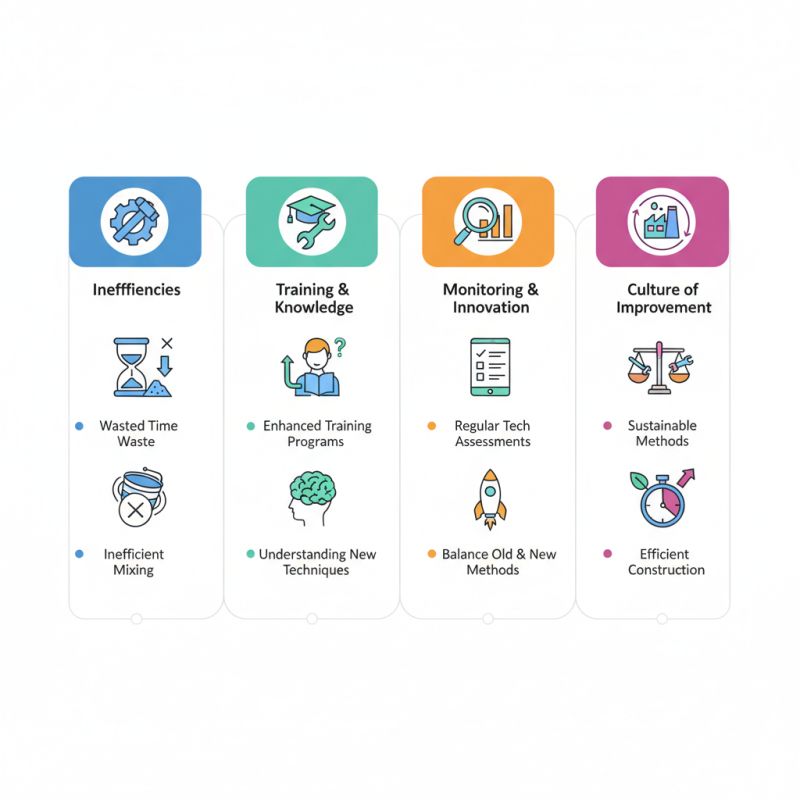
For instance, outdated methods can lead to wasted materials and time. Many construction sites struggle with inefficient cement mixing processes. This can inflate project costs. A lack of proper training in new cement technologies is often an issue. Workers may not fully understand the latest techniques. Therefore, enhanced training programs are needed to bridge this gap.
Moreover, monitoring technology usage can help identify weaknesses. Many companies overlook regular assessments of their tools and processes. Innovations may exist, but their implementation is often lacking. Finding the right balance between old and new methods remains a challenge. Embracing a culture of continuous improvement in cement tech is essential. This approach can lead to more sustainable and efficient construction methods.
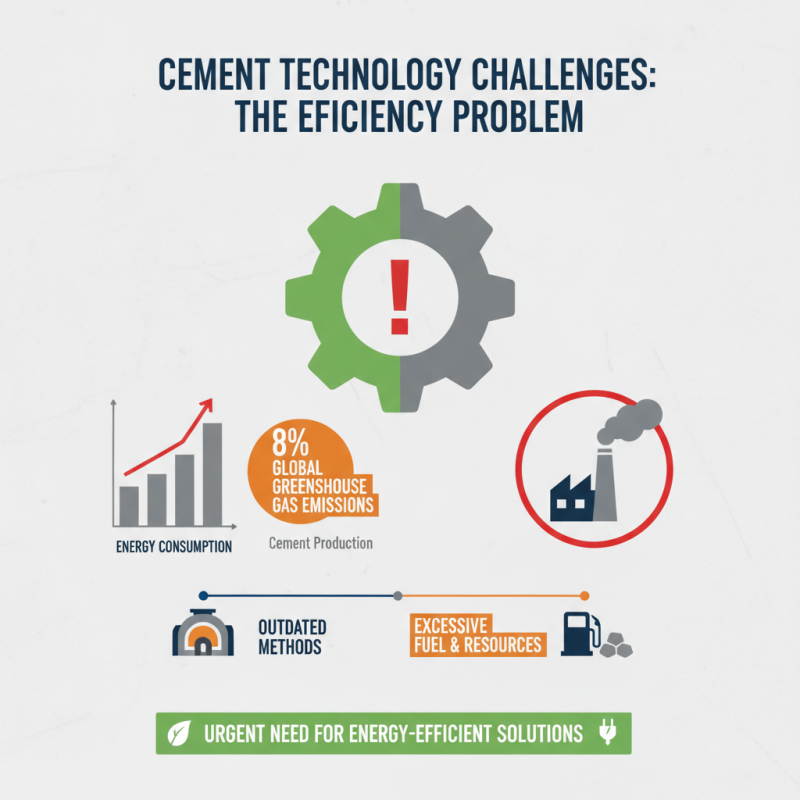
Cement technology faces significant challenges in enhancing efficiency within the construction industry. One major issue is energy consumption. According to industry reports, cement production accounts for approximately 8% of global greenhouse gas emissions. This statistic highlights the urgent need for energy-efficient technologies. Many current methods remain outdated, often utilizing excessive fuel and resources. This inefficiency not only impacts costs but also the environment.
Another challenge is the reliance on traditional materials, which often leads to inconsistent quality. Studies show that variations in raw material properties can cause up to a 20% drop in strength and durability of concrete. This inconsistency undermines the reliability of construction projects and increases the risk of failures. Additionally, many companies struggle to adopt advanced monitoring technologies. Without real-time data, decision-making becomes reactive rather than proactive.
Lastly, industry workforce training is often overlooked. A report noted that 60% of construction workers lack training in modern cement technology practices. This gap creates a knowledge deficit, contributing to inefficiencies. Implementing strong training programs could bridge this divide, empowering workers to use innovative methods effectively. As the construction sector evolves, recognizing and addressing these pain points is crucial.
Innovative mixing techniques are transforming cement performance in the construction industry. Traditional mixing methods have limitations. Many projects suffer from inconsistent quality of cement. According to a recent industry report, up to 30% of concrete failures are linked to poor mixing practices. This highlights the need for better approaches.
One promising technique is high-shear mixing. This method enhances the uniformity of cement blends. It reduces the likelihood of weak spots in the final product. Another innovative approach is the use of additives during mixing. These additives can optimize hydration and improve strength and durability. A study indicated that using specific additives can increase compressive strength by up to 15%.
Despite these advancements, the industry faces challenges. Not all construction teams adopt new techniques. Resistance to change is common. Some projects still rely on outdated methods. A disconnect exists between research and practical application. Addressing this gap is critical for truly enhancing cement efficiency.
The construction industry is shifting to alternative materials for cement production. This change helps reduce environmental impacts. Common alternatives include fly ash, slag, and natural pozzolans. Using these materials can lower carbon emissions significantly.
Tips: Consider local availability when selecting alternative materials. This can reduce transportation costs and carbon footprint.
Fly ash is a byproduct from power plants. It can enhance the performance of concrete. However, the quality varies widely. This inconsistency may lead to challenges. Testing is essential to ensure quality control.
Natural pozzolans, like volcanic ash, show promise but are often underutilized. They can improve durability and reduce water permeability. Still, market demand for these materials remains low. Educating stakeholders about their benefits could drive change.
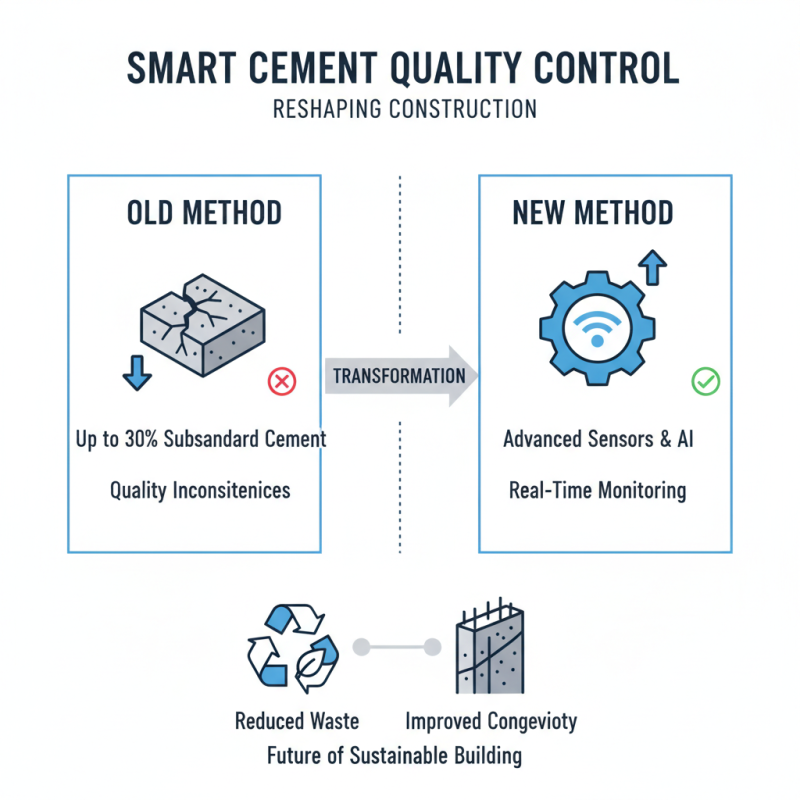
The adoption of smart technologies in cement quality control is reshaping the construction industry. Recent reports indicate that up to 30% of cement produced can be substandard due to quality inconsistencies. By integrating advanced sensors and AI, companies can monitor cement properties in real-time. This shift could reduce waste and improve concrete longevity.
AI algorithms analyze data from various production stages. They detect anomalies that might go unnoticed by human operators. For instance, a study revealed that these systems can spot deviations within minutes. This rapid identification allows for quicker adjustments in the mixing process, potentially decreasing rework rates by 15%.
Despite these advancements, challenges remain. Not all firms can afford to implement these technologies. There is a knowledge gap in understanding how to effectively utilize data analytics. Industry players must invest in training to maximize the benefits. Innovative technologies can enhance cement quality, yet a lack of skilled personnel poses significant barriers.
Cement production significantly affects the environment. Sustainable practices are crucial for improving cement eco-efficiency. The construction industry must consider alternative materials. We could explore using industrial byproducts. Fly ash and slag can replace a portion of cement. These materials reduce carbon emissions and enhance durability.
Recycling concrete also presents an opportunity. Using crushed concrete can lower the need for new material. However, challenges exist with quality control. Not all recycled materials maintain structural integrity. This issue requires attention and innovation. Enhanced testing methods can help ensure safety and performance.
Education within the industry is vital. Workers must understand the benefits and methods of sustainable practices. Regular workshops and training can foster awareness. Engaging stakeholders early can create momentum for change. Ultimately, improving eco-efficiency hinges on collective effort and a willingness to adapt.
| Practice | Description | Impact on Efficiency | Expected CO2 Reduction (%) |
|---|---|---|---|
| Alternative Raw Materials | Using natural and recycled materials to reduce dependence on traditional cement. | Improves resource efficiency and reduces production costs. | 15-20% |
| Energy Efficiency Improvements | Implementing advanced energy recovery systems in cement production. | Reduces energy consumption significantly. | 10-15% |
| Carbon Capture Technologies | Using technologies to capture CO2 emissions from cement plants. | Directly addresses emissions at the source. | 20-30% |
| Optimized Logistics | Improving transportation methods and routes for cement delivery. | Lowers transportation costs and emissions. | 5-10% |