Portland cement is the powder that helps turn sand, aggregate, and water into concrete. It is not concrete itself. Choose the wrong type, and a project may gain little—or face avoidable cost and performance trade-offs.
The scale is significant. The U.S. Geological Survey’s Mineral Commodity Summaries 2024 estimated U.S. cement production at about 90 million metric tons in 2023. Its global estimate was roughly 4.1 billion metric tons. Those figures describe cement, not Portland cement alone, so they should not be treated as a precise measure of one product category. Still, they show why small choices in cement specification matter across construction.
Concrete materials scientist Karen Scrivener has described concrete as “the most widely used man-made material in the world.” That observation puts cement in context: it is one ingredient, but its chemistry influences setting, strength development, and durability. The ASTM C150/C150M specification distinguishes Portland cement types for different performance needs. Type I is commonly used for general construction; Type II offers moderate sulfate resistance; Type III develops strength faster. Other types address specific exposure or heat concerns. Check the current project specification and supplier documentation before buying. Names on a bag are not a substitute for verified compliance.
A dry bag in a warehouse can look reassuring. It tells you little about suitability for a marine foundation, a winter pour, or a thick concrete placement. This guide explains what Portland cement is, how common types differ, and which questions to ask before purchase. There is no universal best type. The uncomfortable part: a technically correct choice can still fail if storage, mix design, or placement is poor.
Portland cement is a hydraulic binder: it hardens through a reaction with water and can continue gaining strength in damp conditions. It is not concrete. Concrete combines cement with water, sand, and coarse aggregate such as gravel. That distinction matters. The cement is the active binder; the other ingredients shape the finished mix.
Most Portland cement begins with limestone and clay or shale, which supply calcium, silica, alumina, and iron. A kiln heats this raw mixture to form hard clinker nodules. The clinker is cooled and ground with a small amount of gypsum, which helps control how quickly the cement sets. The clinker contains several mineral compounds, including alite and belite, which contribute to strength development at different rates. Its aluminates and ferrites also affect setting and other performance characteristics. Exact proportions vary. Even a familiar gray powder does not reveal its full chemistry by sight.
Add water, and cement compounds react to form binding products that lock sand and stone together. The reaction also releases heat, which can matter in large pours. I would not judge a cement’s suitability by the word “Portland” alone; type, local specifications, and project conditions matter. Labels can be easy to skim, and that is where a small mistake begins.
Portland cement begins with limestone, the main source of calcium, mixed with clay or shale. These materials are crushed, blended, and ground into a fine raw meal. Small amounts of iron-bearing material may help adjust its chemistry. The proportions matter: changes in the raw mix can affect how the cement performs. It is not just ground rock.
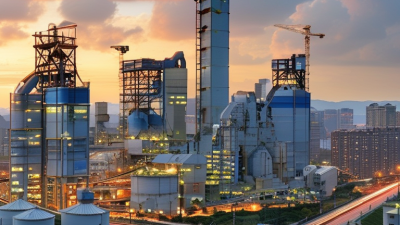
The meal enters a rotary kiln, where temperatures approach 1,450°C. Chemical reactions form hard, dark clinker nodules. After cooling, workers grind the clinker with gypsum, which helps control how quickly the cement sets. Some formulations also include other mineral ingredients. A neat process diagram can hide the variation in raw materials and kiln conditions. That variation requires careful testing.
Manufacturing also has a substantial climate impact. The International Energy Agency’s 2018 Technology Roadmap for the Cement Industry estimates that cement production accounts for about 7% of global CO2 emissions. Much of that comes from limestone releasing carbon dioxide during heating, not only from kiln fuel. This distinction matters when evaluating lower-emission production methods. It also means that cleaner fuel alone cannot remove every source of emissions. Portland cement is technically consistent, but making it is not impact-free.
| Portland Cement Type | Key Characteristics | When to Consider It | Buying Guidance |
|---|---|---|---|
| Type I — General Purpose | For general construction where special requirements for sulfate resistance or heat generation do not apply. | Common concrete work such as slabs, foundations, sidewalks, and general building construction, subject to project specifications. | A typical choice when plans do not call for a specific cement type. Check the applicable standard and local availability. |
| Type II — Moderate Sulfate Resistance | Provides moderate sulfate resistance. Some specifications identify a moderate heat-of-hydration option as Type II(MH). | Concrete exposed to moderate sulfate conditions, when specified by an engineer or applicable building documents. | Use the type required by the exposure assessment and project specification; do not assume it replaces Type V where high sulfate resistance is required. |
| Type III — High Early Strength | Develops strength more rapidly at early ages than Type I under comparable conditions. It is not simply a guarantee of faster setting. | Projects needing earlier form removal, earlier loading, or faster construction schedules, when the mix and curing plan support that goal. | Confirm early-strength requirements, temperature conditions, curing needs, and the concrete mix design with the project professional. |
| Type IV — Low Heat of Hydration | Designed to limit heat generated as cement hydrates. It is uncommon in many markets. | Some mass-concrete applications where controlling temperature rise is important and the specification permits it. | Availability can be limited. Ask the project engineer about suitable alternatives if the specified cement cannot be sourced. |
| Type V — High Sulfate Resistance | Provides high resistance to sulfate attack compared with general-purpose cement types. | Concrete exposed to high-sulfate soils or water, where required by the project specification. | Base selection on a site exposure assessment and the governing specification; cement type alone does not replace durable mix design and construction practices. |
| Air-Entraining Types: IA, IIA, IIIA | Correspond to Types I, II, and III with an air-entraining addition. Air entrainment can improve resistance to freeze-thaw damage in hardened concrete when properly proportioned. | Some concrete exposed to freezing and thawing, especially when de-icing salts may be present. | Coordinate the cement choice with the specified total air content and mix design. Air content must be controlled for the intended application. |
What Portland cement is: Portland cement is a hydraulic binder. It is made primarily by grinding Portland cement clinker with calcium sulfate, commonly gypsum, and may include permitted additional constituents. It reacts with water and hardens.
| Manufacturing Stage | What Happens | Why It Matters |
|---|---|---|
| 1. Quarrying and preparation | Limestone and other raw materials, such as clay or shale, are extracted, crushed, and proportioned. | Consistent raw-material proportions help achieve the required chemical composition. |
| 2. Raw grinding and blending | The materials are ground into a fine raw meal and blended to create a more uniform feed. | A uniform feed supports stable kiln operation and consistent clinker quality. |
| 3. Preheating and calcination | In many modern plants, the raw meal passes through a preheater and may enter a precalciner. Heat drives off moisture and decomposes much of the limestone into lime and carbon dioxide. | This prepares the material for the high-temperature reactions in the kiln. |
| 4. Kiln burning and clinker formation | The material is heated in a rotary kiln to roughly 1,450°C in the burning zone, forming hard nodules called clinker. | High-temperature reactions create the clinker minerals responsible for cement’s strength development. |
| 5. Clinker cooling | Hot clinker is rapidly cooled after leaving the kiln. | Cooling helps control clinker properties and allows heat to be recovered in the process. |
| 6. Finish grinding | Clinker is ground with gypsum or another calcium sulfate source to control setting. Permitted additions may also be used depending on the cement standard and product specification. | Grinding fineness and sulfate content influence setting behavior and strength development. |
| 7. Storage and quality control | Finished cement is stored in silos, tested against applicable requirements, and dispatched in bulk or bags. | Testing and proper storage help maintain compliance and protect cement from moisture contamination. |
Selection reminder: Choose cement according to the structural plans, exposure conditions, applicable standards, and advice from the project engineer or concrete supplier. Cement type is only one part of concrete performance; water-to-cement ratio, aggregate quality, air content, placement, and curing also matter.
Portland cement types are selected for exposure, temperature, and construction schedule—not simply strength. ASTM C150/C150M defines common Types I, II, III, IV, and V. Type I suits many general projects. Type II offers moderate sulfate resistance and moderate heat generation. Type III gains strength faster, useful when forms must come off early. Type V is intended for severe sulfate exposure. Type IV limits heat, but is less common today.
The differences matter at the job site. A fast-setting mix can help in cool weather, yet may leave less time for placing and finishing. Low-heat cement can reduce temperature rise in thick concrete pours. The USGS Mineral Commodity Summaries 2025 estimated U.S. cement production at about 90 million metric tons in 2024, reflecting cement’s broad use—not proof that one type fits every job. Check the project specification and local exposure conditions.
Tips: Ask for the cement type on the delivery ticket, and confirm it matches the plans. For soil or groundwater exposure, request sulfate test results before choosing Type II or V. Small detail, big consequence. I would not select by bag label alone; actual mix design, curing, and workmanship also affect performance.
Choosing a Portland cement type starts with exposure, placement conditions, and the project specification—not just the bag label. ASTM C150/C150M classifies Type I for general use, Type II for moderate sulfate exposure or heat control, Type III for faster early strength, and Type V for high sulfate resistance. Type IV is a low-heat option, but it is less commonly available. For a driveway poured in cool weather, early strength may matter; for a thick foundation, heat buildup deserves more attention. The wrong trade-off can be costly.
Check the site conditions. ACI guidance ties sulfate-resistant cement selection to measured sulfate levels in soil or water, so “Type V” should not be chosen by guesswork. Ask the supplier for the cement’s current test data, and confirm the project specification allows that type. ASTM C595 also covers blended cements; Type IL contains 5% to 15% limestone by mass. It can suit many ordinary placements, but confirm compatibility with the mix design and finishing schedule. Small details matter.
Lower-carbon choices may also influence the decision. The Global Cement and Concrete Association’s 2021 Concrete Future roadmap estimates cement production contributes about 7% of global carbon dioxide emissions. That figure describes the sector, not one bag of cement. Compare project-specific environmental product declarations where available, and weigh carbon data against exposure and performance needs. A label alone is not enough. A little uncertainty remains until the actual mix, curing plan, and site chemistry are checked.
Cement performance depends on chemistry, fineness, water content, curing, and exposure—not just the type printed on the bag. ASTM C150/C150M distinguishes Portland cement types by properties such as strength development, heat generation, and sulfate resistance. Type III can help when early strength matters; sulfate-resistant cement may suit sulfate-bearing soils. But the right choice still depends on mix design and site conditions.
Water content is a major performance factor. Too much mixing water can leave more pores as concrete hardens, making it easier for moisture and salts to enter. ACI 318-19 sets a maximum water-to-cementitious-materials ratio of 0.40 for several severe exposure classes. That limit is a useful specification reference, not a guarantee of durability. Cold weather, wind, and poor curing can still damage the surface. Even a sound mix can disappoint when it dries too quickly.
Tips: Match cement type to exposure and construction schedule. Check the project specification, then confirm the supplier’s test certificate and cement standard. Keep curing concrete damp; protect edges from drying wind. If conditions are uncertain, ask a qualified materials professional to review the mix. Small site adjustments can have large effects.
Portland cement is a hydraulic binder that hardens when mixed with water. The right type depends on factors such as sulfate exposure, heat limits, and the required construction schedule.
How to read this chart: ASTM C150/C150M limits tricalcium aluminate (C₃A) to 8% for Type II, 7% for Type IV, and 5% for Type V cement. Lower C₃A content generally improves resistance to sulfate attack. Type IV is intended for low-heat applications, while Type V is used where high sulfate resistance is specified. Check project requirements and local standards before choosing; the chart shows limits, not typical test results.