Top 10 Concrete Association Innovations Transforming the Industry?
The concrete industry is undergoing significant transformations, driven by innovations from leaders within the concrete association. Experts like Dr. Jane Sanders, a prominent figure in the field, emphasize the importance of these advancements. “Innovation in our industry is not just welcome; it's necessary for our survival,” she asserts. This statement reflects the urgency felt across the sector as it embraces change.
New technologies and methods are emerging, impacting everything from production efficiency to sustainability. Concrete associations are at the forefront, advocating for research and implementation of these innovations. The focus is not merely on profit but also on environmentally friendly practices. For instance, the use of recycled materials in concrete is becoming increasingly popular. However, challenges persist, and not all innovations have been seamlessly integrated into daily operations.
Yet, despite the positive strides, some issues warrant reflection. Not every association has adapted equally. There’s a noticeable gap in adopting new technologies among smaller firms. Additionally, ongoing education is crucial. It remains a challenge to ensure all industry members are informed about the latest tools and techniques. The journey of the concrete industry is both exciting and complex, filled with potential and obstacles alike.
Emerging Technologies in Concrete Production and Design
Emerging technologies in concrete production are reshaping the industry. 3D printing stands at the forefront. This method allows for intricate designs that traditional methods can't achieve. Builders can create complex structures quickly and at lower costs. However, the technology is still evolving. Issues like material sustainability and printer limitations are present.
Another innovation is the use of self-healing concrete. This type of concrete contains bacteria that can repair cracks when they form. It enhances durability and extends the material's lifespan. Nevertheless, this technology is not yet widespread. Questions about its long-term effectiveness linger, requiring additional research and testing.
Smart concrete is also gaining attention. It incorporates sensors that monitor structural health. This helps identify issues before they become serious. Yet, the integration of such technology can be costly and complicated. Educating workers and addressing installation challenges remain hurdles to overcome. The potential is vast, but the path forward is not without obstacles.
Sustainable Practices Revolutionizing Concrete Usage
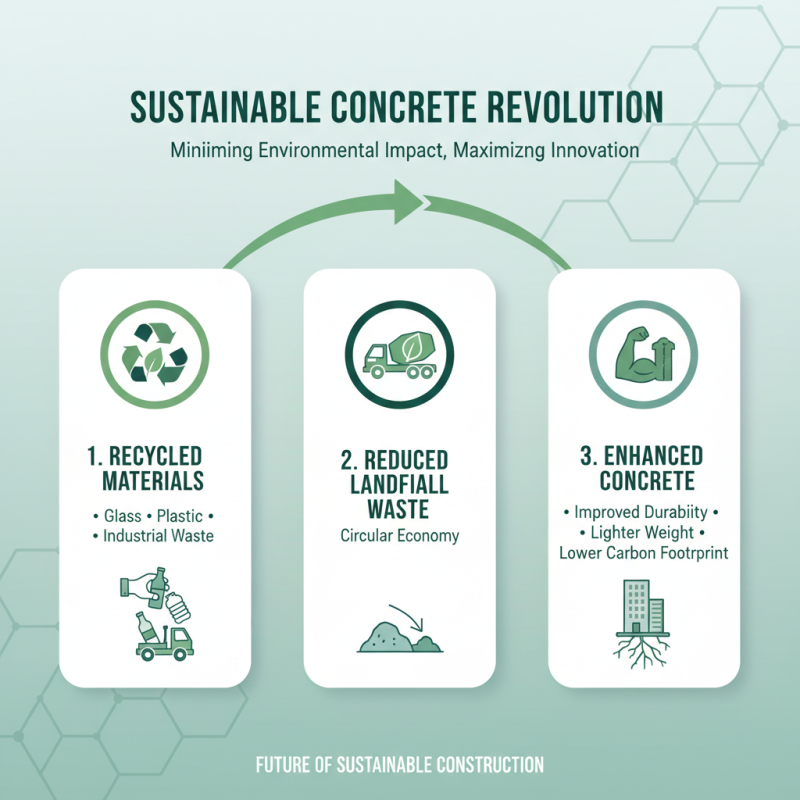
The concrete industry is undergoing a significant transformation, focusing on sustainable practices that minimize environmental impact. Innovative techniques are emerging, changing how concrete is utilized in construction. One notable trend is the use of recycled materials. By incorporating waste materials like glass and plastic into concrete mixtures, we reduce landfill waste while enhancing concrete's properties.
Adopting greener technology is essential. Techniques such as carbon capture can drastically lower emissions from concrete production. This innovation allows plants to absorb CO2, turning harmful gases into solid minerals. However, not all companies are ready to embrace these changes. It requires investment and a shift in mindset.
Tips: Start small. Explore using recycled aggregates in your local projects. Education is crucial too; workshops can teach sustainable practices. Collaborate with others. Sharing ideas fosters growth. Not every initiative will succeed. Some may require reevaluation to find the right approach. Seeking feedback can lead to improvement and innovation.
Innovative Construction Techniques Enhancing Efficiency
The construction industry is witnessing a shift with innovative techniques enhancing efficiency. Techniques like modular construction are gaining traction. This method allows components to be built off-site. It not only speeds up the process but also reduces waste.
One effective approach is using 3D printing in construction. It allows for intricate designs and can minimize labor costs. 3D printing creates structures layer by layer, offering flexibility in shape and size. This technology brings a unique aesthetic to buildings.
Consider using prefabricated materials. They are manufactured in a controlled environment. Quality control is easier, and the risks are lower. While these methods show promise, challenges remain. Not every workforce is trained in these techniques. Embracing change means ongoing education and adaptation. Always assess the balance between innovation and practicality.
Advanced Materials Improving Durability and Performance
The concrete industry is evolving rapidly. Advanced materials are at the forefront of this transformation. Recent studies indicate that using high-performance concrete can increase durability by 40%. This can significantly lower maintenance costs in the long run.
New additives and mixtures are improving performance. For example, incorporating silica fume enhances strength dramatically. It allows for thinner structures without compromising stability. However, these advanced solutions can be pricey and may not be accessible for all projects.
Sustainability remains a concern. While some innovations help reduce the carbon footprint, others require energy-intensive processes. The challenge lies in balancing these innovations with environmental responsibility. Industry data reveals that nearly 30% of new materials still lack long-term performance verification. This gap raises questions about their reliability.
Top 10 Innovations in Concrete Industry
This chart illustrates the advancements in concrete technology, showcasing how various innovative materials enhance durability and performance across the industry.
Digital Tools and Automation Shaping the Future of Concrete Industry
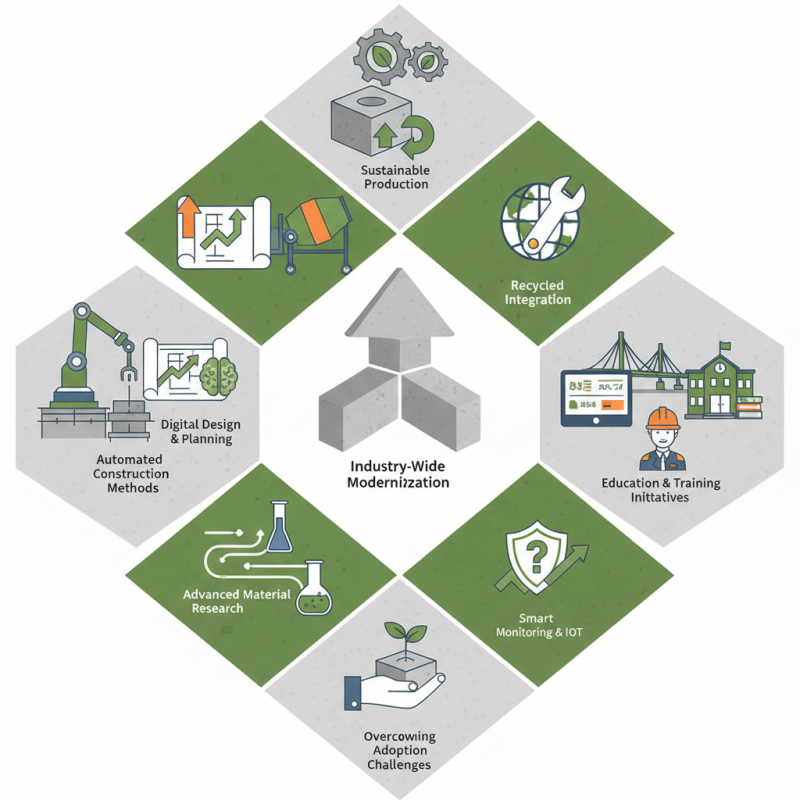
Digital tools and automation are revolutionizing the concrete industry. These innovations streamline processes and enhance efficiency. Real-time data collection is becoming common. This helps in monitoring project progress more effectively. Drones and sensors are being used for site inspections. They reduce the need for manual checks, ensuring better safety.
Using software for project management can save time. It minimizes errors in planning and execution. Workers can access information from mobile devices instantly. Data-driven decisions improve quality control. However, not all companies adopt these tools easily. Some struggle with integration due to existing systems. Change can be daunting, but it is necessary.
Tips: Start small. Test digital tools on one project before a full rollout. Engage workers in the transition process. Training is crucial for successful implementation. Overcoming resistance to change takes time, but the long-term benefits are significant. Embrace innovation, but be wary of potential disruptions in workflow.
Top 10 Concrete Association Innovations Transforming the Industry
| Innovation |
Description |
Impact on Industry |
Adoption Year |
| 3D Concrete Printing |
Utilizing 3D printing technology to create structures and components with precision. |
Reduces material waste and enhances design flexibility. |
2021 |
| Smart Concrete |
Concrete embedded with sensors to monitor structural integrity in real-time. |
Provides crucial data for maintenance and safety. |
2020 |
| Augmented Reality (AR) Planning |
Using AR for visualization and planning of concrete projects. |
Improves planning accuracy and client communication. |
2022 |
| Digital Twin Technology |
Creating digital replicas of structures for simulation and analysis. |
Enhances predictive maintenance and lifecycle management. |
2019 |
| Prefabrication |
Off-site construction of concrete components for quicker assembly. |
Reduces construction time and labor costs. |
2020 |
| Blockchain for Supply Chain |
Using blockchain to enhance transparency in concrete supply chains. |
Increases traceability and trust among stakeholders. |
2021 |
| BIM Integration |
Integrating Building Information Modeling (BIM) with concrete design. |
Improves coordination and project outcomes. |
2019 |
| Drones for Site Assessment |
Employing drones for surveying and monitoring construction sites. |
Enhances efficiency and safety in site inspections. |
2022 |
| AI for Project Management |
Implementing AI solutions for analyzing project data and optimizing workflows. |
Improves decision-making and resource allocation. |
2023 |