For global buyers, Wall Panels are more than decorative surfaces. They influence durability, installation speed, indoor comfort, and long-term maintenance. A hotel corridor needs impact resistance and easy cleaning. A bathroom requires reliable moisture performance. A retail store may prioritize texture, color consistency, and fast replacement.
This guide examines ten Wall Panels that attract international attention across residential, commercial, hospitality, and renovation projects. The selection considers material quality, surface finish, acoustic behavior, fire performance, moisture resistance, installation methods, and total project cost. It also considers practical sourcing details, including sample approval, packaging strength, minimum order quantities, shipping volume, technical documentation, and supplier responsiveness.
Small details matter.
A panel that looks excellent under showroom lighting may reveal uneven joints on a large wall. A low price may become expensive after difficult cutting, damaged cartons, or repeated maintenance. Experienced buyers should request physical samples, review independent test reports, confirm production tolerances, and inspect the supplier’s quality-control process. Certifications and warranties should be verified for the intended market, not assumed from general marketing language.
The ranking is not absolute. Project conditions change the answer. A lightweight PVC panel may suit a quick renovation, while mineral fiber or engineered wood may perform better in demanding interiors. Some options offer impressive acoustics but require careful installation. Others are attractive yet vulnerable to scratches. This comparison aims to provide a practical, evidence-based starting point, while acknowledging one limitation: no universal panel solves every design, budget, climate, and maintenance challenge.
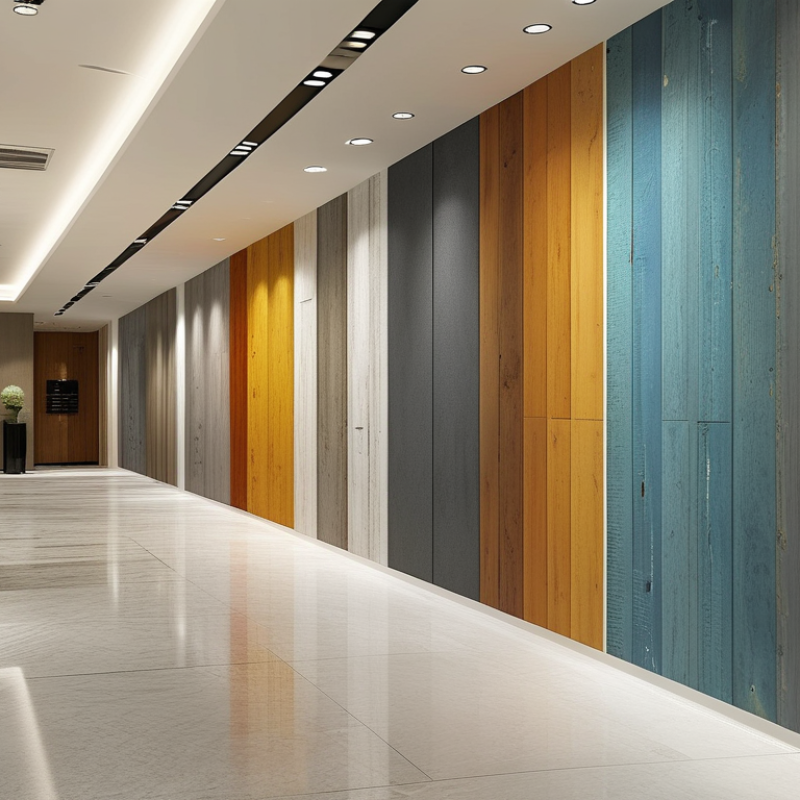
Wall panels are not merely decorative surfaces. They influence moisture control, acoustics, fire performance, installation speed, and indoor comfort. The ten practical categories include PVC, WPC, wood veneer, bamboo, gypsum, acoustic PET, metal, ceramic, stone veneer, and fiberglass-reinforced plastic panels. Each suits different building conditions. A humid hotel bathroom needs a different solution from a quiet office or a cold warehouse.
Global buyers increasingly compare performance data, not only appearance. Grand View Research valued the global wall panels market at approximately USD 14 billion in 2023, with continued growth expected through 2030. The report points to renovation, faster construction, and durable interior materials as major demand factors.
UNEP’s 2023 Global Status Report for Buildings and Construction also recorded that buildings consumed about 30% of global final energy in 2022. Therefore, buyers should examine insulation, recycled content, transport weight, and installation waste.
Details matter. A panel may look premium but absorb moisture at its edges. A lightweight product may reduce freight costs yet require stronger framing.
Request fire classifications, VOC test results, acoustic ratings, and maintenance instructions. Check samples under real lighting. Please test them.
Certifications help, but they do not replace local code review. Requirements differ across countries and building types. Some product data remain incomplete, especially for recycled materials. That uncertainty deserves attention. Reliable procurement combines laboratory evidence, installer experience, transparent warranties, and a realistic life-cycle assessment.

Global buyers now compare wall panels by performance, not appearance alone. Grand View Research estimates the global wall panels market will expand at about 5% annually through 2030. That growth reflects demand for faster installation and lower maintenance.
The ten leading types serve different needs. PVC panels resist moisture and clean easily. WPC panels add wood-like texture with improved dimensional stability. MDF panels offer smooth finishes and economical customization. Slat panels create rhythm and conceal minor wall defects. Acoustic panels reduce reflected sound in offices and hospitality spaces. 3D gypsum panels provide sculptural depth but require careful handling. Fiberglass-reinforced gypsum panels deliver strength with lighter weight. Metal panels withstand heavy traffic and support modern interiors. Stone veneer panels create a natural surface with less structural load. Ceramic or porcelain panels provide excellent water resistance and strong abrasion performance.
The Acoustical Society of America notes that sound absorption depends on frequency, thickness, and installation gaps, not panel labels alone. That detail is often missed. For humid rooms, buyers should check water absorption, joint sealing, and substrate compatibility. For public projects, request fire-test documentation, VOC declarations, and installation instructions. ISO 16000 methods are widely used for indoor-air assessments. My practical mistake was judging a panel by its sample alone. A small showroom piece cannot reveal edge chipping, color variation, or long-term cleaning damage. No panel wins every project. Procurement teams should compare tested performance, replacement access, shipping dimensions, and local installer experience before choosing.
| Rank | Wall Panel Type | Main Material | Key Features | Moisture Resistance | Typical Fire Performance | Common Applications | Installation Profile |
|---|---|---|---|---|---|---|---|
| 1 | Gypsum Wallboard | Gypsum core with paper or glass-fiber facing | Smooth finish, easy to cut, cost-effective, and available in standard, moisture-resistant, and fire-resistant grades. | Moderate to high, depending on grade | Good; rated assemblies can provide fire resistance | Residential interiors, offices, schools, hotels, and partitions | Fast; screw-fixed to metal or timber framing, then taped and finished |
| 2 | Fiber Cement Board | Cement, cellulose fibers, mineral fillers, and water | Dense, dimensionally stable, impact-resistant, and suitable for demanding interior or exterior conditions. | High when edges and joints are correctly sealed | Typically non-combustible; verify the tested system | Facades, wet rooms, soffits, kitchens, and high-traffic areas | Moderate; requires suitable cutting tools and corrosion-resistant fixings |
| 3 | PVC Wall Panels | Rigid polyvinyl chloride | Lightweight, waterproof surface, low maintenance, and available in many printed or textured finishes. | Very high at the panel surface | Combustible; fire rating depends on formulation and assembly | Bathrooms, utility rooms, commercial interiors, and hygienic spaces | Very fast; adhesive or batten installation with interlocking joints |
| 4 | WPC Decorative Panels | Wood fibers or flour combined with thermoplastic polymer | Wood-like appearance, consistent profiles, concealed fixing options, and good resistance to everyday stains. | Good; avoid prolonged standing water unless specifically rated | Combustible unless treated and tested to a specific standard | Feature walls, living areas, hospitality spaces, and covered exterior zones | Fast; clip, screw, or adhesive systems are commonly used |
| 5 | MDF Decorative Panels | Refined wood fibers bonded with resin | Smooth, machinable, paintable, and well suited to routed, fluted, slatted, or veneered designs. | Low to moderate; moisture-resistant grades perform better | Combustible; fire-retardant grades are available in some markets | Dry interior walls, reception areas, retail fit-outs, and furniture walls | Easy to machine and install; requires a dry, stable environment |
| 6 | Plywood Panels | Cross-laminated wood veneers | High strength-to-weight ratio, visible wood grain, good screw-holding capacity, and structural stability. | Moderate to high, depending on adhesive and grade | Combustible; protective coatings or rated assemblies may improve performance | Interior cladding, partitions, ceilings, workshops, and lightweight construction | Moderate; can be screw-fixed, nailed, or mounted on battens |
| 7 | Metal Wall Panels | Steel, aluminum, or coated metal alloys | Durable, recyclable, resistant to impact and pests, and available in ribbed, perforated, cassette, or flat formats. | High with appropriate protective coating | Metal is non-combustible; insulation and coatings require separate assessment | Commercial facades, industrial buildings, transport facilities, and interiors | Moderate; requires accurate subframes, fasteners, and detailing against corrosion |
| 8 | Acoustic PET Panels | Thermoformed or compressed polyester fiber, often containing recycled PET | Lightweight, soft to touch, design-flexible, and effective at reducing reverberation when properly spaced or backed. | Moderate; not intended for wet locations | Varies by fiber treatment and tested product configuration | Offices, classrooms, studios, restaurants, auditoriums, and meeting rooms | Easy; adhesive, clips, magnets, or mechanical fasteners are common |
| 9 | Natural Stone Veneer Panels | Thin natural stone, stone strips, or stone-faced engineered backing | Distinct natural appearance, high surface durability, UV stability, and strong architectural appeal. | High; substrate and joints still require correct detailing | Generally non-combustible; backing and adhesive must be assessed | Feature walls, fireplaces, hospitality projects, facades, and landscaping structures | Moderate to demanding; substrate strength, leveling, and jointing are important |
| 10 | OSB Panels | Oriented strands of wood bonded under pressure | Strong and economical sheet material with a distinctive appearance; structural grades are widely used in construction. | Moderate; select the correct exposure class and protect edges | Combustible; performance depends on grade, treatment, and assembly | Structural sheathing, interior design walls, temporary spaces, and workshops | Fast; panel joints, edge gaps, and moisture protection must be properly detailed |
Note: Fire, moisture, acoustic, and structural performance depends on the specific product, thickness, installation method, substrate, and applicable local building standards. Always verify technical documentation before specification.
Global buyers often compare the top ten wall panels by material, purpose, and tested performance. These include PVC, WPC, MDF, plywood, natural wood, veneer, metal, aluminum composite, ceramic, and stone panels. Each material solves a different building problem. PVC handles moisture well in laundry rooms and bathrooms. WPC offers a wood-like surface for semi-outdoor areas, but heat may cause movement. MDF creates smooth interior walls and accepts paint easily. It needs careful sealing near water. Plywood provides strength for retail fixtures and busy corridors. Natural wood adds warmth, although color changes with sunlight.
Veneer reduces material use while preserving a refined appearance. Metal panels suit kitchens, workshops, and commercial façades because they resist impact and fire when properly specified. Aluminum composite panels are lightweight and quick to install, but their core classification needs verification. Ceramic panels tolerate steam and stains around cooking areas. Stone panels deliver durability and visual weight, yet their structure may require stronger support. Performance differs. In project inspections, I check moisture absorption, surface hardness, fire ratings, acoustic data, and cleaning methods. A panel that looks excellent in a showroom may fail beside a humid loading entrance. Installation quality matters too. Small gaps, weak adhesives, or missing expansion joints can shorten service life. I once preferred a heavier panel for acoustic control, but its added load complicated the framing. That decision needed more review. Test reports should match the actual climate, substrate, and daily use.
For global buyers, the top ten options include PVC, WPC, SPC, MDF, plywood veneer, metal, ceramic, natural stone, stone composite, and FRP panels. Each material suits a different environment. PVC and WPC handle humid rooms well. SPC offers strong impact resistance. MDF and plywood create warmer interiors but need careful moisture control. Metal panels resist heavy use, while ceramic and stone provide long service lives. Stone composite and FRP can offer lighter installation with practical surface performance.
Installation affects real durability more than catalogs suggest. A level wall, accurate measurements, and compatible adhesives prevent gaps and cracking. Large ceramic or stone panels may require mechanical support. Lightweight panels usually reduce labor, but their joints can look uneven. Fit matters. During project inspections, I check corner alignment, expansion gaps, and substrate dryness before approving installation. I would recheck these details after seasonal temperature changes.
Safety requires fire-performance documents, low-emission testing, and compliance with local building rules. Do not assume a thick panel is safer. Ask for verified test reports. Maintenance also varies. Smooth PVC, metal, ceramic, and FRP surfaces usually need mild soap and soft cloths. Textured stone can collect dust. MDF edges may swell after repeated water exposure. Regular inspection around sinks, windows, and floor lines catches small failures early. No panel wins everywhere. Dawning confidence without site testing remains a mistake.
Choosing the Right Wall Panels for Different Global Markets
The top ten wall panel options include PVC, WPC, MDF, acoustic PET, natural veneer, stone composite, ceramic, metal, gypsum, and bamboo. Each serves a different environment. PVC suits humid bathrooms and coastal buildings because it resists water. WPC offers a warmer appearance for hotels and retail interiors. MDF and veneer work well in dry residential spaces, but they need careful moisture control. Acoustic PET panels help reduce echo in offices, classrooms, and restaurants. Ceramic and stone composite panels provide durable surfaces in high-traffic areas. Metal panels fit modern commercial projects, while gypsum supports fire-conscious interior designs. Bamboo can add a renewable visual character, although supply consistency may vary.
Market conditions should guide the choice, not only appearance. In tropical regions, installers should check edge sealing, ventilation, and mold resistance. Cold markets may require stable backing systems for temperature changes. Earthquake-prone areas need tested fixing methods and flexible joints. Local requirements for fire performance, emissions, moisture, and structural safety must be verified before purchase. A showroom sample can look excellent and still fail on site. That mistake is more common than many buyers admit.
Tips: Request technical data, test a small sample, and speak with local installers. Compare cleaning needs, replacement access, shipping weight, and warranty conditions. Do not trust “waterproof” claims without test evidence. Color matching can also change under regional lighting, so inspect panels in the actual room. A lower price may create higher installation costs.

