Top 10 3D Wall Panels for Global Buyers
Wall finishes do more than cover a surface. A well-chosen 3d Wall Panel can add depth to a hotel lobby, soften a home office, or create a focal point behind a reception desk. Yet the same panel may look different under warm lighting, humid conditions, or close inspection. Details matter. Global buyers need to compare more than patterns and price: material, thickness, finish, installation method, packaging, and supplier documentation all affect the decision.
The environmental context deserves attention, too. UNEP and the Global Alliance for Buildings and Construction reported that buildings and construction used about 32% of global energy and produced 34% of global CO₂ emissions in 2023. These are sector-wide figures, not measurements of wall panels. Still, they make material choice and product life worth examining. This guide compares ten panel options through practical buyer questions, including durability, design flexibility, maintenance, and shipping considerations. A ranking cannot capture every project condition. A lightweight panel may simplify handling, while a textured finish may collect dust; neither detail is decisive on its own. We also look for clear specifications and credible product information, though supplier claims can vary in quality. There is no universally best panel. The right choice depends on the room, the installer, and the buyer’s priorities.
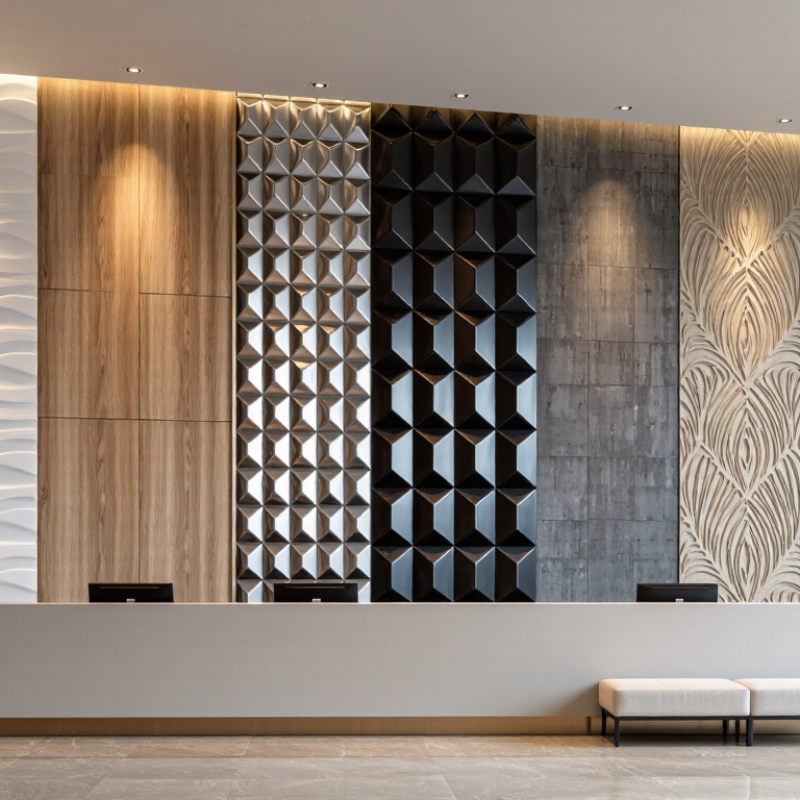
How 3D Wall Panels Are Defined and Classified
A 3D wall panel is an interior surface element with raised, recessed, or patterned geometry that creates visible depth. Unlike flat wallcovering, it changes how light falls across a room. Classification is not always neat: some products are decorative, while others also manage sound or protect the wall. Buyers should check the technical sheet, not rely on photographs alone.
Common material groups include gypsum, wood or wood-fibre, mineral composites, plastics, and plant-based materials. Panels can also be classified by installation: direct-fixed, mechanically mounted, or modular systems. A third useful distinction is performance. Decorative panels need clear fire and moisture information; acoustic panels need measured absorption data, such as a tested noise reduction coefficient. Small details matter. Check panel weight, joint design, cleaning needs, and substrate requirements before comparing prices. In humid rooms, a beautiful surface may still be the wrong choice.
This scrutiny matters in a resource-intensive sector. The 2023 Global Status Report for Buildings and Construction, by UNEP and GlobalABC, reports that buildings accounted for 34% of global energy demand and 37% of energy- and process-related CO₂ emissions in 2022. These figures describe the wider sector, not the impact of any single panel. Still, they support asking about recycled content, service life, and replacement waste. Claims can be vague. Request test methods and documentation; classifications vary between suppliers and markets.
Materials, Designs, and Performance Features of 3D Wall Panels
Top 10 3D Wall Panels for Global Buyers
3D wall panels vary widely in material, surface, and performance. Common options include gypsum, PVC, MDF, natural wood, bamboo, and plant-fiber composites. Each responds differently to moisture, impact, and cleaning. A textured gypsum panel can create crisp shadows in a dry living room, but it may need careful handling during installation. PVC panels are easier to wipe, though their surface can feel less warm than wood. There is no perfect material for every room.
Design affects more than appearance. Deep geometric grooves catch side lighting and make a feature wall feel more dimensional; shallow patterns are often easier to dust. Wood and bamboo bring visible grain, while molded panels offer more uniform shapes. Check panel weight, edge finish, and installation method before comparing prices. These details influence labor and the final look.
Performance deserves equal attention. Ask suppliers for clear specifications on fire behavior, moisture resistance, and indoor emissions, then confirm that test documents match the exact product. Useful details. Also check whether replacement panels will be available later. A sample viewed under showroom lights can look quite different beside a window at home; I have seen color choices disappoint for exactly that reason. Even careful planning misses things. Room conditions, workmanship, and maintenance all affect how panels age, so treat impressive product claims as a starting point, not a guarantee.
The Top 10 3D Wall Panel Types for Global Buyers
For global buyers, the best 3D wall panel depends on climate, substrate, installation method, and the room’s use. Gypsum panels offer crisp geometric relief and paintable surfaces; MDF gives consistent patterns at moderate cost but needs careful moisture control. Solid-wood and wood-veneer panels bring visible grain, while bamboo adds a linear, natural texture. PVC panels are lightweight and easy to clean; wood-plastic composite panels can suit areas needing greater moisture resistance. Cork provides a softer, tactile finish. PET-felt panels add texture and may help reduce reverberation, but buyers should request tested acoustic ratings. Mineral-coated ceramic panels are durable, though heavier and more demanding to install. Small details matter.
Material choice also affects project impact. The UN Environment Programme and GlobalABC’s 2024 Global Status Report states that buildings and construction account for 34% of global energy demand and 37% of energy- and process-related CO₂ emissions. The World Green Building Council’s Bringing Embodied Carbon Upfront report attributes about 11% of global energy-related emissions to building materials and construction. These figures are not panel-specific, but they make material quantity and service life worth checking. Ask suppliers for panel weight, recycled-content documentation, finish details, and installation instructions. Compare test results, not just catalogue claims. A low-cost panel can become costly if edges swell, colors vary between batches, or replacement pieces are unavailable. Buyers sometimes overlook this. The perfect pattern matters less when the wall behind it is uneven.
How to Compare Panels by Cost, Durability, and Installation
Top 10 3D Wall Panels for Global Buyers: How to Compare Panels by Cost, Durability, and Installation
A panel’s price per square metre is only the starting point. Include trims, adhesive, cutting waste, surface preparation, and installer time in the comparison. The National Association of Home Builders’ 2024 Cost of Construction Survey put interior finishes at 24.1% of average U.S. home construction costs. That figure covers much more than wall panels, but it shows why finish choices deserve a full project budget. Small details matter.
Installation can change the total quickly. Check whether panels need a flat substrate, specialist tools, or careful alignment around outlets and corners. The U.S. Bureau of Labor Statistics reported a median annual wage of $46,050 for construction laborers and helpers in May 2023. This is not a panel-installation rate, but it reminds buyers that labor has a real cost. Ask suppliers for a written scope, not just a material quote.
Durability depends on the panel material and the room. Moisture resistance matters in kitchens; impact resistance may matter in busy corridors. Request relevant test documents, cleaning guidance, and warranty limits before comparing products. A thick panel is not automatically a durable one. The comparison is imperfect, too: lab results cannot fully predict years of use, and local installation conditions vary. A sample on the actual wall can reveal seams, shadows, and surface texture before a large order.
Global Sourcing Factors: Standards, Shipping, and Project Needs
Global buyers should compare more than color and price when selecting 3D wall panels. Check the panel material, installation method, and intended room conditions. A hotel corridor may require different fire-performance documentation from a private residence. Ask suppliers for current test reports, then confirm that the stated classifications match the destination market and project specification. Requirements vary. Indoor air-quality evidence and moisture resistance may also matter, especially in humid climates or busy public spaces. Paperwork is useful, but it does not replace review by the project’s architect or local compliance professional.
Shipping can change the real cost and condition of an order. Request packed dimensions, gross weight, pallet details, and a clear estimate of lead time. For long-distance transit, ask how corners and surface textures are protected against impact and moisture. One dented edge can be obvious under grazing light. Order a sample early, and compare its finish with the approved specification before production. Small color shifts happen. A neat spreadsheet cannot predict every site condition, and I would not assume that a sample represents every production batch. For large projects, confirm tolerances, replacement procedures, and installation guidance in writing. Also check that quantities include a sensible allowance for cuts and damaged pieces, without ordering blindly.