Top Home Cement Types for Global Buyers to Consider?
Choosing the right home cement is crucial for any construction project. This material plays a vital role in durability and aesthetics. As global buyers seek the best options, understanding various types is essential.
Home cement can vary widely in composition and application. Some types are suitable for interior projects, while others thrive in outdoor conditions. Factors such as climate and purpose significantly influence the choice.
However, navigating these options isn't always straightforward. Misunderstandings can lead to mismatched products and project delays. Therefore, careful consideration is necessary. Consulting experts and researching characteristics can help make informed decisions. Selecting the right home cement not only impacts the immediate project but also the long-term integrity of structures.
Understanding the Different Types of Cement in Home Construction
Cement plays a critical role in home construction. Understanding its types is vital for optimal performance. Ordinary Portland Cement (OPC) is the most widely used type, known for its versatility and strength. According to a report by the Global Cement and Concrete Association, over 70% of cement produced globally is OPC. Its applications range from foundations to walls, making it a trusted choice.
Another type is Portland Pozzolana Cement (PPC), which is gaining popularity. It contains pozzolanic materials, enhancing durability and resistance to chemical attacks. This makes it ideal for environments with exposure to moisture. Recent studies show that using PPC can reduce construction carbon footprints by up to 15%, a crucial consideration for eco-conscious builders.
Tip: When selecting cement, consider the environment. Choose PPC for areas prone to moisture.
Understanding the differences among types can prevent costly mistakes. For example, some homeowners may think all cements behave similarly. However, each type has distinct properties affecting strength, setting time, and durability. Local climate conditions and soil type should inform your cement choice.
Tip: Consult with a construction expert. Their insights can clarify the best options for your project.
Make informed choices when it comes to home construction. The right cement can enhance your home’s lifespan and sustainability.
Top Home Cement Types for Global Buyers to Consider
This chart illustrates the popularity of various types of cement in home construction. Portland Cement is the most widely used, while White Cement has the least popularity among global buyers.
Key Properties of Portland Cement for Residential Use
Portland cement is the most commonly used cement for residential applications. Its strength and versatility make it a preferred choice among builders globally. According to the Global Cement Report, Portland cement accounts for over 80% of the total cement consumption in the construction sector. This statistic underlines its significance in residential construction.
One of the key properties of Portland cement is its compressive strength. Typically, it can achieve a compressive strength of over 32 MPa within 28 days when mixed correctly. This makes it ideal for structural components like foundations and walls. It is important to note that while Portland cement is durable, its performance can vary based on environmental factors and mix ratios. Moisture control during curing is critical; failure to address this can lead to cracks.
Another noteworthy aspect is its setting time. Portland cement generally sets within a few hours, providing a quick turnaround in construction projects. However, different environmental conditions can extend this setting time. Caution is advised when working in cooler climates. Additionally, experts suggest that excessive heat can compromise the mixing process, leading to suboptimal results. Understanding these nuances is essential for effective use in residential projects.
Top Home Cement Types for Global Buyers to Consider
| Cement Type |
Key Properties |
Common Uses |
Strength (MPa) |
Setting Time |
| Portland Cement |
High strength, durability, and versatility |
Concrete structures, pavements |
20-40 MPa |
Initial: 2-4 hrs, Final: 6-8 hrs |
| Blended Cement |
Lower environmental impact, improved workability |
Residential projects, bridges |
15-35 MPa |
Initial: 3-5 hrs, Final: 8-10 hrs |
| Rapid Hardening Cement |
Fast strength gain, early load-bearing capacity |
Pavement repairs, precast products |
30-50 MPa |
Initial: 1-2 hrs, Final: 4-6 hrs |
| Low Heat Cement |
Reduced heat of hydration, lower temperature rise |
Mass concrete structures, dams |
20-30 MPa |
Initial: 6-12 hrs, Final: 12-24 hrs |
| Sulphate Resisting Cement |
High resistance to sulphate attacks |
Sewer structures, coastal areas |
25-45 MPa |
Initial: 2-4 hrs, Final: 6-8 hrs |
Comparing the Advantages of Blended Cements for Home Buyers
Blended cements are gaining popularity among home buyers. They combine Portland cement with other materials. This enhances performance and sustainability. Many homeowners appreciate reduced environmental impact. A significant advantage of blended cements is their versatility. They can be tailored to meet various project needs. This flexibility is crucial for diverse construction tasks.
Using blended cements can lead to stronger structures. These cements often improve durability and resistance to cracking. However, not all blended cements are created equal. Some may not perform as well under specific conditions. Home buyers should consult with experts before making a decision. Understanding the local climate and soil conditions is essential.
Cost-effectiveness is another consideration. Blended cements can sometimes be cheaper than traditional options. Yet, investing in quality materials often pays off in the long run. Homeowners might face challenges in sourcing the right type. Each region may have different availability and quality. Thus, it’s wise to research local suppliers thoroughly.
Exploring Eco-Friendly Cement Options for Sustainable Building
Eco-friendly cement options are gaining traction in the construction industry. These alternatives reduce carbon emissions significantly. Traditional cement production is energy-intensive. It contributes heavily to global greenhouse gas emissions. Many sustainable cements use waste materials. They incorporate by-products like fly ash and slag.
Limestone-based cement is a notable option. It requires less energy for production. It also has a lower carbon footprint than ordinary Portland cement. Additionally, recycled content in cement can improve sustainability. These materials enhance the properties of concrete. They also minimize reliance on virgin resources. However, some eco-friendly options can lack durability. This raises questions about long-term performance.
Innovations continue to emerge in sustainable cement technologies. Researchers are experimenting with bio-based cements that use natural materials. These can bind effectively while being non-toxic. Exploring these materials needs careful consideration. The balance between performance and environmental impact should always be evaluated. The construction industry must prioritize sustainability. Striving for greener solutions is no longer optional. It’s a necessity for the future.
Impact of Regional Cement Standards on Global Purchasing Decisions
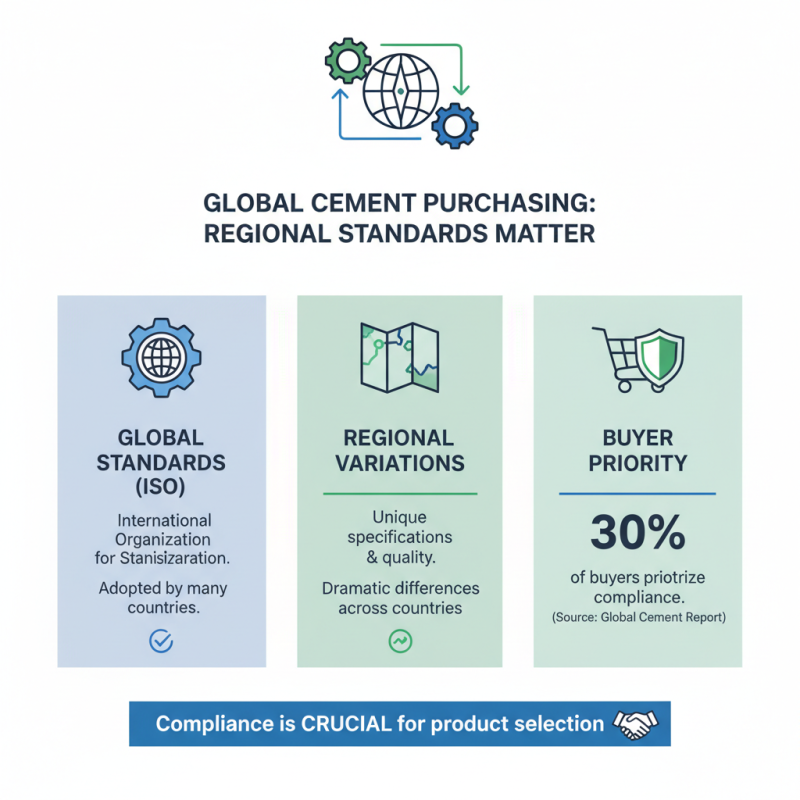
When it comes to global cement purchasing decisions, understanding regional standards is crucial. Different countries have outlined unique specifications and quality requirements. For example, the International Organization for Standardization (ISO) has set standards that many countries adopt. However, regional regulations often vary dramatically, influencing product selection. A report by the Global Cement Report highlights that 30% of buyers consider compliance with these standards as a top priority.
Some countries emphasize specific attributes, such as sulfate resistance or strength. In India, the Bureau of Indian Standards (BIS) dictates cement grades that meet regional needs. Meanwhile, European countries might focus on environmental sustainability, such as reduced carbon footprints. These distinctions can complicate global procurement efforts. Buyers must navigate these complexities to ensure compliance and quality.
Tip: When sourcing cement internationally, research the regulatory landscape of target markets. Understanding local standards can prevent costly missteps.
Quality assurance might seem straightforward. Yet, regional certifications can be confusing. Underrating these differences may lead to product failures. Buyers should frequently consult updated industry reports to stay informed about evolving standards.
Tip: Regularly engage with local experts to gain insights into certification processes. Their knowledge can mitigate risks tied to non-compliance.