Top 10 Standard Concrete Types for Construction Projects You Should Know
In the ever-evolving field of construction, the choice of materials plays a pivotal role in determining the success and longevity of any project. Among the various options available, standard concrete stands out as a fundamental building block due to its versatility, durability, and cost-effectiveness. As construction techniques and architectural designs continue to advance, understanding the different types of standard concrete becomes crucial for professionals and enthusiasts alike. This knowledge not only aids in making informed decisions but also enhances the quality and safety of structures.
This article delves into the top ten standard concrete types that are essential for a wide range of construction projects. From traditional mixes to specialized formulations, each type of concrete serves unique purposes and offers distinct advantages. By exploring these standard concrete varieties, readers will gain insight into their properties, applications, and best practices for usage. Whether you are embarking on a residential build, commercial development, or infrastructure project, knowing which standard concrete type to utilize can significantly impact the project's overall efficiency and sustainability.
Overview of Standard Concrete Types in Construction
In the realm of construction,
understanding the various types of standard concrete is essential for choosing the right material for specific projects.
Each type of concrete serves distinct purposes, characterized by its unique composition and properties.
Among these, traditional concrete is the most common choice,
typically comprising cement, water, and aggregates. Known for its durability and strength, it is ideal for foundational work
in residential and commercial structures.
Another significant type is reinforced concrete,
which incorporates steel bars or meshes to enhance its tensile strength. This combination permits the construction of larger
and more complex structures, such as bridges and high-rise buildings, where additional support is vital.
Furthermore, there are specialized concrete types like lightweight concrete,
which is made with lightweight aggregates, making it suitable for projects where reducing weight is necessary,
such as in precast elements or certain roofing applications.
Together, these standard concrete types facilitate a variety of construction methodologies, ensuring
safety, efficiency,
and longevity in building projects.
Conventional Concrete: Composition and Applications
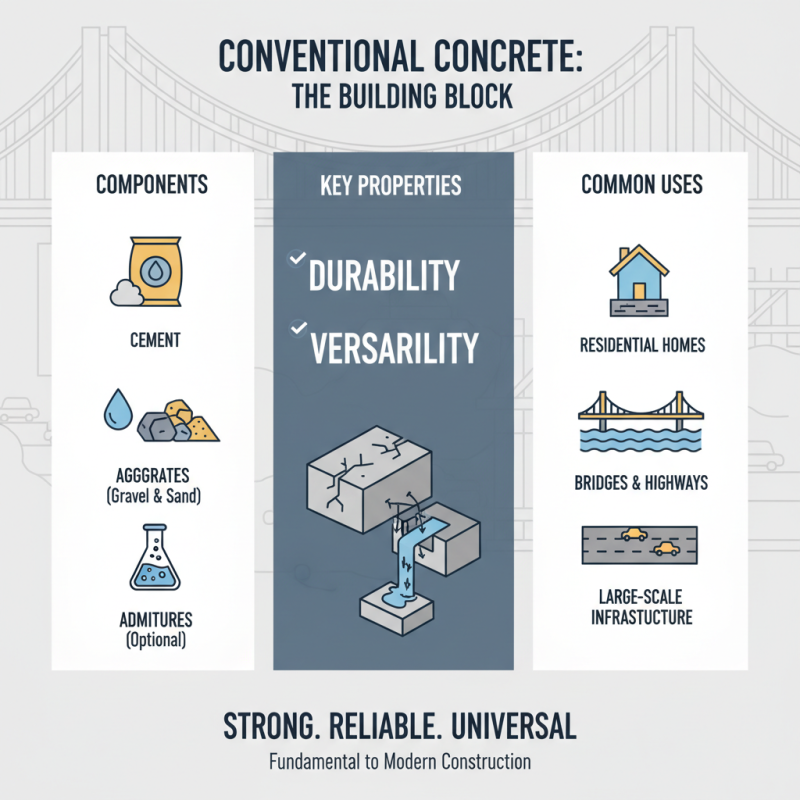
Conventional concrete is a fundamental material in construction, known for its durability and versatility. Composed primarily of cement, water, aggregates (gravel and sand), and occasionally admixtures to enhance certain properties, conventional concrete is the most widely used type in various building projects. Its standard composition allows for the creation of strong and reliable structures, from residential homes to large-scale infrastructures like bridges and highways.
When utilizing conventional concrete, it’s essential to consider the water-cement ratio, as this significantly impacts the strength and workability of the mixture. A lower water ratio typically leads to stronger concrete but may require more effort to mix. Additionally, the quality of aggregates plays a crucial role in the concrete’s overall performance. Selecting clean, well-graded aggregates helps to reduce porosity and increase strength.
Tips for construction projects include performing on-site tests for concrete consistency and strength, ensuring all materials are sourced from reputable suppliers, and implementing proper curing techniques to enhance hydration and reduce cracking. Attention to these details ensures the longevity and durability of the concrete structures, ultimately leading to more successful construction outcomes.
Reinforced Concrete: Benefits and Structural Integrity
Reinforced concrete is a fundamental element in modern construction, known for its exceptional benefits and structural integrity. According to industry reports, structures built with reinforced concrete can withstand greater loads and resist cracking compared to those using traditional concrete. The inclusion of steel reinforcement bars (rebars) enhances tensile strength, making it ideally suited for high-stress environments. A study by the American Concrete Institute indicates that reinforced concrete can extend the lifespan of structures by up to 50 years, significantly reducing the need for repairs and maintenance over time.
The durability of reinforced concrete is further reflected in its performance against various environmental factors. It exhibits high resistance to fire, water, and even seismic activity when appropriately designed. Research published by the National Institute of Standards and Technology emphasizes that reinforced concrete structures are better equipped to handle dynamic loads caused by earthquakes, showcasing a lower collapse risk during seismic events. This resilience not only ensures the safety of the occupants but also contributes to the long-term sustainability of construction projects, making reinforced concrete a preferred choice for architects and engineers alike.
Top 10 Standard Concrete Types for Construction Projects
This bar chart displays the common usage percentage of various types of concrete in construction projects. Reinforced concrete stands out as the most commonly used type, significantly impacting structural integrity and safety in building designs.
High-Performance Concrete: Features and Use Cases
High-performance concrete (HPC) represents a significant advancement in construction materials, designed to deliver enhanced durability, strength, and resistance to environmental factors. One of the standout features of HPC is its improved workability, which allows for easier placement and finishing, making it ideal for complex structures. Moreover, HPC often incorporates various supplementary cementitious materials, allowing for tailored properties depending on the project's requirements. This versatility makes it suitable for a range of applications, from high-rise buildings to bridges and precast elements.
Use cases for high-performance concrete are widespread in infrastructure projects where durability and longevity are paramount. For example, in areas exposed to harsh weather conditions or heavy chemical exposure, HPC can greatly extend the lifespan of structures, reducing the need for frequent maintenance. Additionally, its high compressive strength enables the construction of thinner and lighter elements, contributing to material efficiency and lowering overall project costs. As demands for sustainable construction increase, HPC continues to evolve, offering innovative solutions for modern engineering challenges.
Lightweight Concrete: Properties and Advantages
Lightweight concrete has gained popularity in recent years due to its unique properties and advantages that make it an excellent choice for various construction projects. One of the primary characteristics that set lightweight concrete apart from traditional concrete is its lower density, often achieved by incorporating lightweight aggregates such as expanded clay, expanded polystyrene beads, or volcanic pumice. According to the American Concrete Institute (ACI), this reduction in density can lower the weight of the concrete by 20% to 40%, resulting in significant savings on structural support and foundation requirements.
The benefits of lightweight concrete extend beyond just its weight. Its thermal insulation properties are notably superior to standard concrete, which can help in energy conservation for buildings. The National Institute of Standards and Technology (NIST) reported that structures utilizing lightweight concrete can achieve a reduction in heating and cooling costs by up to 30%. Additionally, lightweight concrete exhibits improved workability during application, allowing for easier handling and placement, which can streamline construction timelines. With these favorable attributes, more architects and engineers are considering lightweight concrete as a sustainable and efficient solution for modern construction demands.
Conclusion
This article provides a comprehensive overview of the various standard concrete types essential for construction projects. It begins with a discussion of conventional concrete, highlighting its basic composition and common applications. The focus then shifts to reinforced concrete, which offers enhanced structural integrity and durability, making it a preferred choice in many building designs.
Additionally, the article explores high-performance concrete, known for its impressive features and versatility in challenging environments, alongside lightweight concrete that boasts unique properties beneficial for specific construction needs. Finally, it examines decorative concrete, which presents aesthetic options and techniques to enhance the visual appeal of structures. Understanding these standard concrete types is crucial for architects and builders to select the appropriate material for their construction projects.