Why Choose an FBE Coating LSAW Steel Pipe Factory?

Choosing an FBE coating LSAW steel pipe factory means evaluating more than price and delivery time. Large-diameter longitudinal submerged arc welded pipes may serve water, energy, and industrial projects, where coating quality affects long-term protection. The right supplier should explain its process clearly, from surface preparation to final inspection.

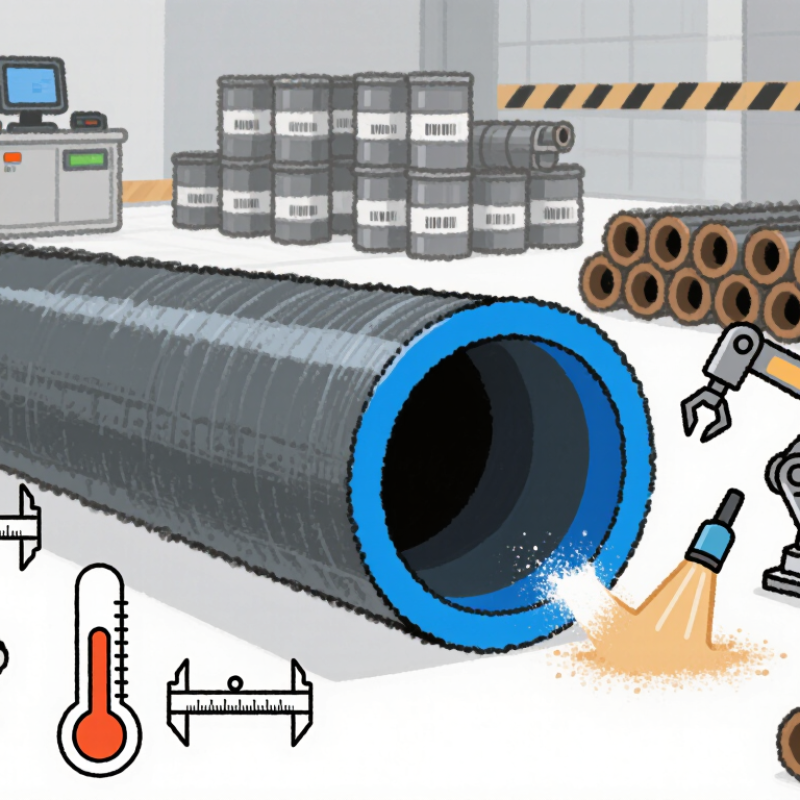
Details matter. Ask how the factory controls abrasive cleaning, steel temperature, powder application, and coating thickness. On a production line, these steps can be checked against project specifications, while holiday testing can help identify coating discontinuities. A useful discussion also covers pipe dimensions, weld inspection records, traceability, and how damaged areas are repaired before shipment. Requesting sample inspection reports can make general quality claims easier to assess.

Not every plant handles every specification equally well. A capable manufacturer should state its production limits and identify where project requirements need confirmation. That candor is useful. Buyers should compare documented procedures and recent inspection evidence, rather than relying on polished brochures alone. Site visits, when practical, can reveal ordinary but telling details: calibrated instruments, orderly powder storage, and clear identification on finished pipes. These observations do not guarantee performance, but they help form a better-informed judgment. This outline explores how factory experience, process control, testing, and communication can guide a careful supplier choice—while recognizing that the final coating system must suit the actual service conditions.
Why Choose an FBE Coating LSAW Steel Pipe Factory?

Understanding FBE-Coated LSAW Steel Pipes

FBE (fusion-bonded epoxy) is a powder coating applied to prepared steel and cured with heat. On an LSAW pipe, it forms a protective layer over the pipe body and longitudinal weld. The coating helps limit contact between steel and moisture or corrosive soil. It does not add structural strength to the pipe. That distinction matters.

Reliable performance begins before coating. The steel surface must be cleaned and prepared, since oil, rust, or scale can weaken adhesion. During production, temperature and coating thickness need close control. Inspectors may check thickness, adhesion, and coating continuity using methods specified for the project. Tiny gaps can matter. Pipe ends and handling points also deserve attention because damage may occur after coating.

A capable factory should explain its preparation steps, inspection records, and repair procedures in clear terms. Ask how it protects coated pipes during lifting and storage, and how cut ends or field joints are addressed. FBE is not a universal solution: soil conditions, operating temperature, and installation methods can affect coating selection. Specifications still need careful review; in practice, that step is easy to rush.
How LSAW Steel Pipes Are Manufactured

LSAW steel pipe begins as a flat, inspected steel plate. Technicians check its thickness and surface before milling the edges to prepare a consistent weld groove. The plate is then pressed into a cylindrical shape, often through UOE or JCOE forming. Small variations can remain. They deserve attention.

After tack welding holds the seam in place, submerged arc welding joins it from the inside and outside. The process uses flux to shield the molten weld pool. Operators monitor welding parameters and inspect the seam for defects. Ultrasonic or radiographic testing may be used, depending on the project requirements. Each pipe is also checked for dimensions, and hydrostatic testing can verify its pressure resistance.

Only after required inspections does surface preparation for fusion-bonded epoxy coating begin. The pipe is typically abrasive-blasted to remove scale and leave a clean, textured surface. Dust and contamination must be controlled before the epoxy powder is applied and cured with heat. A small missed patch can affect coating performance, so thickness and coverage checks matter. Actual production sequences and acceptance criteria vary by specification.

Why Choose an FBE Coating LSAW Steel Pipe Factory? - How LSAW Steel Pipes Are Manufactured

Manufacturing Stage What Happens Typical Controls or Data Why It Matters
1. Plate inspection Steel plate is checked before forming, with material identification and dimensional checks. Grade, thickness, width, surface condition, and material test documentation are checked against the purchase specification. Confirms that the starting material is suitable for the specified pipe design and traceability requirements.
2. Edge preparation Plate edges are milled or otherwise prepared to create the required weld groove and fit-up. Bevel geometry, edge straightness, plate width, and cleanliness are controlled to the applicable procedure. Consistent edges support accurate forming and sound longitudinal welds.
3. Plate forming The plate is shaped into a cylindrical or near-cylindrical pipe shell using a forming method such as UOE or JCOE. Forming sequence, shell geometry, roundness, and edge alignment are monitored against the required dimensions. Controlled forming helps achieve the specified diameter and fit-up for welding.
4. Tack welding and fit-up The formed shell edges are aligned and temporarily joined before the main longitudinal weld. Root opening, mismatch, alignment, and tack-weld condition are checked in accordance with the approved welding procedure. Good fit-up reduces weld defects and helps maintain pipe shape during welding.
5. Longitudinal SAW The longitudinal seam is welded, commonly using submerged arc welding (SAW) on the inside and outside of the pipe. Welding parameters, consumables, operator qualifications, and procedure records are controlled as required by the applicable specification. A controlled welding process supports consistent seam quality through the pipe wall.
6. Weld and dimensional inspection The weld seam and pipe dimensions are inspected after welding and, where required, after mechanical expansion. Inspection may include visual examination and specified non-destructive testing, such as ultrasonic testing or radiographic testing; the extent depends on the order and governing standard. Inspection verifies compliance with the project’s weld-quality and dimensional requirements.
7. Hydrostatic testing The pipe is pressure-tested when required by the applicable product specification or purchase order. Test pressure, hold time, and acceptance criteria are determined by the governing standard, pipe dimensions, grade, and order requirements. Provides a specified check of pipe-body integrity under the test conditions.
8. Surface preparation for FBE The pipe surface is cleaned and abrasive-blasted before coating; dust and surface contaminants are removed. A commonly specified cleanliness level is Sa 2½ under ISO 8501-1. A profile in the approximate range of 50–100 μm may be specified, depending on the coating system and project requirements. Cleanliness and surface profile affect FBE adhesion and coating performance.
9. FBE application and curing The prepared pipe is heated, electrostatically coated with fusion-bonded epoxy powder, and cured under controlled conditions. Pipe temperature, powder application, cure conditions, and coating thickness are controlled to the approved coating specification. Single-layer FBE thickness is project-dependent; values around 300–500 μm are commonly specified for some systems. Correct application and curing create a continuous protective coating bonded to the steel surface.
10. Coating inspection and dispatch The finished coating is inspected, pipe ends are protected as specified, and product records are prepared for shipment. Checks may include visual condition, thickness, adhesion, and holiday detection where required. Acceptance limits and inspection frequency follow the project specification. Final checks help confirm coating continuity, documentation, and protection during handling and transport.

Note: Process details, test methods, and acceptance limits vary by pipe specification, coating standard, and project requirements. The values shown are typical examples, not universal requirements.

How FBE Coating Protects Pipes from Corrosion

An FBE-coated LSAW steel pipe factory brings corrosion control into the manufacturing line. In practical pipeline work, steel deteriorates when water, oxygen, and salts reach its surface. Fusion-bonded epoxy creates a dense electrical barrier around prepared steel. It reduces moisture transfer and interrupts the corrosion process. The protection starts before coating. Clean steel matters.

Factory technicians abrasive-blast the pipe to remove mill scale, rust, and oil. This treatment creates a surface profile that helps epoxy bond firmly. Heated powder melts onto the steel and forms a continuous protective film during cooling. The coating can resist buried soil, changing humidity, and many chemical exposures. Inspectors check thickness, adhesion, and coating continuity. Holiday detection can locate tiny pinholes that visual inspection may miss. Recorded test results also support traceability and process improvement.

LSAW production adds another quality consideration. The longitudinal weld seam must receive even coverage without weak edges or exposed areas. Experienced teams inspect weld zones, pipe ends, lifting points, and repaired sections. A small scratch can become a serious entry point for corrosion. FBE is not magic. Poor blasting, excessive impact, or incorrect curing can reduce its service life. Field inspections often show that handling damage causes unexpected failures. This is a useful reminder: coating quality depends on disciplined preparation, careful application, and honest inspection.

Factory Capabilities That Shape Pipe Quality

Why Choose an FBE Coating LSAW Steel Pipe Factory?

Factory capabilities directly shape pipe quality. An experienced LSAW steel pipe factory controls plate chemistry, edge milling, submerged arc welding, and dimensional correction. Each stage leaves evidence in inspection records. Ultrasonic testing can reveal lamination, incomplete fusion, or hidden weld defects before coating begins. API 5L requirements also support controlled material traceability and mechanical testing.

FBE performance depends on surface preparation, heating accuracy, powder application, and curing control. ISO 21809-2 provides a recognized framework for external pipeline coating systems. Surface cleanliness must be verified, not guessed from appearance. A factory should record steel temperature, blast profile, coating thickness, adhesion, and holiday detection results. The NACE IMPACT Study estimated global corrosion costs at about 3.4% of global GDP. That figure explains why coating discipline matters, although field conditions can still expose weaknesses.

Tips: Ask for batch records, calibration certificates, and repair procedures. Check how rejected pipes are isolated. A smooth coating proves little by itself. In practice, even a capable factory can experience process drift. Humidity changes, worn blasting media, or rushed curing may reduce protection. The World Steel Association reported approximately 1.89 billion tonnes of crude steel production in 2023, showing the scale of modern steel manufacturing. Large output is not equal to consistent quality. Look for stable procedures, trained inspectors, and test results linked to each pipe.

Why Choose an FBE Coating LSAW Steel Pipe Factory?

Factory Capabilities That Shape Pipe Quality

Typical FBE coating thickness: 300–500 μm is a commonly encountered range for line-pipe coatings; actual requirements depend on the project specification. Consistent surface preparation, temperature control, powder application, and inspection help a factory achieve an even coating.

How to Assess a Factory for Your Project Needs

Why Choose an FBE Coating LSAW Steel Pipe Factory?

How to Assess a Factory for Your Project Needs

Choosing an FBE-coated LSAW steel pipe factory requires evidence, not polished brochures. The NACE IMPACT study estimated global corrosion costs at 3.4% of GDP, or about US$2.5 trillion annually. It also reported that 15–35% of corrosion costs could be reduced through effective prevention.

These figures make coating quality a project-control issue, not a cosmetic upgrade. Ask for records showing steel heat numbers, plate chemistry, weld inspection, and pipe traceability.

Visit the production line if possible. Watch abrasive blasting, surface cleanliness checks, preheating, powder application, and curing. ISO 21809-2 provides testing guidance for fusion-bonded epoxy coatings used on pipeline components.

A capable factory should demonstrate coating thickness readings, adhesion results, holiday detection, cathodic-disbondment testing, and repair procedures. Small details matter. Dust on a blasted surface can weaken adhesion. Poor temperature control can leave an attractive but under-cured film.

Request recent, project-similar test reports rather than generic certificates. Confirm laboratory calibration, sampling frequency, nonconformance handling, and production capacity during peak periods.

Review how the factory manages LSAW weld seam geometry before coating. That step is often overlooked. A factory may meet a standard on paper yet struggle with long pipe lengths, winter humidity, or urgent replacement batches.

This is where supplier interviews become useful, although interview answers can still be incomplete. A witnessed trial order reveals more than a confident presentation.

The owner of this website has made a commitment to accessibility and inclusion, please report any problems that you encounter using the contact form on this website. This site uses the WP ADA Compliance Check plugin to enhance accessibility.