Top 10 Types of Portland Concrete for Global Buyers

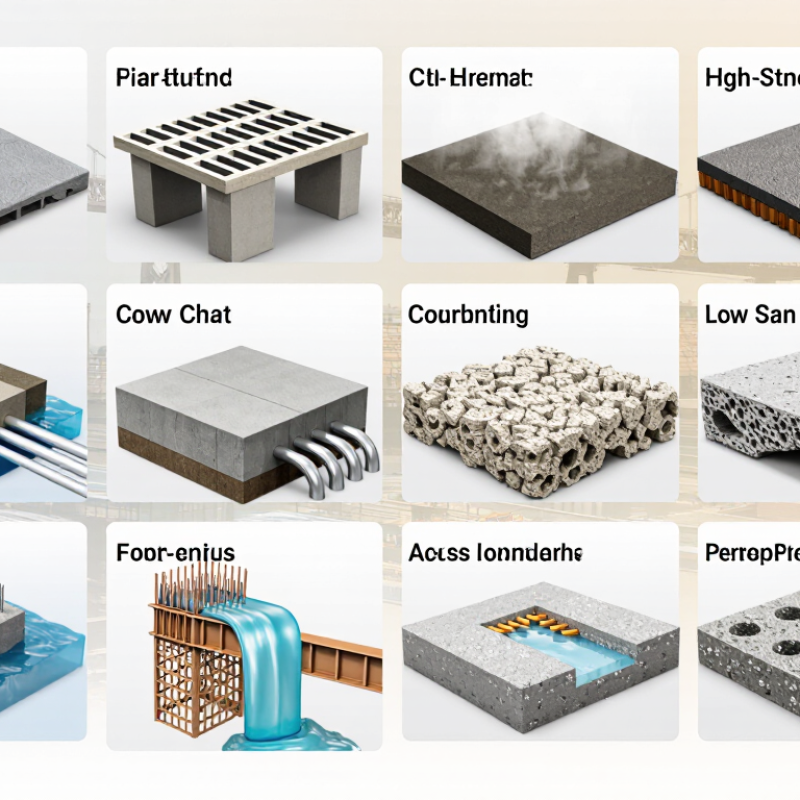
Global buyers need more than a simple list of concrete products. They need reliable guidance for selecting Portland concrete under different climates, construction schedules, budgets, and performance requirements. This guide introduces ten important types, from ordinary-strength mixes to high-strength, rapid-hardening, low-heat, sulfate-resistant, lightweight, fiber-reinforced, self-consolidating, air-entrained, and pervious concrete.

Each type serves a different purpose. A bridge deck may require high durability and low permeability. A cold-weather repair may depend on rapid strength development. A residential floor might benefit from air entrainment, fibers, or a lightweight aggregate. Small differences in water content, cement ratio, aggregate grading, and curing conditions can change the final result significantly. Concrete is less forgiving than many buyers expect.

For international sourcing, product names alone are not enough. Buyers should review mix designs, compressive-strength results, slump ranges, setting times, curing instructions, and applicable standards. ASTM, EN, and regional specifications may describe similar materials differently. Supplier experience also matters, especially when shipping materials across humid ports, hot warehouses, or long inland routes.

Searching for “concrete portland” may produce many suppliers, but not every listing offers comparable quality. Request recent test reports, batch information, technical data sheets, and clear packaging details. Ask practical questions. Can the supplier support local testing? Does the mix suit the project’s aggregate and water conditions? Some recommendations may still need adjustment after site trials. That uncertainty deserves attention, not confident promises. Reliable purchasing comes from documented performance, professional review, and realistic field expectations.
Top 10 Types of Portland Concrete for Global Buyers

What Portland Concrete Is and How Its Main Classes Differ

Portland concrete is concrete made with Portland cement, water, and graded aggregates such as sand and crushed stone. Its performance depends on mix design, curing, exposure, and site workmanship. The term “class” is not universal. Standards and suppliers may use different names, so global buyers should check the applicable specification before comparing products.

Common classes include normal-strength, high-strength, rapid-hardening, low-heat, sulfate-resistant, air-entrained, lightweight, fiber-reinforced, self-consolidating, and decorative concrete. Normal-strength concrete suits slabs, foundations, and general structural work. High-strength mixes support heavily loaded columns but may require tighter quality control. Rapid-hardening concrete can shorten repair schedules. Low-heat concrete helps reduce cracking in thick foundations. Sulfate-resistant concrete is useful in aggressive soils or groundwater. Air-entrained concrete handles freeze-thaw cycles more reliably. Lightweight concrete reduces structural dead load. Fiber-reinforced concrete can limit shrinkage cracks, although it does not replace proper reinforcement. Self-consolidating concrete flows around dense steel without extensive vibration. Decorative concrete changes surface appearance through texture, color, or exposed aggregate.

Test the details. Buyers should review compressive strength, slump, air content, aggregate size, curing requirements, and exposure limits. A mix that performs well in a dry warehouse may fail near saltwater. That mistake is common. Delivery temperature and transport time also affect workability. No class is automatically best. Project conditions decide the answer. Even experienced teams should verify trial batches, because field results can differ from laboratory expectations.

Top 10 Types of Portland Concrete for Global Buyers — What Portland Concrete Is and How Its Main Classes Differ
No. Concrete Type or Class Defining Characteristics Typical Compressive Strength at 28 Days Typical Fresh Density Common Applications Main Purchasing Considerations
1 Normal-Weight Portland Concrete Conventional Portland-cement concrete made with normal-weight mineral aggregates. It is the general-purpose reference class for many structural and civil works. 20–40 MPa
(2,900–5,800 psi)
Approximately 2,200–2,400 kg/m³
(137–150 lb/ft³)
Foundations, slabs, beams, columns, pavements, retaining walls, and general building work. Usually the most widely available and economical option. Specify exposure conditions, aggregate size, slump, strength, and local standard.
2 Lightweight Portland Concrete Uses lightweight aggregates or lightweight fines to reduce density and dead load. Structural and nonstructural grades are available. 15–35 MPa
(2,200–5,100 psi); higher grades are possible
Approximately 1,440–1,920 kg/m³
(90–120 lb/ft³)
Precast panels, elevated slabs, bridge decks, high-rise construction, and projects with strict dead-load limits. Lower density can reduce structural loads, but aggregate availability, absorption, pumping, finishing, and moisture control require attention.
3 High-Strength Concrete Designed to achieve substantially higher compressive strength through a low water-to-cementitious-materials ratio, optimized aggregate grading, and often chemical admixtures. Typically 50–100 MPa
(7,250–14,500 psi)
Approximately 2,200–2,500 kg/m³
(137–156 lb/ft³)
High-rise columns, heavily loaded industrial floors, bridges, precast elements, and long-span structures. Strength alone does not guarantee durability. Confirm curing requirements, heat development, shrinkage, and local testing procedures.
4 High-Performance Concrete Engineered to provide one or more enhanced properties, such as durability, low permeability, early strength, dimensional stability, or improved service life. Often 50–100+ MPa
(7,250–14,500+ psi), but performance is not defined by strength alone
Approximately 2,200–2,500 kg/m³
(137–156 lb/ft³)
Marine structures, bridges, tunnels, wastewater facilities, industrial plants, and severe exposure environments. Buy to a performance specification covering permeability, chloride resistance, freeze–thaw durability, shrinkage, and curing—not only compressive strength.
5 Self-Consolidating Concrete (SCC) Highly flowable, stable concrete that spreads and consolidates under its own weight without conventional mechanical vibration. 25–80 MPa
(3,600–11,600 psi)
Approximately 2,200–2,450 kg/m³
(137–153 lb/ft³)
Congested reinforcement, complex formwork, architectural surfaces, precast production, and difficult-to-access placements. Evaluate slump flow, passing ability, segregation resistance, formwork pressure, delivery time, and placement temperature.
6 Fiber-Reinforced Portland Concrete Contains discrete steel, synthetic, glass, or natural fibers to help control cracking and improve toughness, impact resistance, or post-cracking performance. 20–60 MPa
(2,900–8,700 psi); strength depends on the base mix
Approximately 2,200–2,500 kg/m³
(137–156 lb/ft³)
Industrial floors, tunnel linings, shotcrete, precast products, pavements, and impact-resistant elements. Specify fiber material, length, dosage, orientation requirements, residual strength, mixing sequence, and finishing method.
7 Air-Entrained Portland Concrete Contains a controlled system of microscopic air voids that improves resistance to repeated freezing and thawing and helps accommodate ice formation. 20–50 MPa
(2,900–7,250 psi)
Approximately 2,150–2,400 kg/m³
(134–150 lb/ft³)
Cold-region pavements, bridge decks, parking structures, exterior slabs, and structures exposed to freeze–thaw cycles. Specify target air content for the aggregate size and exposure class. Excessive air can reduce strength and should be controlled during delivery.
8 Pervious or No-Fines Portland Concrete Uses a narrow aggregate grading and little or no fine aggregate to create interconnected voids that allow water to pass through the pavement. 10–25 MPa
(1,450–3,600 psi)
Approximately 1,600–2,000 kg/m³
(100–125 lb/ft³)
Parking areas, walkways, low-volume roads, drainage layers, and stormwater management surfaces. Prioritize infiltration rate, void content, clogging resistance, subgrade drainage, curing, and maintenance rather than maximum strength.
9 Roller-Compacted Concrete (RCC) A very low-slump, near-zero-slump concrete placed with paving equipment and compacted using rollers. It combines cement-bound performance with rapid paving methods. 25–50 MPa
(3,600–7,250 psi)
Approximately 2,200–2,450 kg/m³
(137–153 lb/ft³)
Heavy-duty pavements, container yards, industrial yards, airport areas, and water-retaining structures. Requires specialized batching, placement, compaction, joint planning, and moisture management. Confirm equipment and production capacity before ordering.
10 Rapid-Setting or Early-Strength Concrete Formulated to gain usable strength quickly or to shorten setting and reopening times. It may use specialized cementitious materials, admixtures, or both. 20–50 MPa
(2,900–7,250 psi) at 28 days; early strength is the key requirement
Approximately 2,200–2,500 kg/m³
(137–156 lb/ft³)
Road repairs, airport maintenance, utility work, precast production, cold-weather construction, and time-critical repairs. Confirm working time, setting time, early-strength target, temperature sensitivity, finishing window, curing method, and compatibility with reinforcement.
Technical note: “Portland concrete” generally refers to concrete made with Portland cement or a Portland-cement-based binder. The categories above can overlap; for example, concrete may be both high-performance and fiber-reinforced. Strength, density, slump, air content, durability, and testing requirements vary by aggregate, climate, exposure class, cementitious materials, and applicable local or international standards. Values are indicative ranges for preliminary comparison and should be confirmed through a project-specific mix design.

The Ten Principal Types of Portland Concrete for International Buyers

International buyers need more than a product name. Portland concrete must match climate, loading, placement, and local standards. In practical purchasing work, the ten principal types are normal-strength, high-strength, lightweight, heavyweight, air-entrained, fiber-reinforced, self-consolidating, rapid-setting, sulfate-resistant, and mass concrete.

Normal-strength concrete suits floors, walls, and general structural work. High-strength concrete supports slender columns and heavy industrial loads. Lightweight concrete reduces dead load in high-rise slabs.

Heavyweight concrete uses dense aggregates for shielding and specialized foundations. Air-entrained concrete contains controlled microscopic bubbles, improving resistance to freeze-thaw cycles. Fiber-reinforced concrete can limit cracking around warehouses, pavements, and precast panels.

Self-consolidating concrete flows around congested reinforcement with limited vibration. Rapid-setting concrete helps urgent repairs, but workers must manage its short placing window.

Sulfate-resistant concrete is useful where soil or groundwater contains aggressive sulfates. Mass concrete controls heat buildup in thick foundations and large pours. Temperature records matter.

Specification details should include strength at a stated age, slump or flow, aggregate size, air content, cement type, curing method, and delivery temperature. Buyers should also request test reports, batch traceability, and transport times. Standards differ between countries. A mix accepted in one region may need adjustment elsewhere. No classification is perfect. Site trials can reveal pumping problems, surface defects, or slower strength gain. That extra testing may feel inconvenient, yet it often prevents expensive rejection.

Performance Factors: Strength, Durability, Workability, and Setting Time

Top 10 Types of Portland Concrete for Global Buyers

Global buyers often compare ten Portland-cement concrete options by performance, not labels alone. The practical differences involve strength, durability, workability, and setting time. General-purpose mixes suit buildings and pavements. Rapid-hardening mixes support faster repairs. High-early-strength concrete gains strength quickly, but may require careful temperature control. Low-heat concrete reduces thermal cracking in thick foundations. Sulfate-resistant concrete performs better in aggressive soils and groundwater. Air-entrained concrete handles freeze-thaw cycles more reliably. White concrete serves visible architectural surfaces. Pozzolanic and slag-based mixes can improve long-term durability. Expansive concrete helps control shrinkage when detailed correctly.

Strength should match the actual load schedule, not exceed it blindly. A higher cement content can increase heat and shrinkage.

Durability depends on water-cement ratio, curing, cover depth, and exposure conditions. Concrete placed near seawater needs different protection than indoor flooring. Workability affects pumping, consolidation, and surface quality. A mix that feels stiff on site may tempt workers to add water. That shortcut can weaken the finished concrete. Setting time also changes with weather, cement chemistry, admixtures, and delivery distance.

Field experience shows that laboratory results do not always predict placement behavior. A well-designed trial batch is essential. Measure slump, air content, temperature, and early strength before purchase. Check local standards and climate data.

One detail is often missed: curing quality can matter more than the selected type.

No ranking fits every project. Reconsider the specification when transport, labor, or weather conditions change.

How to Match Each Concrete Type with Global Construction Applications

Top 10 Types of Portland Concrete for Global Buyers

Matching concrete to its application requires more than comparing strength grades. Normal-strength Portland concrete suits residential slabs, sidewalks, and small foundations. High-strength concrete fits bridge piers, high-rise columns, and heavily loaded industrial floors. Rapid-hardening concrete supports urgent repairs where traffic must return quickly. It can cost more and may demand careful temperature control.

Sulfate-resistant concrete works well in coastal soil, wastewater structures, and foundations exposed to aggressive minerals. Low-heat concrete helps control cracking in dams, thick rafts, and large retaining walls. Air-entrained concrete is valuable in freeze-thaw climates, especially for roads and exposed pavements. Lightweight concrete reduces structural load in roofs and upper floors. Fiber-reinforced concrete can limit surface cracking in warehouses, tunnel linings, and sprayed repairs. Self-consolidating concrete flows around dense reinforcement and suits complex columns or narrow forms. No mix is perfect. A stronger concrete may still fail when curing is poor.

Tips: Confirm local standards, cement availability, climate data, and aggregate quality before purchasing. Request trial batches and independent laboratory results. Check slump retention after transport, not only at the plant. For marine or sulfate exposure, review permeability and durability testing. Site teams should record curing temperature, moisture, and early cracking. One overlooked detail can change the correct choice. When project data is incomplete, specify performance requirements and ask a qualified engineer to verify the mix design.

International Purchasing Criteria: Standards, Supply, Cost, and Delivery

Global buyers should compare the project need, not only the lowest quotation. Common options include ordinary, rapid-hardening, low-heat, sulfate-resistant, white, air-entrained, high-strength, self-compacting, fiber-reinforced, and blended Portland concrete. Each option responds to different climates, loads, and construction methods. Ask for the cement type, water-cement ratio, aggregate grading, design strength, and exposure class. Request laboratory reports, batch traceability, and conformity documents against the required national or international standard. Standards differ by market. One certificate may not satisfy local approval.

Supply reliability deserves equal attention. Confirm monthly capacity, raw-material sources, production schedules, and backup arrangements before signing. A qualified supplier should explain controls for moisture, temperature, admixture dosage, and storage time.

For bagged products, inspect pallet wrapping and warehouse ventilation. One torn bag can absorb moisture quickly. For bulk shipments, verify silo compatibility, loading equipment, port access, and cleaning procedures. Small packaging details often create larger site delays. No checklist is perfect.

Compare total landed cost rather than factory price alone. Include testing, export packing, inland transport, ocean freight, insurance, duties, unloading, and possible demurrage. Request a written schedule covering production lead time, vessel windows, documents, and contingency actions. Check whether partial shipments fit changing construction phases. Fast delivery is useless without customs paperwork or test records. Define inspection rights, claim periods, and replacement procedures clearly. Forecasts may be wrong, so review them against actual consumption after the first shipment.

The owner of this website has made a commitment to accessibility and inclusion, please report any problems that you encounter using the contact form on this website. This site uses the WP ADA Compliance Check plugin to enhance accessibility.