7 Tips for Buying Portland Cement Globally?

Buying portland cement across borders is not simply a price exercise. It is a quality, logistics, and risk decision. A cheaper quotation may hide longer sailing times, storage exposure, or inconsistent strength performance.

The International Energy Agency reports that cement production creates roughly 7% of global energy-related and process CO2 emissions. The Global Cement and Concrete Association also estimates that the world uses about 14 billion cubic metres of concrete each year. These figures show the scale of the market, but they do not guarantee reliable supply. Buyers must examine cement type, applicable standards, clinker content, test certificates, packaging, and delivery conditions before signing contracts.

Dr. Karen Scrivener, a leading cement materials scientist, has stated, “The easiest way to reduce the CO2 emissions from cement is to reduce the clinker content.” Her point matters to global buyers. Lower-clinker products may support sustainability goals, but only when local standards, project specifications, and performance data agree. Environmental claims alone are not enough.

Small details matter. Check the mill name. Review recent laboratory results. Confirm moisture protection inside each bag or silo. Compare landed cost, not only the factory price. A port delay can turn a competitive offer into an expensive shortage. No checklist is perfect. Even experienced buyers can overlook currency movement, port congestion, or unsuitable storage conditions.

This guide presents seven practical tips for buying portland cement globally. It focuses on verifiable documents, supplier capability, technical fit, freight planning, and long-term value rather than attractive quotations alone.
7 Tips for Buying Portland Cement Globally?

Define Cement Specifications and Intended Construction Use

Buying Portland cement globally begins with a specification, not a quoted price. Intended construction use should control every technical requirement. For ordinary reinforced concrete, define cement type, strength class, initial setting time, soundness, and fineness. For marine foundations, add sulfate resistance and chloride exposure limits. Precast work may require rapid strength gain, while mass concrete may need low heat hydration. These choices are practical, not cosmetic. USGS Mineral Commodity Summaries 2024 estimated world cement production at about 4.1 billion metric tons in 2023. Large volume does not mean uniform performance. Production methods, raw materials, and testing practices vary between regions. Ask for a current certificate of analysis, test methods, and batch traceability. Request results under the applicable standard, such as ASTM C150/C150M or EN 197-1. Do not accept “general purpose” as a complete specification.

Match the cement to the exposure and concrete mix. A high-strength class can still perform poorly if curing is weak or aggregates react with alkalis. The International Energy Agency reports that cement production contributes about 7% of global energy-related carbon dioxide emissions. That makes clinker content and supplementary cementitious materials worth checking, where local standards permit. Confirm storage conditions too. Moisture can begin hydration inside unopened bags. I have seen purchasing teams compare price per tonne, then overlook strength development at seven and twenty-eight days. That is an expensive lesson. For every supplier, compare independent laboratory data, sampling frequency, delivery climate, and replacement procedures. Specifications should describe the real structure, not simply the material being traded.

Verify Supplier Credentials, Product Quality, and Export Experience

7 Tips for Buying Portland Cement Globally?

Buying Portland cement internationally requires more than comparing prices. Verify the supplier’s legal registration and physical factory address. Request recent business licenses and export records. Contact previous overseas buyers when possible. A polished website proves very little. Ask who actually manufactures the cement.

Check the product quality carefully. Request test reports for compressive strength, setting time, fineness, and chemical composition. Confirm the testing laboratory and report date. Compare samples with the stated standard. Independent laboratory testing is safer for large orders. Inspect packaging for clear batch numbers, production dates, and moisture protection. Cement can lose performance after poor storage. This detail is often ignored.

Review export experience in practical terms. Ask about shipment volumes, destination ports, customs documents, and delivery history. Confirm the agreed standard, quantity tolerance, inspection process, payment terms, and transport responsibility in writing. A factory may have excellent cement but weak logistics. That risk matters. Check whether the supplier can maintain consistent quality across several batches. Request a small trial shipment before committing to a large contract. I would not rely on one successful sample alone. My own review can also be incomplete, especially when documents look authentic but remain unverified. Keep communication records, use qualified inspectors, and allow time for independent checks before payment.

7 Tips for Buying Portland Cement Globally? - Verify Supplier Credentials, Product Quality, and Export Experience

Tip Buying Dimension What to Verify Acceptable Evidence Relevant Standard or Requirement Main Risk
1 Supplier legal credentials Confirm that the supplier is a legally registered business and that the contracting entity, manufacturing site, bank account, and export documents refer to the same legal party.
  • Current business registration or equivalent official record
  • Tax or customs registration details where applicable
  • Signed quotation showing the legal entity and registered address
  • Bank-account ownership confirmation
Documents should be current, internally consistent, and independently verifiable through an official registry or competent authority. High
2 Cement type and intended use Specify the required cement designation before requesting prices. Do not compare quotations that use different standards or cement types.
  • Product data sheet
  • Declaration of conformity
  • Applicable technical specification in the sales contract
  • Recommended storage and application conditions
Common reference systems include ASTM C150/C150M for Portland cement and EN 197-1 for common cements. The selected designation must match the destination-market requirements. High
3 Independent product-quality testing Require recent test results from an independent or accredited laboratory. Check that the tested sample, production date, cement type, and lot number correspond to the shipment.
  • Certificate of analysis for the specific lot
  • Laboratory name, test date, and test method
  • Results for chemical and physical properties
  • Sample-retention or pre-shipment inspection arrangement
Typical verification items include chemical composition, fineness, setting time, soundness, and compressive strength at the ages required by the applicable standard. Test methods should be traceable to the governing standard. High
4 Manufacturing consistency and traceability Review quality-control procedures and confirm that each shipment can be traced from the production line to the invoice, packing list, and transport documents.
  • Batch or lot identification system
  • Recent quality-control summary
  • Calibration records for critical laboratory equipment
  • Factory audit or pre-shipment inspection report
A robust traceability record should identify the production date, lot number, cement designation, quantity, packaging format, and loading date. Medium
5 Export experience and documentation Ask for evidence of completed international shipments to comparable destinations and confirm the supplier’s ability to prepare accurate customs and shipping documents.
  • Redacted bills of lading or shipment records
  • Commercial invoice and packing-list template
  • Certificate of origin, when required
  • Safety, conformity, or import documents required by the destination
The contract should state the agreed Incoterms® 2020 rule, named place, document responsibilities, shipment window, and procedure for handling customs delays. High
6 Packaging, moisture protection, and logistics Select packaging suitable for the transport route and storage conditions. Cement must be protected from moisture and contamination during handling, transit, and storage.
  • Packaging specification and bag construction
  • Net-weight tolerance and pallet configuration
  • Container or bulk-loading plan
  • Loading photographs and seal numbers
Packaging should remain intact through the agreed transport chain. Bags must be stored dry, off the ground, and protected from rain and condensation; the contract should define damage and shortage claims. High
7 Commercial safeguards and landed cost Compare the full landed cost rather than the factory price alone, and use payment and inspection terms that limit exposure before quality and quantity are confirmed.
  • Itemized quotation including freight, insurance, duties, and handling
  • Defined inspection and claim procedure
  • Clear payment milestones
  • Contract terms for replacement, refund, delay, and non-conforming goods
The purchase contract should define cement standard, quantity, tolerance, test requirements, delivery term, shipment schedule, document set, payment conditions, and measurable acceptance criteria. High

Compare Global Prices, Minimum Orders, and Total Landed Costs

Buying Portland cement globally requires more than comparing the price printed on a quotation. In my procurement experience, suppliers often quote different trade terms, package sizes, and delivery points. Check whether the price includes factory loading, export handling, ocean freight, insurance, and destination charges. A low unit price can become expensive after arrival.

Ask for the minimum order quantity and calculate its effect on cash flow. A 500-ton order may offer better pricing, but it can increase storage costs and slow project turnover. Request current technical certificates, production dates, packaging details, and test results. Confirm the cement grade matches local construction requirements. Small differences matter.

Build a landed-cost sheet for every supplier. Include the cement price, inland transport, port fees, customs duties, inspection charges, insurance, bank fees, and final delivery. Use the same currency and exchange-rate date. Freight can change quickly. I once focused too heavily on the quoted price and underestimated destination handling fees. That error was avoidable.

Compare at least three complete offers. Ask suppliers to state the loading port, estimated transit time, payment schedule, and responsibility for damaged bags. Calculate cost per usable ton, not only cost per shipped ton. Allow space for moisture damage, delays, and storage loss. Your estimate will still be imperfect. That is normal. Recheck it before signing.

Global Portland Cement Buying Benchmarks

Indicative bulk-trade benchmarks for comparing FOB price, minimum order quantity, and estimated total landed cost. Prices are in USD per metric ton; MOQ is shown in metric tons.

Estimated landed cost includes FOB cement price, ocean freight, insurance, port handling, and an indicative 5% import-duty allowance. Actual costs vary by cement specification, shipment size, route, customs classification, season, and destination port.

Evaluate Shipping Routes, Packaging, Storage, and Delivery Risks

7 Tips for Buying Portland Cement Globally?

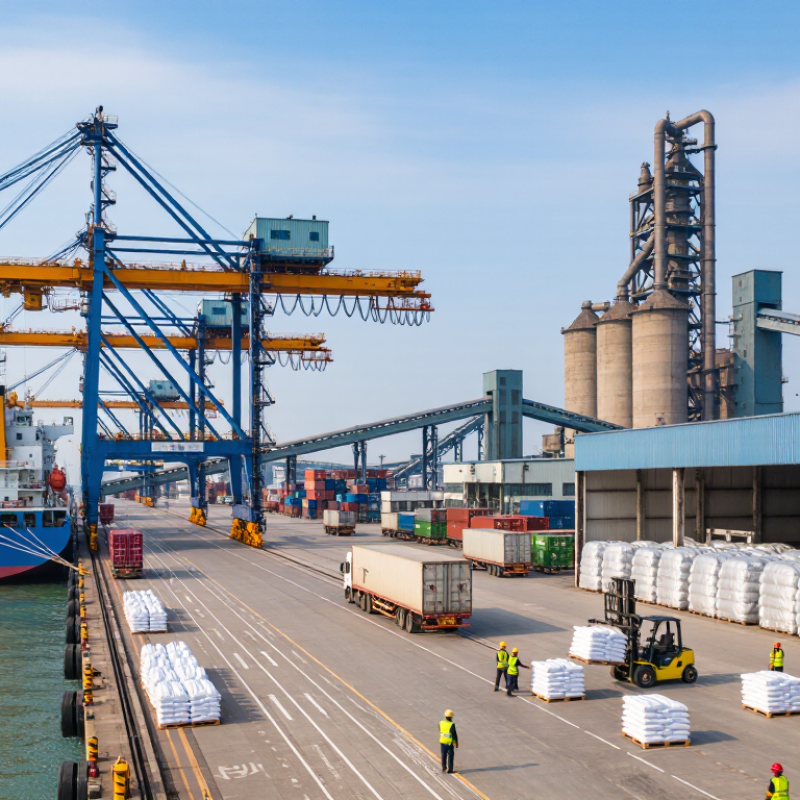
A reliable route starts with the end port, not the supplier’s quotation. UNCTAD’s Review of Maritime Transport 2024 states that over 80% of world merchandise trade by volume moves by sea. That exposure makes congestion, transshipment, and weather material risks. Compare direct calls with feeder routes, then add realistic buffer days. A cheap ocean rate can become expensive after demurrage, inland delays, and missed construction windows.

Packaging deserves equal attention. Portland cement absorbs moisture quickly, even when bags look intact. Use moisture-resistant multiwall bags or sealed bulk tankers, depending on annual volume. Check pallet wrapping, container ventilation, and maximum stack height before loading.

The World Bank’s Logistics Performance Index 2023 highlights customs, infrastructure, and shipment timeliness as distinct logistics capabilities. Request evidence for each, not vague promises. Small details matter.

Storage and delivery plans should be written into the purchase contract. Keep bags on raised pallets, under a roof, away from walls and standing water. Record batch numbers, loading dates, seal numbers, and arrival condition. For bulk deliveries, confirm tanker access, discharge equipment, and backup unloading hours. Leave room for inspection. Mistakes happen. I would also test a sample after extended transit, although this adds cost and may slow release. That trade-off is easy to underestimate.

Sources: UNCTAD, Review of Maritime Transport 2024; World Bank, Connecting to Compete 2023: Trade Logistics in an Uncertain Global Economy.

Check Import Regulations, Contracts, Payments, and Dispute Protection

7 Tips for Buying Portland Cement Globally

Global cement buying begins with import compliance, not price. Confirm the correct HS code, national standards, labeling rules, and required certificates. Portland cement is commonly classified under HS 2523 in UN Comtrade records. Check the importer’s customs database before signing. The World Trade Organization estimates that full Trade Facilitation Agreement implementation could reduce trade costs by 14.3%.

Documentation quality matters.

Write a detailed contract. Specify cement type, strength class, fineness, setting time, moisture limits, inspection rights, delivery windows, and acceptable tolerances. Include Incoterms, insurance responsibility, and the governing law. Require independent sampling at loading and arrival.

A mill certificate alone may not reflect the cargo after long storage. That risk is easy to underestimate. The World Bank’s 2023 Logistics Performance Index also shows wide differences in customs and shipment reliability between economies.

Use payment protection suited to the supplier and route. Letters of credit, staged payments, and document checks can reduce exposure. Match payment releases to inspection or shipping milestones. Avoid paying the entire amount before verified documents arrive.

Define remedies for late delivery, off-specification material, damaged bags, and quantity shortages. Include mediation and arbitration procedures, evidence rules, and a clear dispute venue.

Keep emails, inspection reports, weighbridge records, and customs receipts together. Buyers often neglect this file until a dispute begins. That is too late.

The owner of this website has made a commitment to accessibility and inclusion, please report any problems that you encounter using the contact form on this website. This site uses the WP ADA Compliance Check plugin to enhance accessibility.