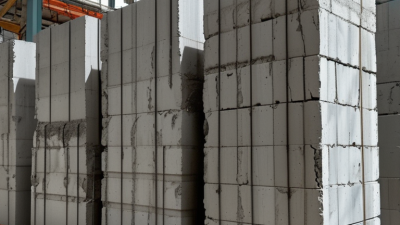
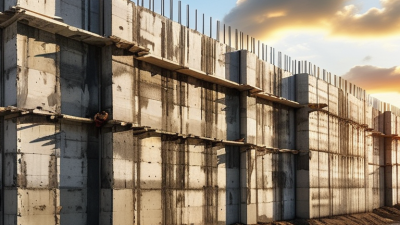
Concrete masonry shapes many walls, foundations, retaining structures, and landscape features worldwide. Its familiar units appear in schools, warehouses, homes, and boundary walls. Yet the material deserves more than a simple strength-versus-cost comparison.
This guide explains what concrete masonry is, including blocks, pavers, panels, and reinforced assemblies. It also examines common uses, structural behavior, fire resistance, durability, thermal performance, and maintenance requirements. The Concrete Masonry and Hardscape Association’s technical guidance emphasizes that performance depends on correct design, mortar selection, reinforcement, drainage, and installation. Small details matter. A poorly detailed wall can still crack, absorb water, or lose efficiency.
Building scientist Joseph Lstiburek offers a useful perspective: “The perfect wall has to control rain, air, vapor, and heat.” His statement, published through Building Science Corporation, applies strongly to masonry envelopes. Concrete masonry can provide mass, resilience, and long service life. However, it is not automatically sustainable. The 2023 Global Status Report for Buildings and Construction, published by the United Nations Environment Programme and GlobalABC, reports that buildings consume about 34% of global energy and produce approximately 37% of energy- and process-related emissions. Material selection therefore requires context. Local aggregates, transport distance, insulation design, repairability, and carbon reduction strategies all influence results.
Concrete masonry may look simple. It is not. This article considers both its practical advantages and its limitations, helping readers make more informed decisions for safer, longer-lasting, and better-performing construction.
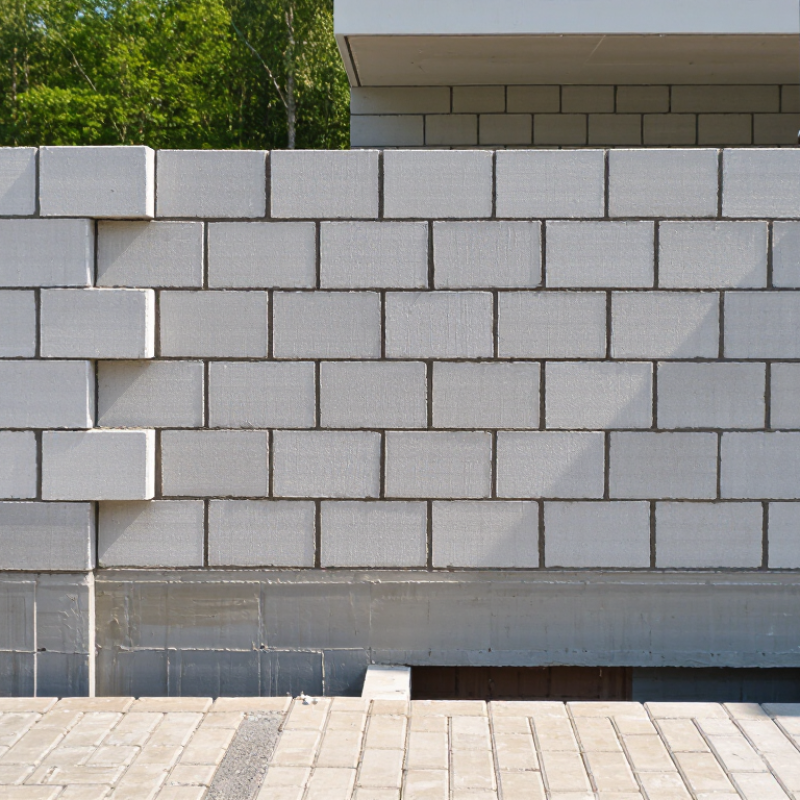
Concrete masonry is a building system made from manufactured concrete units, mortar, grout, and reinforcement. These units are commonly called concrete masonry units, or CMUs. They may be hollow or solid, depending on the wall’s structural and insulation needs. A typical hollow block contains vertical cores, which reduce weight and create space for steel bars or grout. The face shell forms the visible surface, while webs connect the sides and help distribute loads.
Mortar bonds each unit and fills the horizontal and vertical joints. Grout flows into selected cores, creating a stronger reinforced section around steel bars. Reinforcement may include vertical rebar, horizontal joint reinforcement, and bond beams near openings or wall tops. During inspection, I look for full mortar beds, clean cores, accurate alignment, and properly lapped steel. Small gaps can allow water entry or weaken load transfer. Moisture control also depends on flashing, drainage paths, and sealed joints, not only on the block itself. Concrete masonry can perform reliably, but mix proportions, curing, movement joints, and spacing must follow project specifications and local building codes. One detail is often overlooked: a neatly finished wall can still hide poorly filled cores.
Concrete masonry units (CMUs) form walls, partitions, foundations, and landscape structures. Standard hollow units reduce weight and create space for reinforcement or services. Solid units provide greater mass where impact resistance matters. Specialty units include corner blocks, lintel blocks, bond beams, and textured-faced units. Their shapes support cleaner construction at openings and wall intersections.
Major concrete masonry systems include single-wythe, cavity-wall, reinforced, and veneer construction. A single-wythe wall uses one CMU layer and may need added insulation. Cavity walls place an air space between masonry layers, improving moisture control. Reinforced masonry combines steel bars, grout, and CMUs for stronger structural performance. Veneer systems attach masonry to a separate structural frame. Partition walls divide interior spaces without carrying major building loads.
Details matter. On construction projects, I have seen small alignment errors create visible problems across an entire wall. Uneven mortar joints can affect appearance, water resistance, and load transfer. A drawing may look complete, yet site conditions often require careful adjustment. Proper unit selection, full mortar bedding, clean reinforcement cells, and controlled curing improve reliability. Concrete masonry can offer durability, fire resistance, sound reduction, and thermal mass. However, its performance depends on design, workmanship, drainage, and local climate. Inspectors should check joints, flashing, reinforcement placement, and cracking patterns rather than judging the surface alone.
Concrete masonry includes concrete blocks, pavers, retaining-wall units, and precast elements. Each type serves a different construction need. Standard hollow blocks form walls, while solid units suit areas needing greater impact resistance. Their consistent dimensions help crews maintain straight courses and predictable material quantities.
Common construction uses include exterior walls, partitions, foundations, fire-rated enclosures, and service shafts. Block walls often divide warehouses, schools, workshops, and apartments. In residential projects, masonry creates durable foundation walls when detailed and drained correctly. Pavers provide stable paths, patios, and driveways for heavy foot traffic. Retaining units hold back soil on sloped sites, but poor drainage can still cause movement. That detail is easy to underestimate.
Concrete masonry also supports sound control and thermal stability. Its mass can reduce noise and slow indoor temperature changes. However, performance depends on mortar joints, reinforcement, insulation, flashing, and workmanship. A wall may look solid yet fail around openings if lintels or movement joints are poorly planned. Small gaps can become expensive repairs. The material is reliable, not careless-proof. Local codes and an engineer’s design should guide load-bearing, fire, and retaining applications.
Concrete masonry combines cement, aggregate, and water into durable units used for walls, partitions, foundations, and landscape structures. Standard units often measure 8 by 8 by 16 inches. ASTM C90 requires a minimum average net-area compressive strength of 2,000 psi for loadbearing units. That figure supports reliable structural design, but field workmanship still matters.
Concrete masonry performs well under fire, impact, and weather exposure. The National Concrete Masonry Association’s fire-resistance data shows that properly designed masonry assemblies can provide multi-hour protection. Results depend on unit density, wall thickness, grout, reinforcement, and finishes. The U.S. Department of Energy also identifies masonry’s thermal mass as a useful way to delay heat transfer and reduce indoor temperature swings. It works slowly. That is the point.
Moisture control remains a practical concern. Poor flashing, open joints, or trapped water can damage adjacent materials, even when the block itself remains sound. Experience on construction sites often reveals a gap between laboratory performance and finished walls. ASTM results cannot correct careless alignment or incomplete mortar joints. Designers should verify local climate conditions, drainage details, reinforcement, and the tested wall assembly before specifying performance values. Concrete masonry is strong, but it is not automatically maintenance-free.
| Concrete Masonry Type | Typical Composition or Form | Common Uses | Key Benefits | Important Performance Characteristics |
|---|---|---|---|---|
| Hollow Concrete Masonry Unit (CMU) | Factory-made concrete block with one or more hollow cores. | Load-bearing walls, partition walls, foundations, retaining walls, and commercial buildings. | Efficient installation, reduced material weight compared with solid units, and space for reinforcement or services. | Strength depends on unit density, block configuration, mortar, grout, reinforcement, and workmanship. The cores can be grouted to improve structural capacity. |
| Solid Concrete Masonry Unit | Dense concrete block with little or no internal void space. | Heavy-duty walls, equipment bases, security walls, landscape structures, and areas subject to impact. | High mass, strong impact resistance, good durability, and substantial sound-reduction potential. | Higher weight increases handling and foundation demands. Thermal insulation is generally lower than that of insulated or hollow assemblies unless additional insulation is installed. |
| Lightweight Concrete Block | Concrete masonry unit made with lightweight aggregates or other low-density materials. | Interior partitions, low-rise construction, and projects where reduced structural dead load is important. | Lower unit weight, easier handling, and potentially improved thermal performance compared with conventional dense concrete units. | Compressive strength, moisture absorption, and fire performance vary with the aggregate and mix design. The complete wall assembly should be evaluated. |
| Insulated Concrete Masonry | CMU wall incorporating insulation inserts, insulated cores, or continuous insulation. | Exterior walls, energy-efficient buildings, warehouses, schools, and residential construction. | Improved thermal resistance, reduced thermal bridging, and better indoor temperature stability. | Thermal performance depends on insulation continuity, joint details, wall thickness, and air and moisture control layers. |
| Segmental Concrete Paver | Precast concrete unit designed for modular paving applications. | Walkways, driveways, patios, plazas, parking areas, and pedestrian surfaces. | Replaceable individual units, design flexibility, durable surface, and suitability for permeable pavement systems. | Performance depends on unit thickness, bedding layer, joint material, edge restraint, and the compacted base beneath the pavement. |
| Concrete Masonry Veneer | Thin or non-load-bearing concrete masonry used as an exterior or interior finish. | Façades, accent walls, landscape features, fireplaces, and interior decorative surfaces. | Architectural flexibility, relatively low added weight, and a range of textures, colors, and patterns. | It transfers little or no structural load unless specifically designed to do so. Secure attachment, drainage, movement joints, and flashing are essential. |
| Precast Concrete Masonry Element | Concrete component manufactured in a controlled facility and installed on site. | Architectural panels, wall sections, lintels, sills, caps, steps, and modular site elements. | Consistent production quality, dimensional control, rapid installation, and reduced on-site forming. | Transportation, lifting, connection design, joint treatment, and tolerances must be considered. Factory curing can support reliable product quality. |
| Performance Dimension | What It Means in Concrete Masonry | Factors That Influence Performance | Practical Design Consideration |
|---|---|---|---|
| Structural Capacity | Ability of a masonry assembly to resist compression, lateral loads, shear, and local stresses. | Unit strength, mortar type, grout, reinforcement, wall thickness, slenderness, openings, and construction quality. | Design the complete assembly rather than selecting a unit based only on its advertised compressive strength. |
| Durability | Resistance to weathering, abrasion, impact, shrinkage-related movement, and long-term service conditions. | Concrete quality, absorption, exposure conditions, detailing, drainage, workmanship, and maintenance. | Use suitable materials and provide coping, flashing, control joints, and water-shedding details where required. |
| Fire Resistance | Capacity of a masonry wall or assembly to resist fire exposure and limit heat transfer for a specified period. | Wall thickness, unit type, aggregate, grout configuration, reinforcement, and finish materials. | Fire ratings apply to tested or calculated assemblies, not automatically to every individual masonry unit. |
| Thermal Performance | Ability to reduce heat flow and moderate indoor temperature changes. | Unit density, insulation, wall thickness, thermal bridges, air leakage, and interior and exterior finishes. | Evaluate the whole wall, including joints, structural elements, insulation continuity, and air-control layers. |
| Acoustic Performance | Ability to reduce airborne sound transmission between spaces. | Surface mass, wall construction, cores, grout, seals, flanking paths, and penetrations. | Dense and well-sealed assemblies generally provide better sound isolation than lightweight, unsealed partitions. |
| Moisture Management | Ability of the wall system to resist rain penetration and manage incidental moisture. | Absorption, flashing, weeps, drainage cavities, sealants, coatings, joints, and exposure. | Good detailing and drainage are essential; masonry is durable but should not be treated as automatically waterproof. |
| Sustainability | Potential to provide long service life, thermal mass, reuse options, and relatively low maintenance. | Material sourcing, cement content, manufacturing energy, transport distance, durability, and end-of-life practices. | Compare life-cycle impacts and specify durable, locally suitable materials with efficient structural design. |
| Installation Efficiency | Speed and predictability with which masonry components can be placed and integrated into a project. | Unit size, modular coordination, site access, labor skill, reinforcement layout, weather, and material availability. | Coordinate dimensions, openings, utilities, and control joints before construction to reduce cutting and rework. |
Concrete masonry covers solid blocks, hollow units, pavers, and reinforced wall systems. Each type serves a different purpose. Solid units suit retaining walls and high-impact areas, while hollow blocks reduce weight and simplify reinforcement. Pavers work well for patios, walkways, and driveways. Selection should consider structural loads, freeze-thaw exposure, drainage, fire resistance, and local building requirements. A qualified engineer should review load-bearing walls and unusual soil conditions. Appearance matters, but performance matters more.
Installation begins with a stable, level base. Even small settlement can create long cracks. Contractors should prepare compacted gravel, install drainage where water may collect, and check each course with a level and string line. Mortar joints need consistent thickness. Reinforcement must match the approved design, not a convenient guess. Fresh masonry also needs protection from heavy rain, rapid drying, and freezing temperatures. Worksite experience shows that rushed alignment creates expensive corrections later. It is easy to underestimate this step.
Maintenance is simple, but not optional. Inspect walls after severe storms, especially around corners, joints, and openings. Remove dirt with gentle water pressure and a suitable masonry cleaner. Harsh acids can damage faces and mortar. Efflorescence may appear as white powder; controlled cleaning and improved drainage usually help. Sealers can reduce water absorption, but they cannot repair movement or poor construction. A few hairline cracks may be harmless, yet widening cracks deserve professional assessment. Concrete masonry is durable, though no wall is completely maintenance-free.