What Are the Different Types of Portland Cement?
Portland cement is not a single, uniform product. Its type affects strength development, heat generation, and resistance to sulfate exposure—details that matter when concrete meets cold weather, heavy loads, or sulfate-rich soil. The USGS Mineral Commodity Summaries 2024 estimated global cement production at about 4.1 billion metric tons in 2023, underscoring the scale of decisions made across the industry. Cement chemist Karen Scrivener has described concrete as “the most widely used material on Earth after water.” A practical starting point.
ASTM C150/C150M defines five traditional Portland cement types. Type I serves general construction; Type II offers moderate sulfate resistance; Type III gains strength quickly; Type IV limits heat generation; and Type V provides high sulfate resistance. These distinctions are not interchangeable. A foundation exposed to aggressive soil may call for a different specification than a fast-track repair requiring early strength. The right choice also depends on the concrete mixture, curing conditions, and project requirements—not just the label on a bag.
That neat taxonomy is useful, but it does not tell the whole story. Blended cements and performance-based specifications may offer other options, and terminology can vary by standard and market. Engineers should verify current standards and product documentation before specifying a cement. In the sections ahead, we’ll compare each type’s properties, typical applications, and limitations, while noting where real-world performance depends on more than cement alone. A small but important caveat.
How Portland Cement Types Are Classified
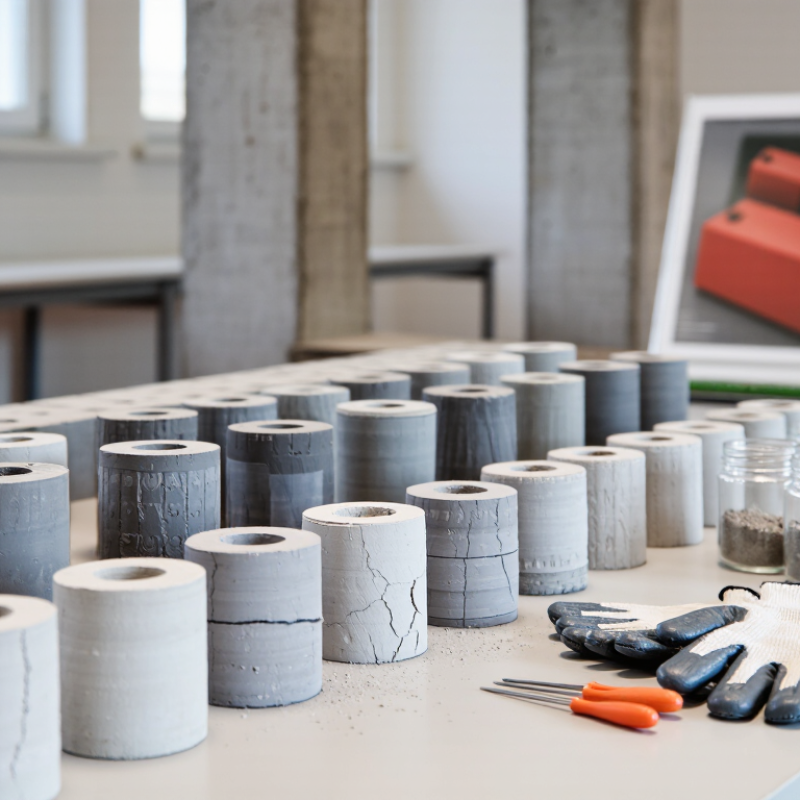
Portland cement types are classified by the performance requirements they meet, not by a simple ranking from weak to strong. In the United States, ASTM C150 groups common portland cement into Types I through V. Each type addresses conditions such as strength development, heat release, or sulfate exposure. The exact requirements depend on the applicable standard and project specification.
Type I is used for general construction when no special performance is needed. Type II offers moderate sulfate resistance and limits heat generation compared with Type I. Type III develops strength quickly, which can help when forms must be removed early. Type IV limits heat more substantially, making it useful in large concrete placements, though it is less commonly specified today. Type V is designed for high sulfate resistance. Small distinctions matter. Air-entraining versions, marked with “A,” help concrete resist freeze-thaw damage by creating tiny air pockets.
These labels describe cement properties, not a guarantee that every mix will behave the same way. Water content, aggregates, curing temperature, and placement methods also affect results. A bag marked Type III, for example, does not remove the need for proper curing. Standards and naming conventions can vary by country, so checking the project specification is more reliable than choosing by type number alone. I used to think the type label told the whole story. It doesn’t.
The Five Standard Types of Portland Cement
Portland cement is commonly grouped into five standard types, each designed for different exposure conditions or construction demands. Type I is general-purpose cement for ordinary buildings, sidewalks, and foundations where soil and weather do not create unusual chemical risks. Type II offers moderate sulfate resistance and, in some specifications, moderate heat generation. It may suit structures exposed to mildly aggressive soils or larger concrete placements. Check the project specification: Type II and Type II(MH) do not always indicate identical heat performance.
Type III develops strength quickly, which can help when forms must be removed early or cold weather slows curing. Type IV releases heat more slowly, making it useful for massive pours where temperature differences could cause cracking; it is less commonly available. Type V provides high sulfate resistance for concrete exposed to more severe sulfate conditions. That does not make it suitable for every harsh environment. Actual performance also depends on mix proportions, water content, aggregates, and curing. A damp curing cover matters. Cement type alone cannot prevent every crack, and choosing one without reviewing soil tests or local requirements deserves a second look.
What Are the Different Types of Portland Cement? - The Five Standard Types of Portland Cement
| ASTM Type |
Common Description |
Key Characteristics |
Typical Uses |
Important Considerations |
| Type I |
General-purpose Portland cement |
Suitable where no special requirements for sulfate resistance or heat of hydration are specified. |
General concrete construction, including buildings, floors, pavements, and foundations in ordinary exposure conditions. |
Use project specifications and exposure conditions to determine whether a more specialized cement is needed. |
| Type II |
Moderate sulfate resistance |
Specified for moderate sulfate exposure. Where designated Type II(MH), it also meets requirements for moderate heat of hydration. |
Concrete exposed to soils or groundwater with moderate sulfate concentrations, and some larger placements when moderate heat characteristics are specified. |
The applicable designation depends on the required properties and the governing specification. |
| Type III |
High early strength |
Develops strength more rapidly at early ages than ordinary Type I cement under comparable conditions. |
Projects needing early form removal, faster construction schedules, or earlier opening to service. |
Rapid strength development can be accompanied by higher early heat release; curing and temperature control remain important. |
| Type IV |
Low heat of hydration |
Designed to limit heat generation during hydration compared with ordinary Portland cement. |
Mass concrete placements, such as large dams, where controlling temperature rise can help reduce thermal cracking risk. |
Strength development may be slower; availability and acceptance should be confirmed for the project and region. |
| Type V |
High sulfate resistance |
Specified for concrete requiring high resistance to sulfate attack. |
Foundations, structures, and other concrete exposed to soils or water with high sulfate concentrations, when required by the project specification. |
Sulfate resistance also depends on concrete quality, water-to-cementitious-materials ratio, curing, and the severity of exposure. |
Note: These are the five traditional ASTM C150 Portland cement types. Air-entraining versions may use the suffix “A” (for example, Type IA); “A” indicates an air-entraining variant rather than an additional base type. Confirm current requirements with the applicable standard and project specifications.
Special-Purpose Portland Cement Varieties
Special-Purpose Portland Cement Varieties
Special-purpose Portland cements are designed for conditions that ordinary construction mixes may not handle as well. Type III develops strength quickly, which can help when forms must be removed early or repairs need to reopen soon. Faster strength gain also means closer attention to curing and temperature. The concrete can feel ready before it has received enough moisture.
Type IV produces heat more slowly as it hydrates. That can be useful in massive pours, such as thick foundations, where excess internal heat may create temperature differences and cracking. Type V is formulated for stronger sulfate resistance, which can matter when soil or groundwater contains damaging sulfate levels. Type II offers moderate sulfate resistance and moderate heat performance. The names can mislead: site conditions and mix design still matter.
White Portland cement is another specialized option, valued for pale architectural concrete, terrazzo, and colored finishes. Its lighter color makes pigments and surface variations more visible, so consistent materials and careful batching are important.
Air-entraining versions are available in some cement classifications. They help concrete resist freeze-thaw damage by creating tiny, distributed air spaces. Not every project needs a specialty cement. A specification should reflect exposure, placement size, schedule, and local availability—not just a product label.
How Cement Types Differ in Composition and Performance
Portland cement types differ through clinker chemistry, fineness, and performance requirements. The Portland Cement Association’s Design and Control of Concrete Mixtures reports typical clinker ranges of 50–70% alite, 15–30% belite, and 5–10% aluminate. Alite contributes strongly to early strength; belite reacts more slowly.
Small changes matter. Type III cement is ground finer and designed for faster strength gain, useful when forms must come off early. That speed can bring more heat, so it may not suit every large pour.
ASTM C150/C150M distinguishes types by intended performance as well as composition. Type II offers moderate sulfate resistance, while Type V limits tricalcium aluminate to 5% maximum for higher sulfate resistance. Type IV is designed for lower heat generation, though it is less common.
On a job site, these differences affect curing plans: a rapid-hardening mix may need careful temperature control, while slower strength gain can delay loading. The labels help, but they do not tell the whole story.
Aggregate, water content, and curing conditions also shape results. Even a specified cement type cannot guarantee identical performance in every mix. I would check the project exposure and test data before choosing.
Selecting a Type for Construction Needs
Selecting a Portland cement type starts with exposure, placement size, and the construction schedule. Type I suits many routine slabs and foundations. Type II offers moderate sulfate resistance and moderate heat generation. Type V is intended for more severe sulfate exposure, while Type III helps when forms must come off early. Small differences matter. ASTM C150/C150M sets a three-day mortar-strength benchmark of 12 MPa for Type I and 20 MPa for Type III. These are laboratory requirements, not a promise of identical field performance; temperature, curing, and mix proportions affect results.
Match cement to measured site conditions, not assumptions. ACI 318 classifies sulfate exposure using concentrations in soil and water, so request a geotechnical test before specifying sulfate-resistant cement. For large pours, such as thick bridge supports, lower-heat Type II or Type IV cement can help manage temperature rise. Type IV may be difficult to source, so confirm availability early. Not always. A faster-strength cement can shorten a schedule, but it may also increase heat and complicate finishing in hot weather. Review the project specification, exposure test, and placement plan together; a neat specification can still miss what happens on a cold morning or a windy site.
Portland Cement Types: Maximum C₃A Limits
ASTM C150 limits for tricalcium aluminate (C₃A) content in selected Portland cement types. Lower limits help indicate suitability for environments where sulfate resistance is important.
How to read the chart: Type II has an 8% maximum C₃A limit, Type IV 7%, and Type V 5%. Types I and III have no C₃A maximum shown here; this does not mean their C₃A content is zero. Type I is used for general construction, Type II for moderate sulfate exposure, Type III when high early strength is needed, Type IV for low-heat applications, and Type V for high sulfate exposure. Check the applicable project specifications and current standards when selecting cement.