Top Concrete Masonry Manufacturers in China

China’s concrete masonry sector serves projects ranging from residential walls to warehouses, landscaping, and infrastructure. Yet a polished catalog alone cannot show how consistently a manufacturer produces blocks, pavers, or wall systems. Buyers need to look beyond product photos. Details matter.

This guide introduces leading concrete masonry manufacturers in China and explains what to assess before requesting a quotation. It considers product range, production capacity, quality-control practices, customization options, export experience, and the clarity of technical documentation. These factors can help buyers compare suppliers against real project needs, rather than relying on broad claims. A useful review also checks dimensions, compressive-strength information, finish, packaging, and stated delivery terms. Ask for current test reports and samples when appropriate; confirm that specifications match the intended application. Small differences can matter. A block that looks suitable in a photograph may not meet a project’s loading, exposure, or installation requirements.

No single ranking fits every buyer. A supplier with extensive export experience may suit one project, while a regional producer with a narrower range may offer a better practical fit elsewhere. Company information and product capabilities can also change, so verify important details directly with each manufacturer. This overview is a starting point, not a substitute for technical review. Compare evidence carefully, ask specific questions, and allow room for uncertainty—some supplier details may be difficult to confirm from public materials alone.
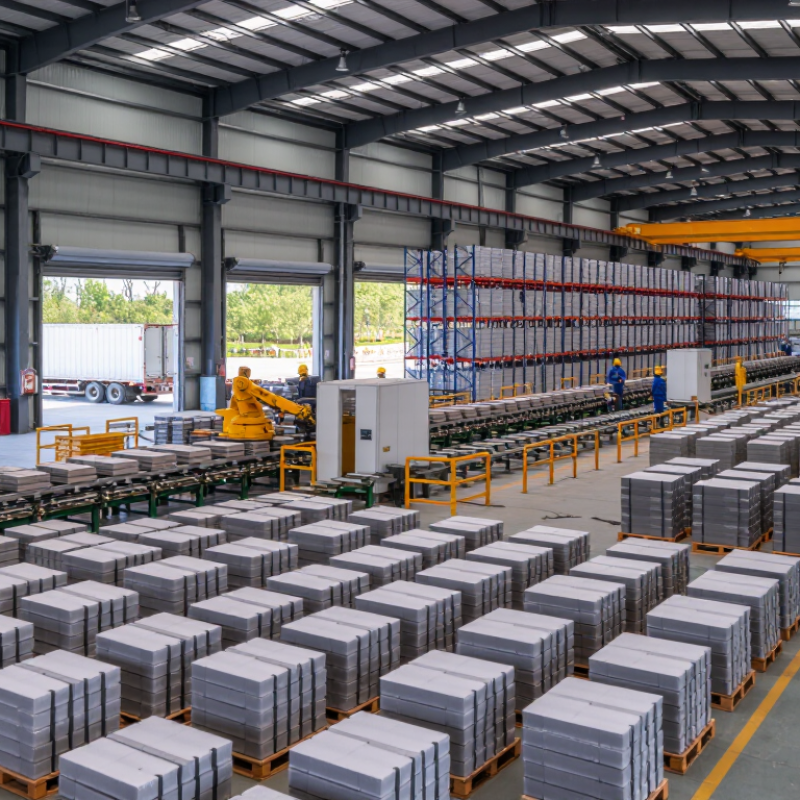
Top Concrete Masonry Manufacturers in China

Concrete Masonry Product Types and China’s GB/T 8239 Standard

Top Concrete Masonry Manufacturers in China

GB/T 8239 focuses on ordinary concrete small hollow blocks, a common masonry product used in walls and partitions. These blocks are not interchangeable with every concrete masonry unit. Solid blocks, paving units, and decorative products may follow different specifications. Buyers should confirm the product category before comparing quotations or test reports.

For blocks covered by the standard, review dimensions, visible defects, and strength results against the applicable edition and purchase requirements. Check that the report identifies the same block type and production batch being offered. A neat-looking face tells only part of the story. Ask how samples were selected and whether test records can be traced to routine production. Exact limits should be checked in the standard text, not copied from an old catalogue.

Small details matter. On site, compare delivered units with approved samples; chipped corners can complicate laying and joint thickness. Storage matters, too: blocks left in standing water may arrive with conditions unlike those used in testing. GB/T 8239 provides a useful reference, but it does not replace clear drawings, agreed acceptance criteria, or independent verification where needed. Even careful checks can miss variation between batches. That deserves a second look.

AAC Block Density Grades B03–B08 Under GB/T 11968

For buyers comparing concrete masonry manufacturers in China, AAC block density grades deserve close attention. Under GB/T 11968, B03 through B08 identify dry-density classes, broadly corresponding to nominal levels from 300 to 800 kg/m³. A grade is not a guarantee that every block has precisely that density. Confirm the applicable standard edition, test results, and project specification before ordering.

Lower-density blocks can reduce wall weight and improve insulation, but they may need more careful handling and suitable fixing details. Higher-density grades are generally heavier and may better suit applications requiring greater strength, subject to verified test data. Check density alongside compressive strength, dimensions, and moisture condition. One figure is not enough.

On site, compare the supplier’s test report with the delivered batch and inspect edges for chips or uneven cuts. Ask how samples were conditioned before density testing; moisture can affect readings. Small differences matter. A specification can look tidy on paper, yet installation quality still depends on consistent blocks and proper workmanship. When a grade seems suitable, verify it against the structural and thermal requirements of the wall, not just its price per unit.

How to Assess Manufacturers: Capacity, Strength Grades, and Certifications

When comparing concrete masonry manufacturers in China, assess production capacity against your actual order, not a headline figure. Ask for monthly output by block type, current utilization, mold availability, and peak-season lead times. A line rated for 80,000 blocks daily may not sustain that mix across hollow blocks, pavers, and custom sizes. Request recent production records and inspect finished pallets for chipped corners, uneven faces, and dimensional variation. Numbers help. The yard tells more.

Strength grades should match the intended use and project specifications. Check how compressive strength samples are selected, cured, and tested, then request dated laboratory reports for the products offered. Compare water absorption and dimensional tolerances too; a strong block can still cause problems if mortar joints vary. Confirm which standards apply to the project, and verify certificates with the issuing organization where possible. A certificate alone cannot prove consistent batches.

Tips: Request samples from two separate batches and record each sample’s grade, size, and test date. Arrange independent inspection if the order is substantial. It adds cost, but assumptions can cost more. Supplier documents are useful, not infallible.

Top Concrete Masonry Manufacturers in China - How to Assess Manufacturers: Capacity, Strength Grades, and Certifications

Assessment dimension What to check Useful evidence or benchmark How to assess
Production capacity Annual rated capacity, recent actual output, operating shifts, and available capacity for your order. Request capacity in pieces or cubic metres by product type, plus monthly output records and a production schedule. There is no single national capacity threshold that makes a manufacturer suitable for every project. Compare recent output with the proposed order and delivery window. Confirm whether the stated figure is site-level rated capacity or verified production.
Product category and standard Confirm whether the product is a concrete small hollow block, solid concrete masonry unit, or autoclaved aerated concrete (AAC) block. For concrete small hollow blocks, check the applicable edition of GB/T 8239 and the product specification. AAC blocks are a separate product category and should be assessed against the applicable AAC product standard, such as GB/T 11968. Match the standard and product description on the quotation, test report, technical data sheet, and delivery documents.
Compressive-strength grade Specified grade, test results, sampling method, and consistency between batches. For concrete small hollow blocks under GB/T 8239, strength-grade designations include MU3.5, MU5.0, MU7.5, MU10, MU15, and MU20. The required grade depends on the product and project design; these values are not interchangeable with AAC strength classes. Request recent test reports identifying the exact product, grade, test method, test date, and issuing laboratory. Have the project designer confirm the required grade.
Dimensions and tolerances Nominal dimensions, dimensional variation, squareness, and consistency between production batches. Compare measured samples with the dimensions and tolerances specified in the applicable product standard and purchase specification. Inspect samples from a production batch and record measurements. Confirm the agreed dimensions in the purchase order.
Quality-control system Incoming-material checks, process controls, batch traceability, inspection frequency, and handling of nonconforming products. Review written inspection procedures, batch records, calibration records, and corrective-action examples. ISO 9001 certification, when valid and within scope, is evidence of a quality-management system—not a guarantee that every product meets a specified grade. Check the certificate holder, validity, certification scope, and issuing body. Confirm that the covered site and product operations match the supplier being evaluated.
Environmental and material compliance Applicable material-safety requirements, emissions or environmental controls where relevant, and supporting test documentation. For building-material radionuclide limits, check the applicability and current status of GB 6566 and request relevant test evidence when required by the project or local rules. ISO 14001, if held, relates to environmental management and is not a product-performance certificate. Verify the test report’s product scope, laboratory, date, and applicable requirements. Do not treat a management-system certificate as proof of product compliance.
Delivery and supply reliability Lead time, transport distance, packaging, loading capacity, breakage control, and contingency arrangements. Obtain a written delivery plan showing quantities per shipment, delivery frequency, packaging method, and responsibility for transit damage. Check that the schedule aligns with site storage and installation capacity. Agree on inspection and claims procedures before ordering.
Final supplier verification Consistency among the legal supplier, manufacturing site, product documents, and certificates. Request the supplier’s business details, manufacturing-site address, product test reports, and certificates relevant to the order. Requirements can vary by product, destination, and project specification. Verify documents with the issuing organization where possible and confirm the applicable standards with the project engineer or local authority.

Leading Concrete Masonry Manufacturers in China: Company Profiles

China’s concrete masonry manufacturers are best assessed through plant capability, not catalogue size. A useful company profile records block formats, daily capacity, curing methods, and independent test results. The National Bureau of Statistics of China reported 2.023 billion tonnes of cement output in 2023. Its Statistical Communiqué recorded a 0.7% year-on-year decline. This is an upstream indicator, not a direct count of masonry units. That distinction matters. Plants close to urban projects may shorten delivery times, while regional suppliers can offer economical transport for standard blocks. Buyers should check dimensional tolerances, compressive-strength records, water absorption, and pallet protection.

Leading producer profiles generally fall into three practical groups: automated high-volume plants, regional suppliers serving contractors, and specialists in paving or façade units. Compare batch consistency, material sourcing, curing control, and after-sales response. A modern press line looks impressive, but poor moisture control can still create uneven edges. Not every plant excels. Ask for recent test certificates and sample blocks from the same production run; showroom pieces alone reveal little. Public company information can be incomplete, so rankings should disclose their evidence and avoid treating advertised capacity as verified output. For export orders, confirm packaging, loading plans, and technical documentation before comparing prices.

Compare Product Range, Production Scale, and Export Markets

China’s concrete masonry suppliers differ less by headline capacity than by product depth. Some focus on hollow and solid blocks; others add paving units, kerbs, retaining-wall systems, and custom shapes. Ask whether these products run on the same line, and request capacity by product type. A large plant is not automatically a flexible one.

The USGS Mineral Commodity Summaries 2024 estimates China produced about 2.0 billion metric tons of cement in 2023, out of roughly 4.1 billion worldwide. That signals a vast materials base, not the output of any individual masonry factory. Not the same thing. Compare daily block capacity, curing arrangements, dimensional tolerances, and quality-control records. Ask for recent test results, not just catalogue specifications.

Export markets require a separate check. UN Comtrade’s HS 6810 category covers articles of cement, concrete, and artificial stone; it does not isolate masonry blocks. Trade totals can therefore mislead. For Southeast Asian buyers, freight distance and pallet handling may shape landed cost. For colder or wetter markets, freeze-thaw performance and water absorption deserve closer review. One awkward detail: supplier documents may use different test methods, making comparisons less clean than they look. Request the applicable standard and test date before comparing offers.

Top Concrete Masonry Manufacturers in China — Compare Product Range, Production Scale, and Export Markets

China’s annual cement production provides sector-level context for the scale of its building-materials supply base. These national figures are not manufacturer-specific and should not be read as a ranking of concrete masonry producers.

Source: National Bureau of Statistics of China. Annual output shown in million tonnes; values rounded.

The owner of this website has made a commitment to accessibility and inclusion, please report any problems that you encounter using the contact form on this website. This site uses the WP ADA Compliance Check plugin to enhance accessibility.